
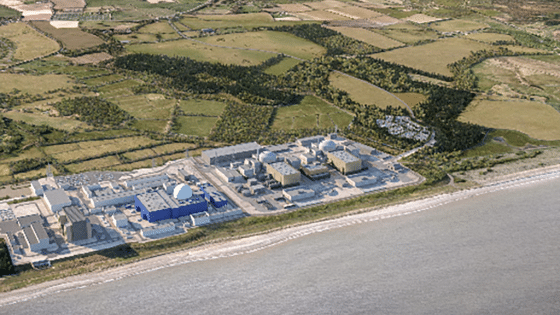

The UK government is advancing the Sizewell C nuclear project with a proposed subsidy of up to £5.5bn, marking a significant step in its development. The funding will back this £20bn venture until a final investment decision is made, expected by the end of the year. UK to own majority stake with EDF holding 20%. Construction firms begin initial works.
- Individual funding tranches will be released following value-for-money assessments.
- Subsidy supplements previous government investments for initial infrastructure works.
- Sizewell C’s construction progresses following regulatory and judicial approvals.
- Once operational, the power station aims to provide electricity to 6 million homes.
The UK government has outlined a substantial financial commitment of up to £5.5bn to support the development of Sizewell C, a £20bn nuclear megaproject in Suffolk. This proposed funding will ensure the continuation of the project until a final investment decision is formalised, which is anticipated before the end of this year. According to a spokesperson for the Department for Energy Security and Net Zero, this decision underscores the government’s commitment to advancing sustainable energy solutions.
The £5.5bn subsidy represents a strategic allocation designed to cover prospective costs leading up to the final investment decision, with provisions to accommodate potential delays. The government has indicated that funding will be distributed through individual tranches, contingent upon a rigorous assessment of value for money at each stage. Primarily, the subsidy will manifest as government equity, with additional mechanisms including letters of credit, indemnities, and guarantees, ensuring a comprehensive financial support structure.
This new financial pledge by the government complements previous investments aimed at laying the groundwork for Sizewell C. With £1.3bn already earmarked for initial infrastructure, comprising site preparation and development expenditures across 2022 and 2023, the project has gained substantial momentum. Such financial endorsements reinforce the government’s intent to see Sizewell C through to fruition, which is anticipated to elevate the UK’s energy infrastructure considerably.
Managed by the UK government with a major shareholding and EDF holding a 20% stake, Sizewell C signifies a collaborative effort in advancing nuclear power capabilities. The project’s progression has received notable boosts following regulatory approvals by the nuclear regulator and the dismissal of a legal challenge against its planning permission. Initial civil construction activities are underway, led by Balfour Beatty, Laing O’Rourke, and Bouygues Travaux Publics, marking a tangible step forward in realising the power station.
In a reflective comment, Sizewell C joint managing directors Julia Pyke and Nigel Cann highlighted the forward momentum, stating that the latest government support “further strengthens the position of this project, which is now full steam ahead”. They also noted the doubling of the workforce and substantial community investments, emphasising Sizewell C’s role in local economic development.
The funding model underpinning Sizewell C utilises a Regulated Asset Base framework, enabling capital generation through modest adjustments in utility bills. This approach distributes the financial risk of construction among consumers, facilitating investor engagement. Once operational, the 3.2 gigawatt facility is poised to meet the electricity demands of approximately 6 million households over an estimated span of sixty years.
The £5.5bn government subsidy marks a pivotal advancement for Sizewell C, reinforcing the UK’s nuclear energy strategy with substantial economic and environmental benefits.

