
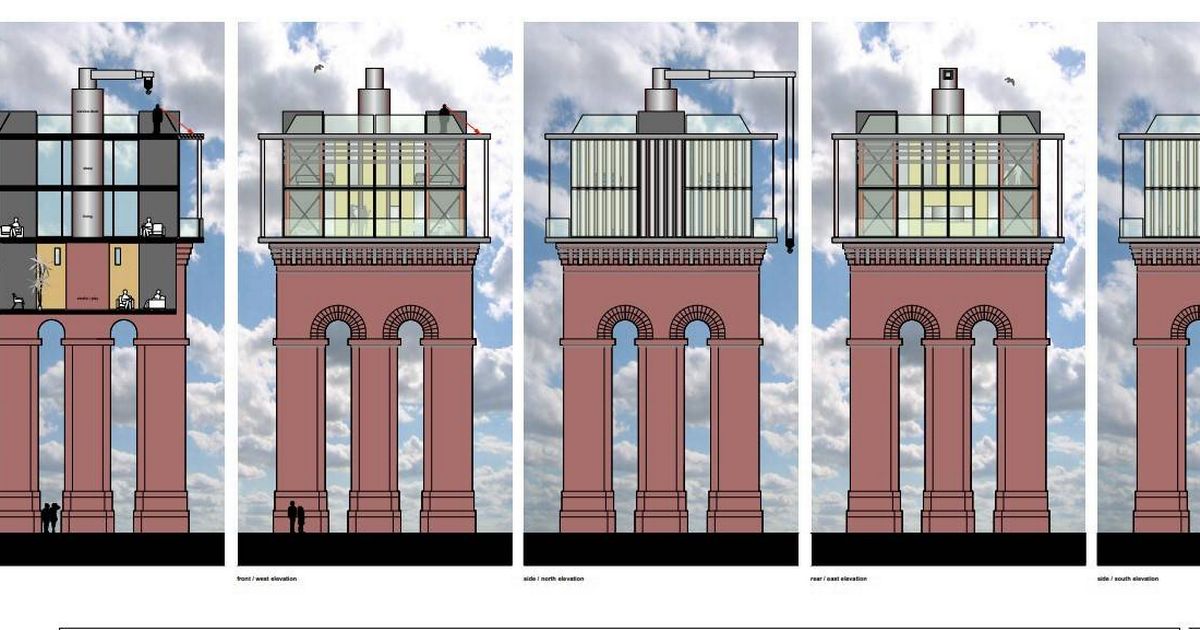

Plans have been approved to convert a historic water tower into a glass-structured family home.
- The 17-metre high Victorian water tower in Lancashire has been registered as a building at risk and vacant for many years.
- Local residents express concerns about privacy, sunlight, and the potential for tourism.
- The plans by Neil Dawson of Snook Architects were re-submitted after an initial approval in 2017 lapsed.
- Despite objections, West Lancashire Council has authorised the transformation, recognising the site’s history and the potential for low carbon integration.
Plans have been sanctioned to transform a Grade II* listed Victorian water tower in Ormskirk, Lancashire, into a residential property featuring a modern glass structure atop the historic edifice. The decision follows a protracted period of vacancy with the tower listed on Historic England’s Buildings at Risk register.
Some local residents have expressed significant concerns regarding the transformation. Brian Farrimond, a Tower Hill resident, articulated fears about the design’s alignment with the original structure, stating, “The structure on top of the tower is wholly out of keeping with the rest of the building.” The proposed louvres designed to maintain privacy were deemed ineffective by Mr Farrimond, furthering apprehensions about a newly proposed platform exacerbating privacy issues.
Helen Pugh, another resident, supports maintaining the building’s existence but criticised the proposed design for its lack of harmony with the original Victorian features. She stressed the importance of involving conservation and archaeological specialists to ensure historical integrity. Concerns were also raised about the structure’s increased height, with Ms Pugh noting its potential to obstruct sunlight to neighbouring properties.
Phil Tyrer and David Kemp, residents from the vicinity, also voiced critiques primarily focused on the implications for privacy and sunlight, with Mr Kemp highlighting potential road safety hazards due to increased traffic. Nevertheless, the council’s development control committee proceeded with approval, backed by councillors Andy Fowler and Edward Pope’s commendations of the project’s views and progress.
Historic England has not presented new objections but emphasised the importance of considering low and zero carbon technologies in such conversions. Ultimately, the development was approved, and councillors acknowledged the longstanding discourse surrounding this site, hoping for a renewed utilisation of the tower.
The approved renovation of the historic water tower exemplifies a contentious yet forward-looking approach to preserving heritage buildings with modern adaptations.

