

Frasers Group is making strategic moves in luxury fashion, raising industry eyebrows.
- The acquisition of Matches and Coggles, alongside an attempted Mulberry takeover, fuels speculation.
- Flannels, the jewel in Frasers’ crown, targets regional consumers with its unique retail strategy.
- Major investments in Flannels’ flagship stores redefine luxury retail experiences across the UK.
- Despite a sluggish market, Frasers remains optimistic about long-term growth in luxury fashion.
Frasers Group’s strategic manoeuvres in the luxury fashion sector have prompted widespread industry speculation. This intrigue is further fuelled by its acquisitions of Matches and Coggles, and an attempted takeover of Mulberry. Under the leadership of Mike Ashley, Frasers acquired a majority share in Flannels in 2012 and later assumed full ownership in 2017. Initially met with skepticism, Flannels has since emerged as the UK’s largest multi-brand premium fashion retailer, embodying Frasers’ ambition to extend luxury across the nation.
David Epstein, managing director of premium and luxury at Frasers, regards Flannels as a pivotal asset within the group, stating that it has significantly altered the landscape of regional luxury retail over the past seven years. Integral to this transformation is a substantial investment in expanding Flannels’ network of over 70 boutique stores and flagship outlets. The retailer has also established exclusive partnerships with prestigious brands to enhance its market presence.
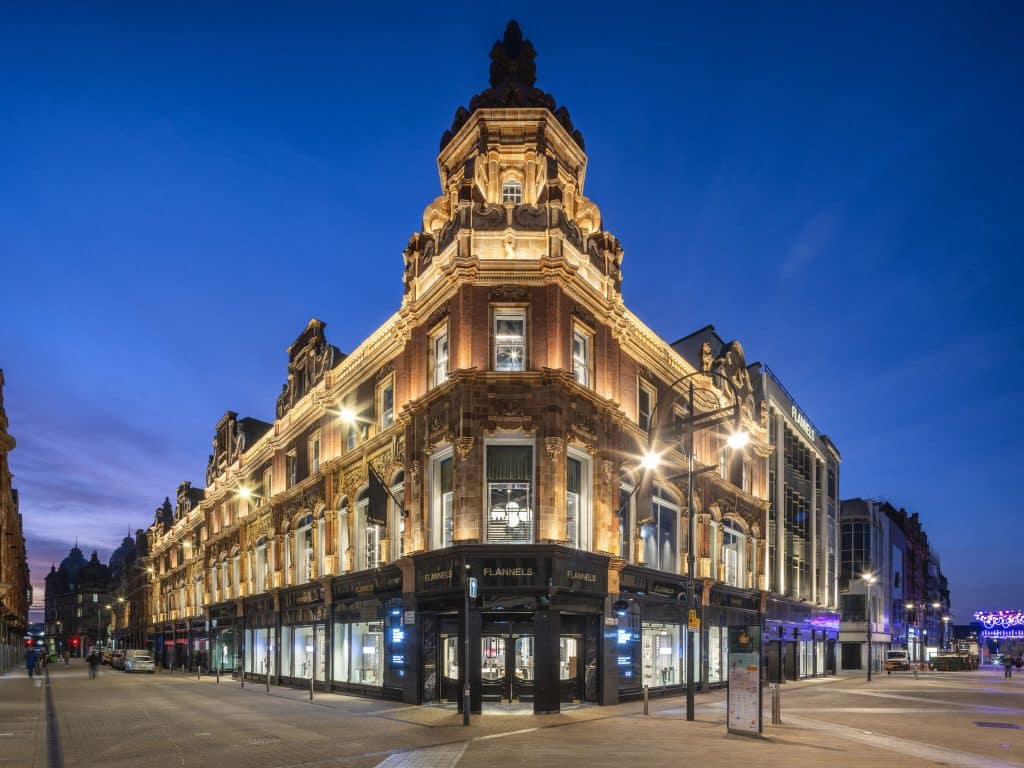
Flannels’ recent developments include the conversion of a former Debenhams in Leeds into a flagship store. Spanning six floors and 70,000 square feet, this store exemplifies Frasers’ disruptive retail approach, offering diverse brand activations alongside a gym and café. Epstein distinguishes these flagships as dynamic spaces, constantly evolving through collaborations with brands like Prada, Off-White, and Valentino. This innovative retail model ensures an engaging customer experience, positioning Flannels at the forefront of luxury.
In contrast to luxury department stores that concentrate on major cities, Flannels prioritises regional markets where consumers value high-profile luxury goods. Epstein identifies this target demographic’s distinctive shopping habits, highlighting their penchant for ‘wearing one’s wealth’. Support from luxury giants such as LVMH and Kering has facilitated Flannels’ expansion into these regions. Despite the failed Mulberry acquisition, Frasers continues to maintain strong relationships with luxury brands to serve its regional consumers.
Flannels’ strategic focus extends beyond retail expansion. The brand is nearing the completion of its store rollout and is transitioning into a phase prioritising sustainable growth. By adapting to market trends, Flannels introduces novel categories like activewear while maintaining its commitment to core luxury partnerships. Despite current market challenges, Epstein asserts that Flannels will continue to adapt and innovate, ensuring the brand remains relevant to regional customers while upholding its luxury ethos.
Frasers Group’s strategic investments and innovative retail strategies position Flannels as a leader in regional luxury fashion within the UK.

