
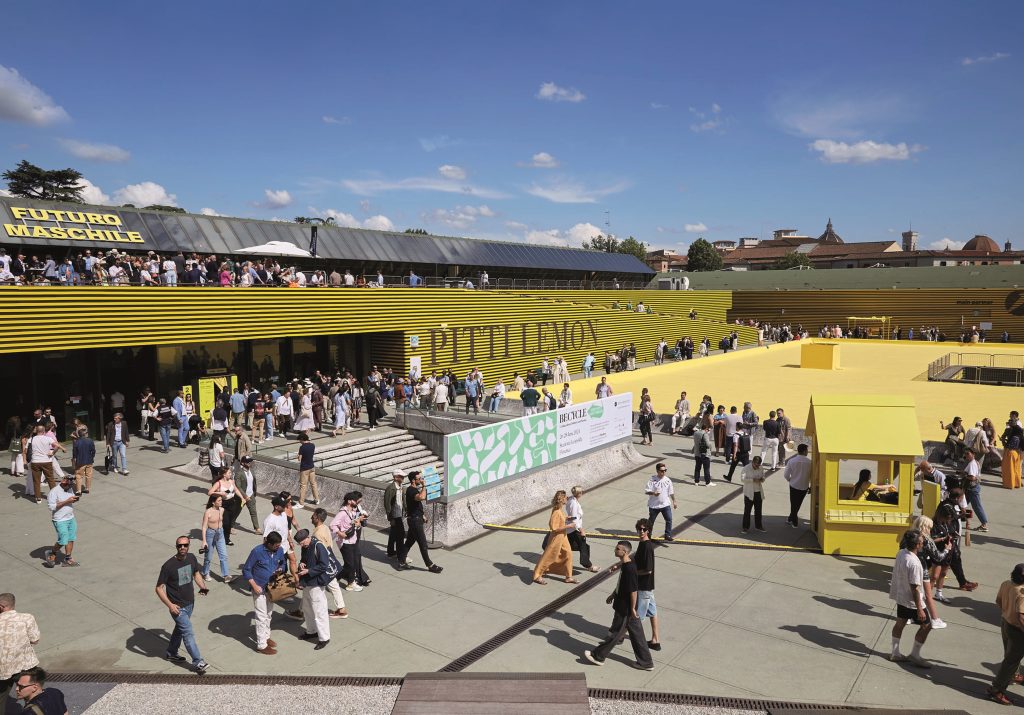

Pitti Uomo, in its 106th edition, remains a pivotal event in the menswear industry, showcasing innovative trends in Florence’s vibrant atmosphere.
With over 790 brands, the trade show reflects the dynamic shift in fashion, embracing the post-Covid realities while retaining its European sartorial charm.
A Strategic Shift in Exhibitors
The recent Pitti Uomo trade show saw a significant shift in exhibitor demographics, with more than 50 French exhibitors leading the non-Italian presence. This strategic change is indicative of the evolving marketplace dynamics post-Brexit, where neighbouring countries are capitalising on opportunities within the UK Fashion and Textile Association, highlighting the broader geopolitical shifts impacting trade.
The event, themed ‘Pitti Lemon’ this year, presented a palette of opportunities for exhibitors despite the construction constraints at the Fortezza da Basso. With 56% Italian brands among the 790 participants, the show was smaller compared to previous years, yet it maintained its status as an essential platform for menswear innovation.
Buyers’ Perspectives and Adjustments
Pitti Uomo has attracted a varied range of buyers this year, each with unique insights and adjustments in their purchasing strategies post-pandemic. John Lambert, a newcomer from County Clothes, was notably impressed by the colourful and inspiring offerings, though mindful of the fit peculiarities of Italian fashion.
Long-time attendees like Gary Culver and Paul Platt observed significant adjustments in the show’s landscape, noting a slight decline in the presence of big brands while highlighting an increase in diverse fashion segments including womenswear and kidswear.
It’s evident that while some luxury brands have shifted focus to Milan showrooms, Pitti Uomo stays relevant by offering competitive pricing and retaining a mix of classic and modern styles.
Adapting to Market Challenges
Amid challenging market conditions, Pitti Uomo reflects the broader economic landscape. In countries like Italy and Germany, adverse weather and economic stresses have kept retailers on their toes, with the UK’s premium market experiencing a notable slump.
Guy Hudson, a seasoned visitor, remarked on how the show’s modest scale mirrors the market’s current state, with less fanfare compared to previous years. Despite these hurdles, the event retains its reputation as the pinnacle of European sartorial excellence.
The sentiment among many exhibitors was one of cautious optimism; they acknowledged the necessity of attending for its inspirational value, even if budgetary constraints for future collections loom.
International Discourse and Networking
The significance of Pitti Uomo extends beyond just fashion showcases; it serves as a crucial networking hub for international retailers and brands. Renowned retailers such as Saks Fifth Avenue and Galeries Lafayette were seen exploring the aisles, indicating the global interest in the show.
Paul Alger of UKFT noted the ‘feel-good factor’ prevalent at Pitti Uomo, although this enthusiasm did not translate into immediate orders in previous editions. Despite the challenges, the show remains a platform for crucial face-to-face interactions within the industry.
Raffaello Napoleone, Pitti CEO, expressed a commitment to evolving with market demands, promising technological advancements and selective exhibitor invitations, underscoring the fair’s key role in driving the menswear sector forward.
Brand Highlights and Innovations
Notably, Paul Smith chose Pitti Uomo to reveal his spring/summer 25 collection, featuring his hallmark tailoring in pastel palettes. His collaboration with Lee showcased creatively reimagined denim pieces, drawing significant interest.
Despite the varied exhibitor base, some like Keith McNichol found valuable collections overlooked in the larger, traditional spaces, indicating a shift towards more eclectic and diverse offerings at the fair.
The presence of independent brands alongside established names highlighted the show’s ability to provide a platform for both innovative newcomers and industry staples, ensuring its relevance across diverse fashion spectrums.
Looking to the Future
Raffaello Napoleone’s vision for Pitti Uomo includes incorporating artificial intelligence to enhance exhibitor and visitor experiences. He remains optimistic about the fair’s trajectory, aiming to maintain its status as a premier global menswear event.
Despite spatial limitations and economic challenges, he believes investing in technology and a curated selection of exhibitors will help Pitti Uomo maintain its competitive edge.
As the industry navigates the ongoing shifts in retail and consumer behaviour, Pitti Uomo’s ability to adapt and innovate will be crucial in sustaining its influence and success.
Conclusion: A Steady Recovery Path
In conclusion, while Pitti Uomo has seen a reduction in scale post-Covid, it retains its status as a key event in the menswear calendar. The show continues to offer vital exposure and networking opportunities, crucial for the sector’s recovery and growth.
The commitment to technological enhancement and strategic exhibitor selection positions Pitti Uomo as a resilient force in the evolving fashion landscape.
Pitti Uomo remains a pivotal event in the menswear industry, adapting to current challenges while maintaining its traditional influence.
The future seems promising with planned innovations and a continued stronghold in the fashion world.

