
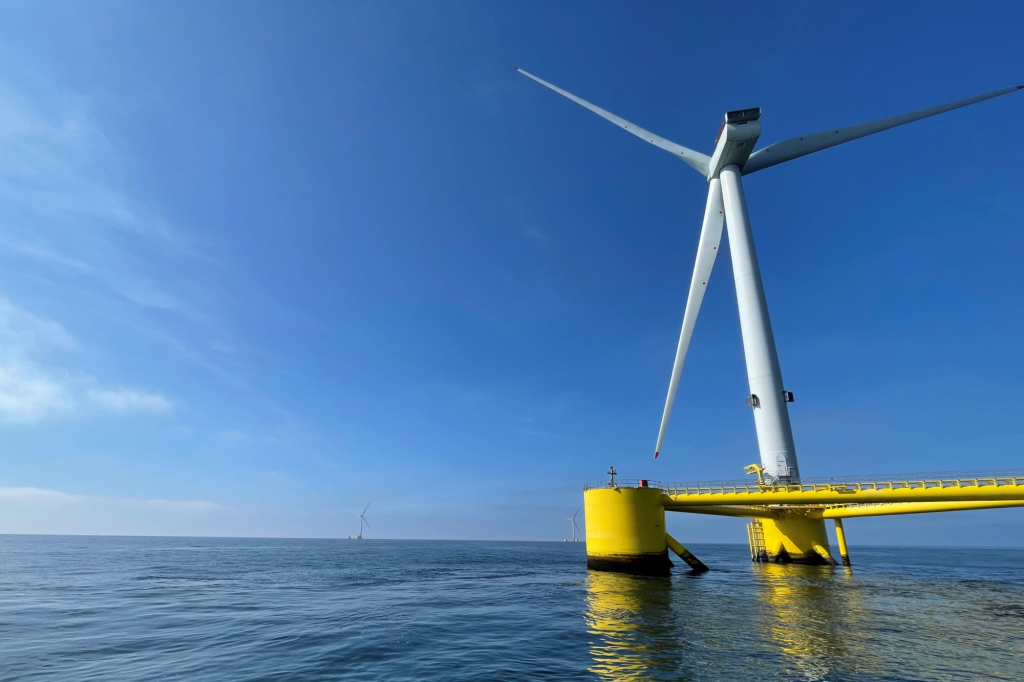

A new report highlights the potential of floating offshore wind farms to meet all of the UK’s electricity demands by 2050.
- The Floating Offshore Wind Taskforce outlines a plan to generate up to 40GW from floating turbines, sufficient for the UK grid and future electric demands.
- Employment and economic benefits could be significant, with projections of up to 97,000 jobs and contributions of £47bn to the economy by 2050.
- Challenges remain in infrastructure and cost reduction, with calls for government and industry collaboration to seize this opportunity.
- Scotland and Wales are poised to become key players, backed by government investments to secure industrial growth and energy advancements.
A recent report by the Floating Offshore Wind Taskforce has underscored the transformative potential of floating offshore wind technology in meeting the UK’s entire electricity demand by 2050. The report emphasises that these turbines can deliver up to 40GW of electricity, which could significantly contribute to the country’s energy needs, particularly with the anticipated rise in electric vehicle usage and the shift towards electric home heating.
In addition to energy generation, the report highlights the economic implications, projecting the creation of up to 97,000 jobs predominantly in Scottish and Welsh ports. These developments are expected to inject £47bn into the UK economy by not only developing local projects but also exporting advanced technology globally.
However, realising this potential hinges on overcoming significant challenges, particularly concerning ports’ manufacturing and assembly capacity. The UK’s advanced pipeline of floating projects is currently threatened by limited port capacity and heightened competition from European firms. Addressing these issues is essential to maximise the economic benefits of this burgeoning industry.
The report also stresses the importance of cost reduction through innovation and industrialisation. By leveraging economies of scale and supporting consistent market demand, the taskforce predicts a significant decrease in energy costs by 2030, with the potential to achieve a Contracts for Difference price beneath £100, marking a substantial reduction from 2024 prices.
Government commitments, particularly from Scotland and Wales, are pivotal to realising these ambitions. Scotland’s investment of up to £500m aims to strengthen the offshore wind supply chain, while Wales’s initiatives reflect the strategic importance of floating wind as a cornerstone of the UK’s future clean energy landscape.
The Floating Offshore Wind Taskforce’s vision presents a significant industrial and energy opportunity for the UK, conditional on strategic investments and effective collaboration.

