
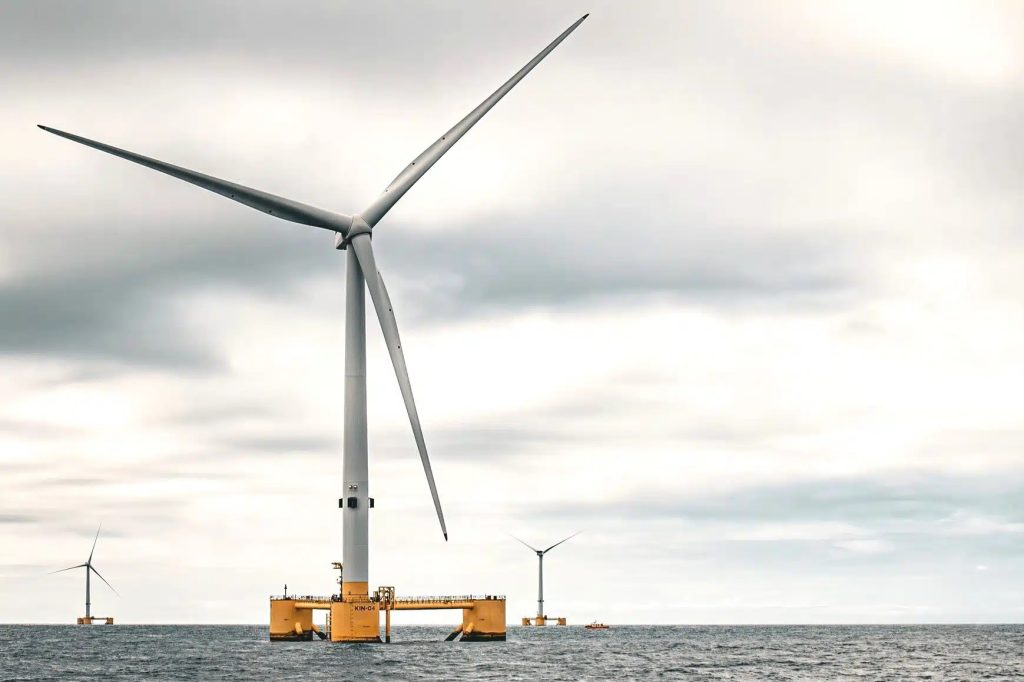

A new floating wind turbine project aims to decarbonise 20% of the Culzean oil and gas platform’s energy needs, marking a step towards sustainable energy in the North Sea.
- TotalEnergies has successfully won the bid to supply offshore wind energy to the Culzean platform through Crown Estate Scotland’s Intog leasing round.
- Culzean platform, located 230km off Aberdeen and a joint venture of TotalEnergies, BP, and Neo, will integrate this renewable energy source to reduce greenhouse gas emissions.
- The 3MW floating turbine is expected to become operational by the end of 2025, employing a design by Ocergy for cost efficiency and ease of assembly.
- Despite this effort in renewable energy, critiques arise regarding the continued facilitation of oil and gas extraction.
The Culzean oil and gas platform, situated 230km away from Aberdeen, is set to integrate renewable energy as part of a pilot project led by TotalEnergies. This initiative, part of Crown Estate Scotland’s Innovation and Targeted Oil & Gas (Intog) leasing round, seeks to incorporate renewable power sources to offshore platforms, effectively reducing their carbon footprints.
This platform, previously owned by Maersk Oil until 2018 and now operated by a consortium including TotalEnergies, BP, and Neo, has an impressive capacity of generating 105 thousand barrels of oil equivalent per day. By positioning a floating wind turbine 2km west of this robust facility, TotalEnergies aims to provide 20% of the electricity needs, which would thereby curtail greenhouse gas emissions significantly.
The floating wind turbine, a 3MW capacity unit set to be operational by late 2025, will utilise a modular semi-submersible floater hull designed by the company Ocergy. This design promises fast assembly and optimised costs. Nevertheless, it’s essential to highlight that downstream emissions remain unaffected as the extracted gas continues to serve international markets, being consumed as fuel where it releases further greenhouse gases.
Critics like Stuart Dossett from Green Alliance underscore that while such projects do help decarbonise energy inputs for oil platforms, they do not prevent the overarching issue of relying on fossil fuels. Dossett explains that true progress involves shifting entirely to renewable energy, rather than enabling further fossil fuel extraction, which remains a contentious topic as the world grapples with climate change.
Meanwhile, industry reports suggest that the UK oil and gas sector is making notable strides in emission reductions. OEUK’s chief executive, David Whitehouse, highlights the sector’s achievements in cutting upstream emissions by 28% since 2018, with even more impressive reductions in methane emissions. This progress not only meets but exceeds the North Sea Transition Deal’s targets ahead of schedule.
While the integration of renewable energy at Culzean presents a progressive step, its broader implications on fossil fuel reliance merit scrutiny.

