
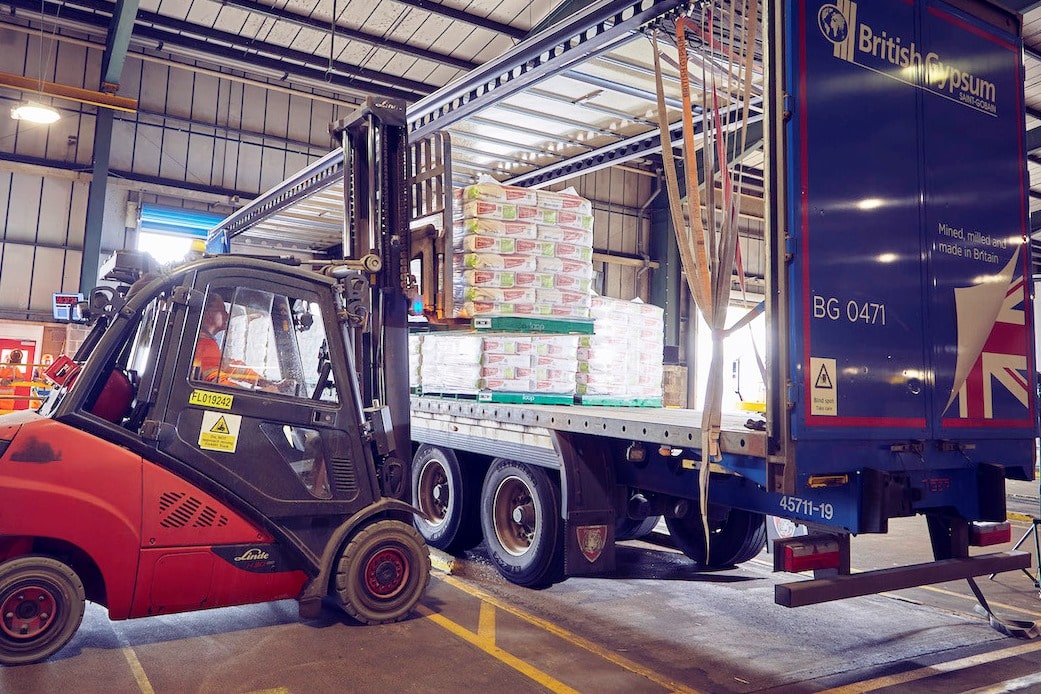

The introduction of reusable pallets with RFID technology marks a significant step forward in the construction supply chain.
- Over 30,000 green pallets have been shipped to British Gypsum’s plants, marking the initial phase of a nationwide distribution.
- The Pallet Loop’s initiative, beginning in 2020, aims at transforming pallet usage in the construction industry with a sustainable model.
- The programme employs a £4 return incentive per pallet, abandoning previous deposit-return schemes.
- Paul Lewis highlights the importance of industry-wide adoption for successful implementation.
In a notable advance within the construction sector, the deployment of reusable pallets equipped with radio-frequency identification (RFID) tags is underway. Over the past three weeks, more than 30,000 units, identified by their distinctive green hue, have been dispatched to British Gypsum’s bagged plaster facilities located in Barrow, East Leake, and Kirkby Thore. As these pallets are processed through British Gypsum’s infrastructure, they commence their journey to construction sites and merchant yards across the nation.
The Pallet Loop, in collaboration with Scott Pallets, has orchestrated this pioneering project as part of a joint venture established in 2020. This initiative signifies a potential shift towards sustainable practices in pallet usage within the construction supply chain. Despite initial setbacks, the programme has begun in earnest, offering a comprehensive solution that includes the collection, inspection, repair, and redistribution of these circular economy pallets. The transition from an initial deposit-return model to a more straightforward £4 return reward per pallet simplifies the process for participating businesses.
Underpinning this endeavour is the acquisition of Scott Group by BSW in December 2022, a move that consolidated the project under the ownership of the Austrian Binderholz group. Paul Lewis, one of the original initiators, continues to steer the project as managing director. His appeal to the construction industry emphasises the need for increased participation, citing that numerous builders’ merchants and contractors have already committed to the collection programme.
The shift to this new pallet system aligns with broader industry goals to reduce waste and promote eco-friendly practices. More than a million pallets are projected to be supplied over the next year, with British Gypsum leading the charge in adopting these sustainable methods for distributing plaster-related products. Lewis urges all involved parties to engage with the new system promptly, ensuring the pallets are returned efficiently to sustain their intended lifecycle.
This initiative has the potential to reshape the construction industry’s approach to sustainable pallet usage, fostering a circular economy.

