
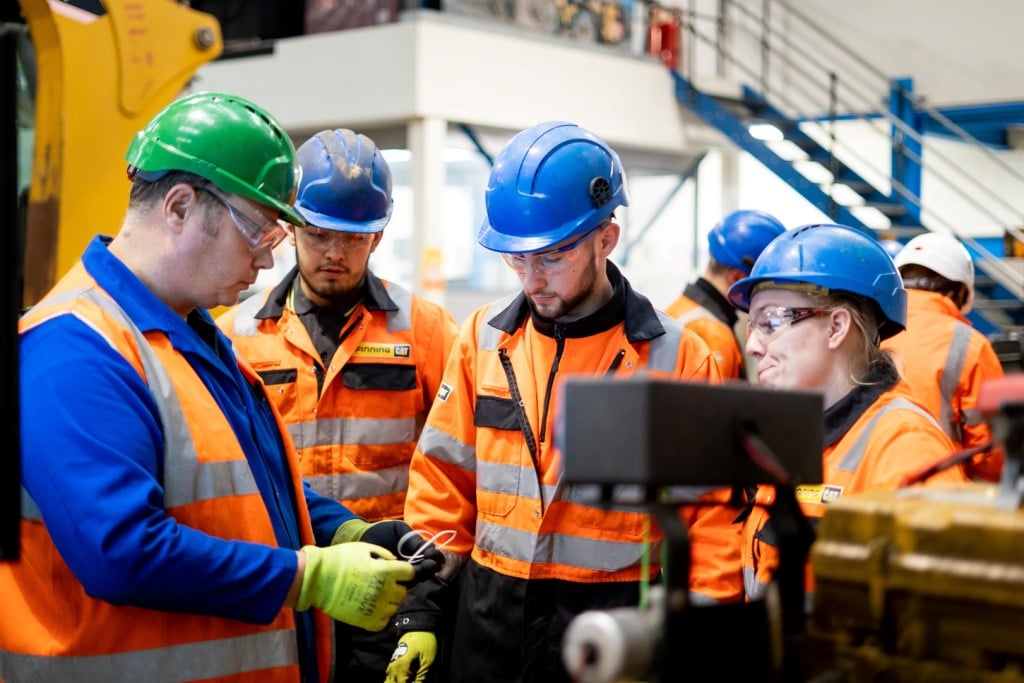

Finning UK’s apprenticeship academy has been awarded a ‘good’ rating by Ofsted, reflecting its effective in-house training approach and strong management.
- The academy, initiated in 2007, uniquely combines the roles of employer and educational institution, providing tailored training for aspiring engineers.
- Currently, 42 apprentices are being trained, focusing largely on land-based service and maintenance engineering, highlighting Finning’s commitment to skill development.
- Ofsted’s assessment acknowledged the academy’s comprehensive support, especially for apprentices with additional needs, ensuring equitable success across the board.
- Graduates from the programme have progressed to management roles, underlining the academy’s success in addressing industry skill shortages.
Finning UK’s apprenticeship academy has achieved a noteworthy ‘good’ rating from Ofsted, a testament to its innovative approach to in-house training and management. Since its establishment at the Cannock headquarters in 2007, the academy has seamlessly integrated the functions of employer and educator, setting a precedent in the industry. This dual approach has yielded significant benefits, particularly in nurturing engineering talent across the UK.
The academy currently enrols 42 apprentices, predominantly in the level 3 land-based service engineering technician course, and a smaller number in maintenance and operations engineering. This focus not only reflects Finning’s commitment to technical excellence but also addresses the pressing skills gap in the engineering sector.
Ofsted’s evaluation, focusing on several categories including quality of education and leadership, highlights effective communication as a core strength of the academy. Importantly, apprentices with additional needs have been noted to achieve outcomes on par with their peers, demonstrating the academy’s inclusive and supportive educational environment.
Graduates of the academy have transitioned into various management roles, both within and beyond engineering disciplines, showcasing the programme’s impact on career trajectories. The success is underlined by the national apprenticeship retention figures, where Finning significantly exceeds the average, securing long-term employment for its trainees.
The academy manager, Craig Smallman, himself a former apprentice, has articulated plans for future expansion. He emphasises a commitment to diversity, with an eye towards increasing female representation among apprentices. The age range of current students, from 16 to 53, further illustrates the academy’s broad appeal and adaptability within the evolving labour market.
Finning UK’s apprenticeship academy stands as a model for effective vocational training, exemplified by its Ofsted ‘good’ rating and successful alumni.

