
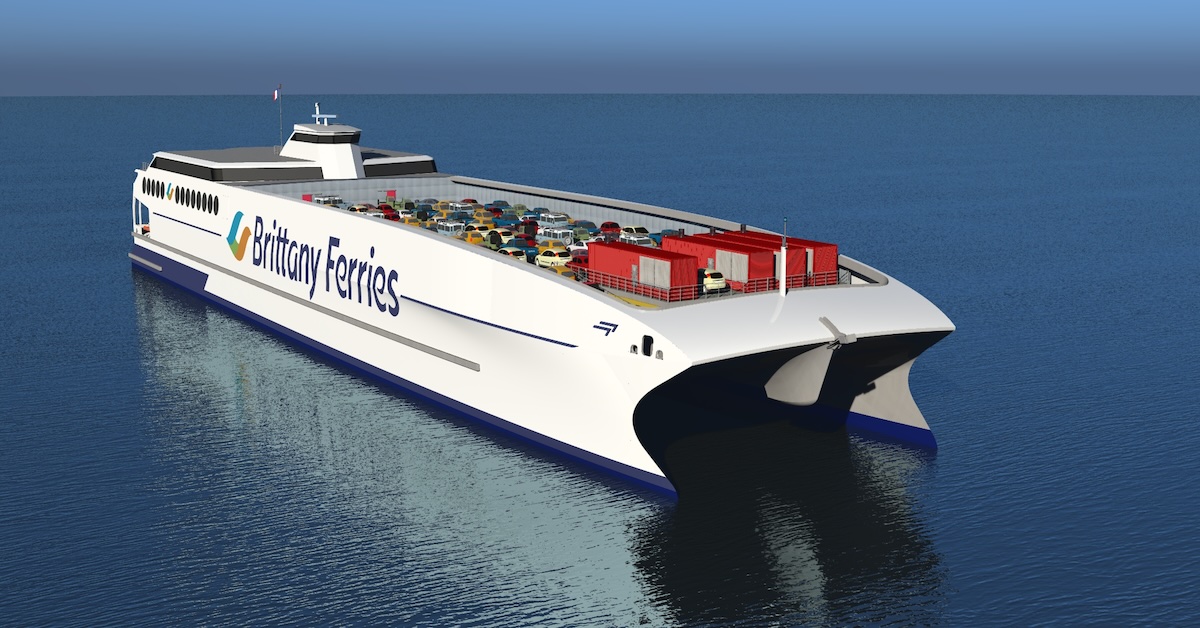

Brittany Ferries has begun exploring the potential for an all-electric ferry.
- The ferry would be a zero-emissions vessel for shorter routes.
- Collaborations are underway with Wartsila and Incat on technical plans.
- This initiative is part of Brittany Ferries’ broader sustainability goals.
- Brittany Ferries aims for net zero by 2050 with trusted partners.
Brittany Ferries is actively investigating the viability of launching an all-electric ferry, focusing on zero-emission capabilities specifically designed for shorter maritime routes. This ambitious venture highlights the company’s commitment to innovative and sustainable solutions in maritime transport.
The proposed ferry, measuring approximately 137 metres, will operate without emissions, reflecting a significant shift towards ecological responsibility in the maritime industry. Such a vessel could become a cornerstone for Brittany Ferries as part of their comprehensive sustainability strategies aimed at enhancing their fleet with zero-emission technology.
A collaboration has been established with marine engine manufacturer Wartsila and Tasmanian shipbuilder Incat to develop the designs and technical specifications necessary for the ferry. Both Wartsila and Incat are established leaders in maritime technology, bringing substantial experience and innovation to the project, ensuring the viability and success of this zero-emissions endeavour.
Wartsila is already a key supplier for Brittany Ferries, contributing liquified natural gas (LNG) engines to the fleet, thus marking a continued partnership towards improved environmental practices. LNG capabilities are already evident in vessels such as Salamanca and Santona, signifying Brittany Ferries’ continuous effort to adopt cleaner fuel alternatives while advancing towards an all-electric solution.
In addition to their efforts in LNG and hybrid propulsion, this latest project embodies Brittany Ferries’ aspiration to lead the industry towards more sustainable travel options. Chief executive Christophe Mathieu expressed, “This is an important project as we look at different ways to reach net zero by 2050.” The collaboration is expected to rapidly progress once essential feasibility assessments are completed.
Incat CEO Stephen Casey endorsed the project by stating, “We know that battery electric propulsion coupled with lightweight aluminium vessels is the ideal choice to eliminate emissions.” This endorsement underscores the innovative approach taken by Brittany Ferries in partnership with recognised leaders of the maritime industry.
Brittany Ferries’ initiative demonstrates a forward-thinking approach to achieving sustainable maritime transport by 2050.

