
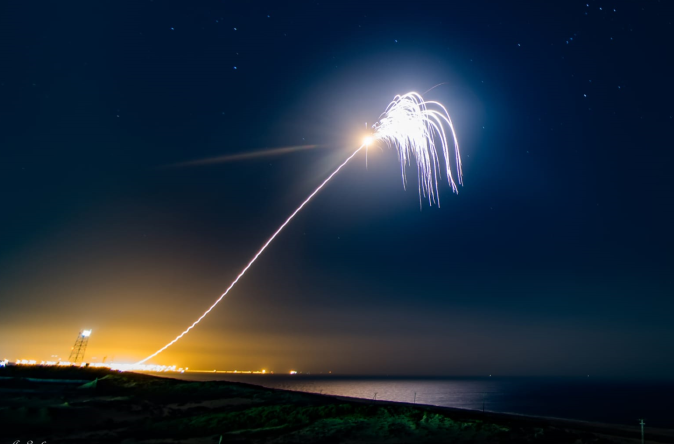

Israel’s Iron Dome has emerged as an emblem of technological innovation, fulfilling a vital role in missile defence amidst ongoing regional tensions.
This article explores the Iron Dome’s operational intricacies and evaluates its effectiveness in safeguarding civilian populations, while examining associated technologies and international collaborations.
Understanding the Iron Dome: Operational Mechanics
The Iron Dome represents a pivotal advancement in missile defence technology. This sophisticated system is designed to intercept and destroy short-range projectiles fired from neighbouring territories, a necessity given the volatile geopolitical climate Israel finds itself in. With its highly advanced radar, it can track and differentiate between missiles aimed at populated versus unpopulated areas, deploying interceptors only when necessary.
The functioning of the Iron Dome can be articulated through a structured process: upon the launch of an enemy rocket, the integrated radar detects and tracks the projectile’s trajectory. Should the calculated impact point lie within a populated region, interceptor missiles are rapidly deployed to neutralise the threat mid-air. The system’s batteries, scattered across Israel, contain multiple launchers for a robust defence reach.
The Genesis and Evolution of the Iron Dome
The roots of the Iron Dome can be traced back to the 2006 conflict with Hezbollah which saw massive rocket fire into Israel, resulting in significant destruction and loss of life. In its aftermath, there was a critical need for an advanced protective mechanism, culminating in the Iron Dome project. Initiated by Israeli entities Rafael Advanced Defense Systems and Israel Aerospace Industries, with essential support from the United States, this collaboration bore fruit in the early 2010s.
The technology underwent its inaugural operational test in 2011 during escalating tensions arising from the Gaza Strip, managed by Hamas since 2007. Successfully interdicting a missile, the Dome marked the beginning of a new era in regional defence strategy, signifying a breakthrough in military technology.
Evaluating Iron Dome’s Performance and Economic Considerations
With a celebrated success rate of 90%, the Iron Dome has been heralded as a crucial shield for the citizens of Israel. However, the system is not without its shortcomings. The efficacy of the Dome diminishes when overwhelmed by a deluge of multiple rockets, as occasionally witnessed.
Despite Iron Dome’s lauded effectiveness, there are inevitable instances where some rockets penetrate the defence grid, underscoring areas for improvement. Additionally, criticisms often focus on the heavy economic burden, exemplified by the interceptor costs estimated at $40,000 per missile. This financial strain is exacerbated during protracted hostilities, necessitating fiscal prudence.
Alternative Technologies: The Emergence of Iron Beam
A noteworthy addition to Israel’s defence repertoire is the Iron Beam, a directed-energy weapon aimed at augmenting the existing defence framework. Developed by Israeli’s Rafael Advanced Defense Systems, the Iron Beam serves as a potent countermeasure against short-range threats including mortar attacks and UAVs, utilising destabilising laser technology.
This pioneering system boasts economic efficiency, offering considerably reduced operational costs relative to traditional interceptor missiles. Its capacity for unlimited firings without the logistical drawback of ammunition resupply further cements its strategic value in a cost-conscious defence landscape.
Introduced at an international forum in Singapore in 2014, the Iron Beam showcases the innovative direction of Israeli defence technology, aiming to bolster security measures against looming threats. The timeline for its full integration remains under development but reveals an assertive approach to imminent dangers.
International Alliances and Prospective Developments
Demonstrating the global importance of the Iron Dome, the United States has exhibited steadfast support for Israel’s defensive measures. Part of this support includes the transfer of two complete operational Iron Dome batteries to Israel, signifying a vital partnership aimed at reinforcing regional security.
Such international cooperation underscores the necessity for continued advancement and collaboration in missile defence technologies. The strategic alliance with the US not only enhances Israel’s defence capabilities but also marks a collective step towards safeguarding civilian populations worldwide.
The advancement of missile defence technologies such as the Iron Dome underscores the importance of innovative military strategies in contemporary conflict resolution. It illustrates a capacity to shield civilian areas from hostile attacks effectively, though not without room for further development. The balance of economic costs and technological improvements remains a core consideration for the future.

