
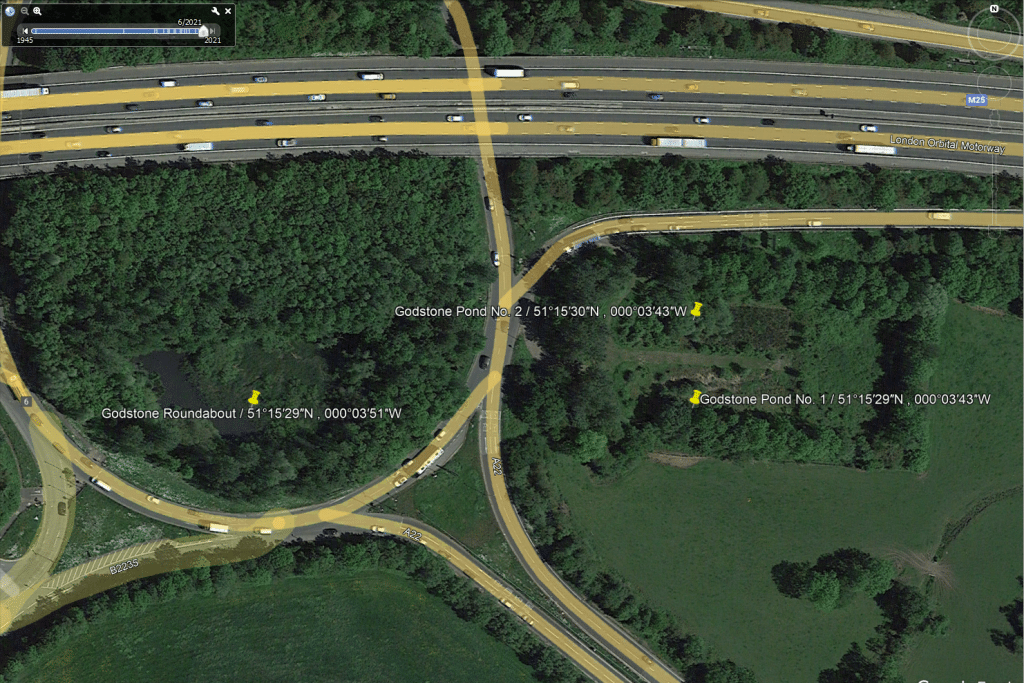

An ongoing debate has arisen over the maintenance of the M25’s runoff ponds, with National Highways asserting they are not overdue for upkeep. The claim stems from a Freedom of Information response, which highlighted discrepancies in maintenance records. Jo Bradley, a waterway health expert, strongly contested the authority’s position. Evidence suggests vegetation overgrowth in some ponds, indicating long-term neglect. The issue raises broader concerns about environmental protection and infrastructure maintenance priorities.
National Highways, overseeing the strategic road network including the M25, maintains that the runoff ponds, crucial for water and pollution management, are not overdue for maintenance. Despite visible sediment accumulation, the authority insists that the ponds have been consistently inspected every two years, aligning with the Routine and Winter Service Code. According to their protocol, a condition score is assigned to each pond, determining the necessity for de-silting within a year.
In a Freedom of Information request, National Highways acknowledged responsibility for 94 runoff ponds around the M25 alongside 54 interceptors designed to capture oil and sediment. However, they only could provide maintenance dates for seven ponds, with the remainder deemed “not yet required” for sediment removal. This ‘not yet required’ status implies no immediate intervention is needed, as the ponds continue to function effectively in preventing downstream contamination.
Jo Bradley, a director at Stormwater Shepherds, disputes these claims, pointing to aerial images and personal visits that reveal thick vegetation and sediment buildup, particularly at sites like Blackdale Fann Pond and Beggars Lane. “I massively dispute that statement,” Bradley remarked, emphasising the visible sediment at water levels and the consequent formation of “toxic ponds.” She advocates for enhanced treatment measures and incremental sediment removal to restore ecological balance.
Bradley explained the critical sedimentation issue that reduces the calculated volume of these ponds, undermining their capacity to mitigate flood and pollution. She noted that excessive sediment compromises the ponds’ design to maintain water over designated periods, thereby diminishing downstream water quality improvements. The analogy of “filling half your bath with sand” was used to illustrate how reduced water capacity affects functionality.
National Highways also admitted to lacking inspection and maintenance data pre-dating 2009, due to the 30-year Private Finance Initiative contract with Connect Plus for managing the M25’s drainage features. This data gap raises concerns about long-term accountability and maintenance practices. Nevertheless, National Highways reaffirmed their commitment to improving water quality, outlining a high-level programme targeting high-risk outfalls by 2030.
The controversy underscores the importance of effective and transparent infrastructure maintenance to safeguard environmental health.

