
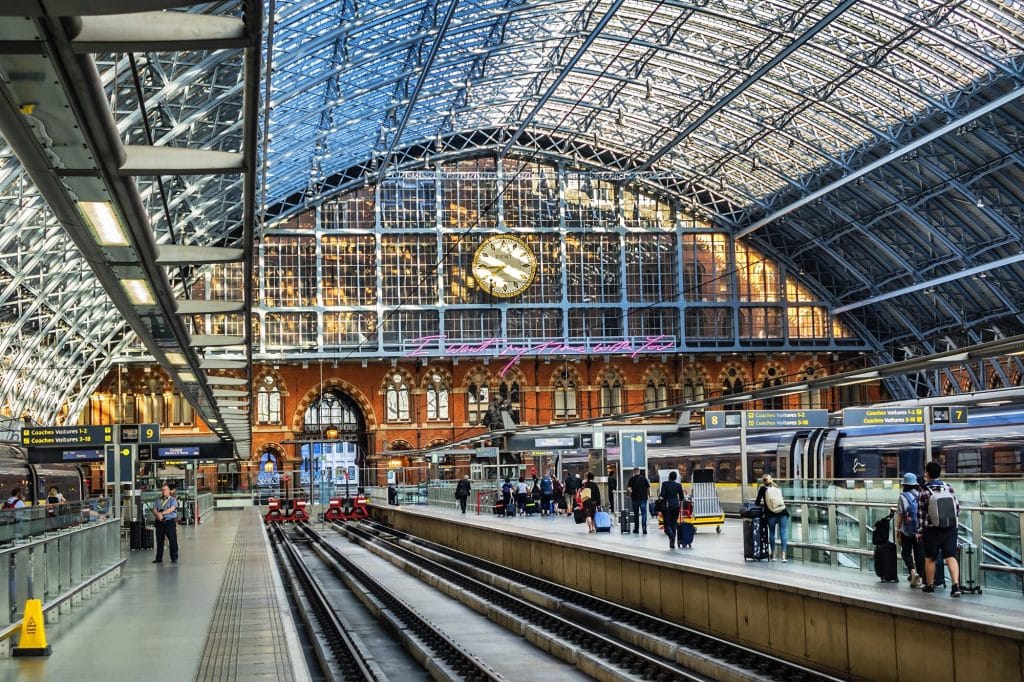

An in-depth study has been commissioned to explore expanding St Pancras International Station.
- High Speed 1 Ltd (HS1 Ltd) has appointed Agency Active Thinking for this task.
- The study responds to growing international rail travel demands.
- Eurostar plans to expand from 19M to 30M annual passengers by 2030.
- The study will optimise station infrastructure and assess expansion feasibility.
As international travel demands rise, St Pancras International Station is poised for potential expansion. High Speed 1 Ltd (HS1 Ltd) has taken an assertive step by commissioning a detailed study to examine avenues for increasing the station’s capacity. This initiative, spearheaded by the expertise of Agency Active Thinking, aims to ensure that the station can accommodate future passenger volumes.
Several companies have expressed interest in launching international train services, creating a competitive and dynamic environment. This interest aligns with Eurostar’s ambitions to increase annual passenger numbers significantly, from 19 million to 30 million by 2030. Such growth underscores the pressing need to enhance St Pancras International’s capabilities to handle more services efficiently.
The study will follow a meticulous three-step approach, first evaluating how the existing station infrastructure can be optimised to handle current demands. The following steps focus on accommodating future passenger growth and a thorough examination of expansion costs and impacts. Through innovative designs and technological advancements, the aim is to streamline passenger movement, enhancing the overall travel experience.
HS1 Ltd’s decision to instigate this study follows a remarkable 22% year-on-year increase in Eurostar’s international passenger numbers, with routes covering major cities like Paris, Brussels and Amsterdam. This surge reflects a robust recovery in international rail travel post-pandemic, reinforcing the necessity for strategic planning and infrastructure development at St Pancras.
Active Thinking was selected through a competitive tender process, bringing together a team with notable experience in transformative projects such as Heathrow Terminal 5 and the 2012 Olympics. Their expertise is expected to bring vital insights into adapting transport infrastructure for sustainable growth, while preserving the station’s historical significance.
Richard Thorp, Engineering Director of HS1, emphasised the ambition to boost capacity, noting, “To cater for the growing number of people wanting to travel by train, HS1 has ambitious plans to boost capacity at St Pancras Station.” This sentiment is echoed by Charles Brindley, Active Thinking’s experience and spatial designer, who highlighted the team’s ability to prepare the station for increasing European travel demand.
Eurostar’s Chief Safety and Stations Officer, Simon LeJeune, reiterated Eurostar’s future-focused vision, stating, “Ensuring there is room to provide a fantastic customer experience at St Pancras long into the future is key to these plans.” This emphasises the necessity of current and continuous infrastructural enhancements to meet anticipated passenger growth.
The study at St Pancras International aims to strategically align expanding rail services with increasing passenger demands.
