
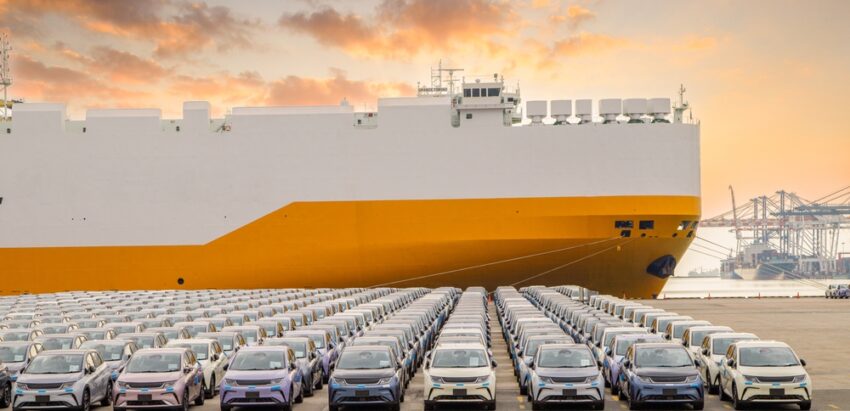

The European Union has voted to implement tariffs on Chinese electric vehicles, with rates reaching up to 35%.
This decision, however, met robust resistance from Germany, a key player in the EU and automotive industry.
EU’s Decision to Impose Tariffs
The European Union has taken a firm stance against what it perceives as unfair competitive practices by Chinese electric vehicle manufacturers. In a decisive vote, the EU has approved tariffs rising to 35% on certain Chinese electric vehicles, a measure proposed to counteract the alleged subsidies that these manufacturers receive from the Chinese government. This move is intended to level the playing field for European automotive manufacturers.
German Opposition to the Tariffs
Germany has expressed significant opposition to the EU’s tariff decision. As the EU’s largest economy and a central player in the automotive sector, Germany is concerned that these tariffs could initiate a costly trade war, threatening its economic interests.
BMW CEO Oliver Zipse warned that the tariffs send a “fatal signal” for the European car industry. He advocates for diplomatic discussions to resolve the issue, underscoring the potential harm a trade conflict could inflict on both the EU and China.
The Division in Europe
The decision to impose tariffs has been divisive within the EU itself. While France, Italy, and Poland have backed the tariffs, twelve member states, including Spain, chose to abstain from the vote.
Contrastingly, countries like Hungary and Slovakia joined Germany in voting against the measure, highlighting the complex dynamics within the Union. This division signals challenges ahead for EU unity on economic policy.
The potential impact on intra-European relations and on global trade dynamics is significant, requiring careful navigation by EU officials in the coming months.
Chinese Response and Implications
China has responded with its own set of retaliatory measures, notably imposing tariffs on European brandy, a significant export for French producers such as Hennessy and Remy Martin.
The Chinese Ministry of Commerce has labelled the EU’s tariffs as protectionist, urging a return to what it states as “the right track” for international trade. This rhetoric indicates the growing strain on EU-China relations.
Further, China has initiated investigations into European pork and dairy products, signalling broader economic repercussions that could extend beyond the automotive sector.
Potential Economic Consequences
The imposition of tariffs by the EU could have wide-ranging economic consequences. European car manufacturers may face increased competition as Chinese firms potentially establish production facilities within the EU to circumvent tariffs.
The current scenario could drive a boost in foreign direct investment and industrial diversification within Europe. However, the prospect of a wider economic retaliation from China looms large over these gains.
Should a trade war escalate, the impact on the global supply chain and the broader market dynamics could be profound, necessitating strategic planning from stakeholders across various sectors.
Path Forward and Negotiations
EU diplomats are actively seeking a diplomatic resolution with China to avoid a full-fledged trade war. The EU has until the end of the month to continue negotiations and potentially revise the tariffs downward.
The strategic aim is to secure a compromise that satisfies both European and Chinese interests, recognising the intertwined nature of their economic relationships. Diplomacy will be crucial to prevent further escalation.
The potential for reaching an agreement remains, but the timeline is tight, and economic pressures are mounting on both sides.
Looking Ahead
The global trading environment is at a crossroads, with the EU’s tariffs on Chinese electric vehicles marking a pivotal moment. The coming weeks will reveal if diplomacy can triumph over conflict.
As tensions simmer, the need for diplomatic negotiation between the EU and China is more urgent than ever.
Both parties must seek resolutions to avoid further damage to their economic ties.

