
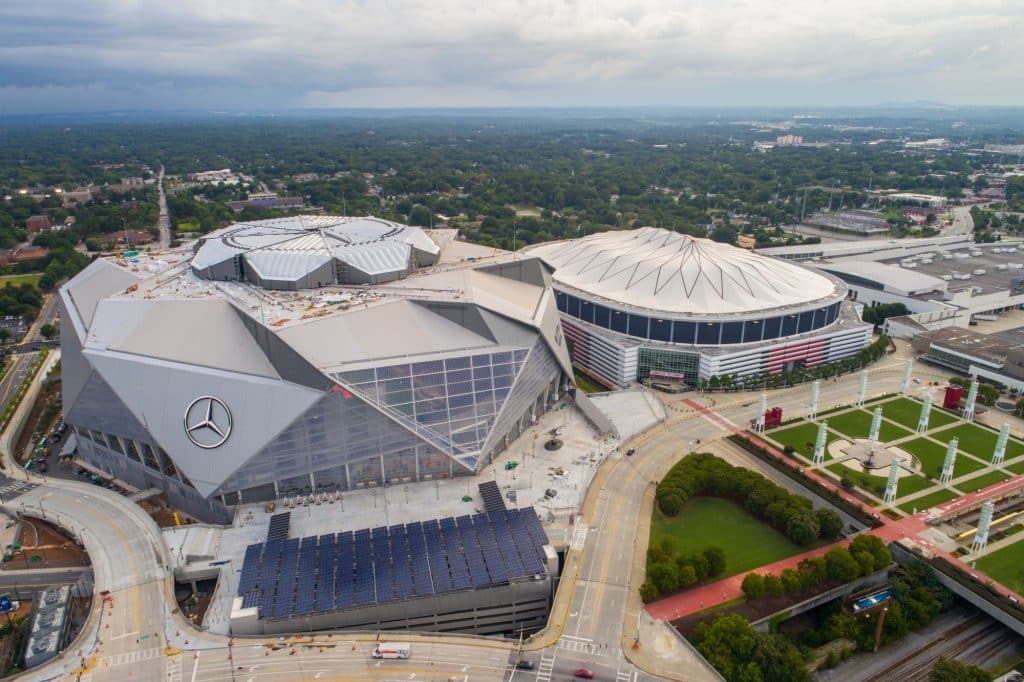

A revolutionary report advocates for the transformation of sports venue engineering to tackle sustainability and accessibility challenges, illuminating the path for future advancements.
- The global sports sector contributes significantly to carbon emissions, urging a rethink of construction and maintenance practices.
- Innovation with sustainable materials and designs during major events like the 2024 Paris Olympics sets a precedent for carbon-neutral initiatives.
- Flexibility in venue strategies, like temporary structures, may reduce the environmental footprint while accommodating diverse sporting needs.
- Enhancing inclusivity in sports venues through integrated design approaches and advanced technologies is pivotal for future developments.
The recent surge in environmental awareness highlights that the global sports industry is responsible for around 350Mt of carbon equivalent emissions, stemming significantly from operational activities and stadium construction. This realisation prompts a critical evaluation of current engineering practices. Sports venues must target emission reductions throughout their entire value chain, addressing scope 3 emissions beyond just energy procurement. Large venues are encouraged to leverage their purchasing influence to steer the decarbonisation of supply chains, assisting smaller venues in parallel efforts. A collaborative approach between governments and sports organisations can incentivise sustainable travel modes to these venues, as exemplified by the carbon-neutral commitments of the 2024 Paris Olympics.
The report draws attention to innovations applied during the Paris 2024 Olympics, including zero-carbon materials such as bio-based hockey turfs and recycled materials for athletics tracks, showcasing the potential to halve greenhouse gas emissions. Such technology sets a critical benchmark for future events, underscoring the need for industries to adapt and integrate sustainable practices.
A strategic recommendation from the report suggests adopting flexible venue strategies that maximise current structures and curb the rush to build new ones. The demountable Stadium 974 in Qatar epitomises this strategy, serving as a model for how temporary and portable venues could meet ecological requirements while supporting multiple sports demands. Although design compromises in multi-sport venues may arise, the advancement of moveable pitches signals an innovative resolution to this challenge.
In addressing accessibility, the IMechE report proposes a consistent framework for sports venue design that incorporates thermal comfort standards tailored to diverse demographics. Advanced technologies, such as sensors and AI, play a crucial role in refining these standards, thus enhancing the spectator and athlete experience alike. Additionally, engaging disabled communities in design processes ensures inclusivity in seat arrangements and navigational ease within venues.
Transparency and accountability also stand out as essential factors for sustainable sports venue development. Governments are encouraged to work alongside the sporting sector to enforce rigorous requirements, guiding new constructions toward net-zero ambitions and existing venues toward daily operational sustainability. Increasing the visibility of certified sustainable venues and advocating for targeted research funding further galvanises this initiative.
Statements from influential figures like Mott MacDonald’s Ruth Shilston, emphasize the urgent responsibility engineers have towards creating sports venues that are not only inclusive and sustainable but also resilient against climate change. Meanwhile, comments from the Football Supporters’ Association underscore the vital role spectators play in the atmosphere of sporting events, stressing that fan considerations in stadia design are as crucial as structural elements.
The engineering of sports venues stands at a crossroads of sustainability and inclusivity, demanding forward-thinking solutions to safeguard the future of global sports.

