
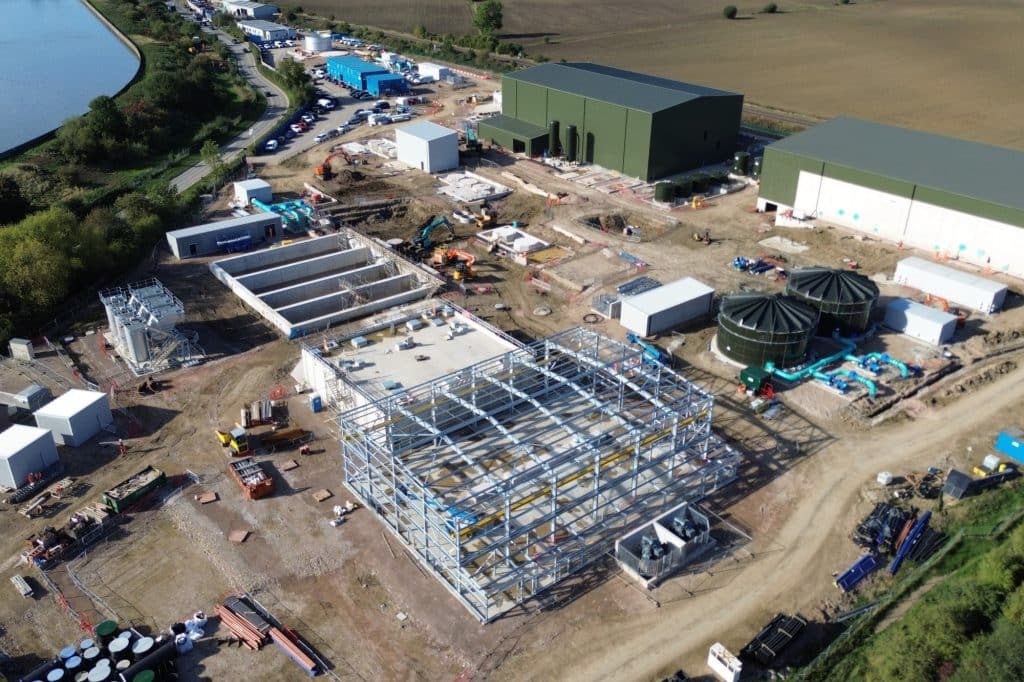

Severn Trent Water’s major project in Derbyshire progresses efficiently using digital tools to streamline construction.
- The Witches Oak facility is part of a £566M initiative to provide clean water to 224,000 households, promising enhanced water supply reliability.
- Digital tools including 3D models have significantly boosted efficiency and safety, reducing build time while facilitating detailed project management.
- Innovative ceramic membrane technology is central to the plant, ensuring high-quality water through improved filtration methods.
- The project expects to commence water supply by May next year, with final completion projected for December 2025.
Severn Trent Water has introduced a pioneering project in Derbyshire, designed to bolster water supply for approximately 224,000 households. This initiative is part of the company’s expansive £566 million Green Recovery Programme. The Witches Oak Water Treatment Works aims to provide an average of 65 million litres of clean water per day, enhancing the resilience of the Derwent Valley aqueduct, crucial for the East Midlands.
The construction of the facility is progressing well, with significant strides made in civil construction and ongoing advancements in electrical and mechanical installations. Importantly, the high voltage network was successfully energised in October. MWH Treatment, a constituent of the RSK Group, has been entrusted as the principal contractor. Their expertise, drawn from previous projects like the Church Wilne water treatment, has been pivotal in enhancing efficiency from design through to commissioning.
A noteworthy aspect of the project is the extensive application of digital tools. Technologies such as 3D models and 4D rehearsals are employed not only to expedite construction processes but also to improve safety measures. The use of digital inspection and test plan field management further underscores the project’s commitment to safety and efficiency. Project director Richard Thomson highlights the transformative potential of these tools, stating that such innovations allow for a comprehensive understanding of construction sequencing, thus optimising schedules.
Richard Thomson also points out a substantial saving in costs achieved through the project’s approach to sludge management and cleaning systems, amounting to £7.4 million and £1.6 million respectively. These savings have been reinvested to strengthen process resilience and mitigate risks, marking a strategic reallocation of resources to enhance overall project outcomes.
Central to the plant’s operation is the ceramic membrane technology, known for its ability to effectively remove pathogens and other impurities from water. This advanced filtration technology promises high-quality water output with benefits such as superior fouling resistance and easier maintenance. Extensive pilot trials have confirmed the design parameters, ensuring the system’s robustness and reliability.
In preparation for the plant’s commissioning phase, engineers from MWH Treatment are providing comprehensive training to Severn Trent Water’s operators. This training is crucial to meeting the stringent quality standards set by the Drinking Water Inspectorate. A new high-voltage power supply from the National Grid is also set to enhance water supply reliability.
As the project moves towards its next phase, the integration of two raw water balance tanks will aid in managing flow from Witches Oak lakes and the River Derwent. This system facilitates blending and control as water is prepared for treatment. Ancillary works by various RSK Group companies, such as landscape appraisal and specialist surveys, underpin the project’s comprehensive approach.
The Witches Oak facility exemplifies a forward-thinking approach to water management, leveraging modern technology and strategic resource allocation to enhance efficiency and reliability.

