
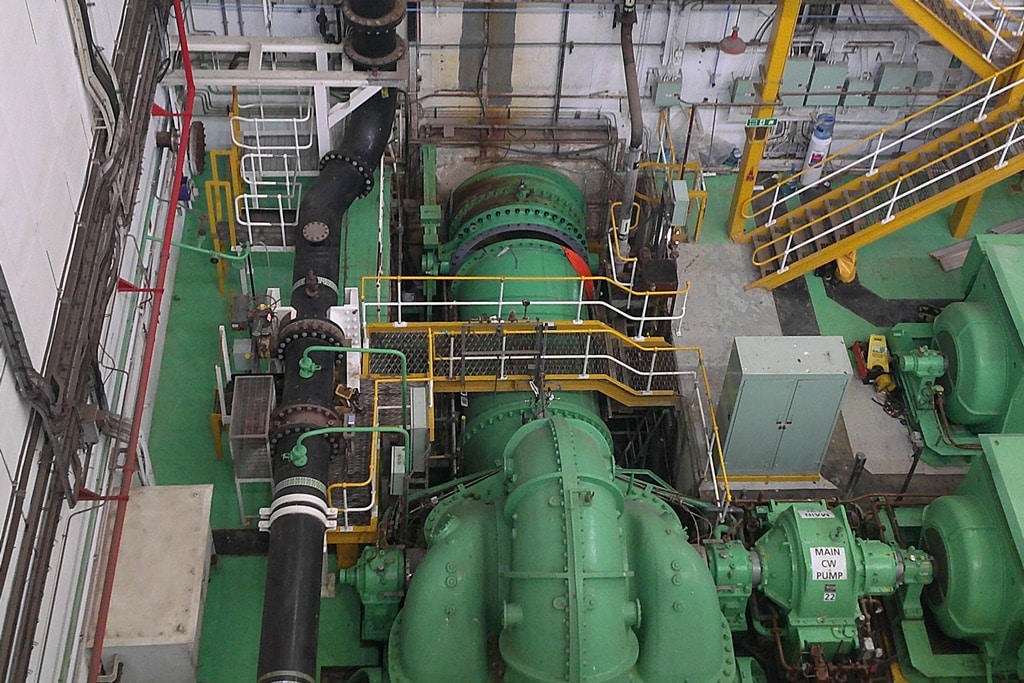

EDF and Trillium Flow Services faced significant fines following a severe accident at Dungeness B power station.
- A scaffolder was seriously injured when a two-tonne counterweight fell from a cooling water pump.
- The regulatory body identified serious safety failings by both companies involved.
- The Office for Nuclear Regulation prosecuted EDF and Trillium under health and safety legislation.
- Both companies admitted to failing to ensure worker safety, resulting in hefty fines.
In a recent legal decision, EDF and Trillium Flow Services Ltd were held accountable for a serious safety incident at the Dungeness B power station. The incident involved a scaffolder, Colin Dell, who suffered severe injuries due to a falling counterweight while performing maintenance activities. The accident occurred on 13th June 2022, highlighting significant oversights in safety protocols at a sensitive nuclear site.
The scaffolder was engaged in routine work near the main cooling water discharge valves when the accident happened. A hydraulic ram, crucial for supporting the heavy counterweight, was missing. This omission led to the counterweight falling, injuring Mr Dell and trapping him momentarily. The injuries sustained were severe, resulting in hospitalisation and long-term consequences for Mr Dell, who has been unable to return to scaffolding and now suffers from post-traumatic stress disorder.
The Office for Nuclear Regulation (ONR) launched an inquiry following the accident, underlining the severity with which the nuclear sector views safety issues. The prosecution was based on breaches of the Health and Safety at Work etc Act 1974. It was found that both companies had a role in the mishap, specifically noting that the absence of a safety-critical component – the hydraulic ram – was a straightforward but catastrophic error.
EDF and Trillium were found to have made serious errors, both operationally and managerially. ONR’s investigation spotlighted the lack of proper sequence adherence during the reinstallation of the valve, alongside a history of similar incidents at the site that seemingly provided no learning curve. This lack of foresight and preparedness resulted in fines amounting to £533,333 for EDF and £100,000 for Trillium, along with additional prosecution costs for each.
Dan Hasted, the ONR director of regulation, pointed to ‘significant shortcomings’ in the procedures followed by both companies. He emphasised that these missteps led to the serious injuries sustained by Mr Dell. The conclusions drawn by the ONR were that both firms failed to uphold adequate safety practices and placed workers at unnecessary risk.
In particular, EDF faced criticism for repeated patterns of safety neglect, drawing parallels with a past incident in 2006 that illustrated a concerning trend. Similarly, Trillium’s involvement was marked by inadequate risk assessments and a team ill-prepared for the complexities of working at such a critical facility. The shortcomings were not just technical but extended to decision-making and planning.
After the court proceedings, both companies acknowledged their failings and cooperated with the investigation. The accident, though lacking radiological implications, prompted robust regulatory scrutiny to ensure worker safety is prioritised in all future operations at nuclear sites.
The fines imposed on EDF and Trillium underscore the vital importance of rigorous safety measures in the nuclear industry.

