

EasyJet is on a mission to reshape perceptions in aviation.
A new survey reveals children hold gender-biased views about pilots.
Survey Reveals Deep-Rooted Stereotypes
Recent research by a budget airline has illuminated persistent gender stereotypes among primary school children. The survey indicated that 52% of children believe that the role of a pilot is inherently male. Such views are echoed by more than half of the parents surveyed, demonstrating a generational persistence of these misconceptions.
Children’s Perceptions Shaped Early
The poll revealed that by the age of 11, nearly half of the children have already developed firm opinions about their career prospects. These perceptions are often limited and influenced by societal stereotypes, as evident in the responses regarding gender roles in aviation.
EasyJet’s Commitment to Change
EasyJet is actively working to shift these entrenched stereotypes by launching initiatives aimed at inspiring young minds. The airline proudly states that 7.5% of its pilots are women, a figure significantly higher than the UK industry average. Captain Rebecca Epton highlights the importance of providing visible female role models in aviation.
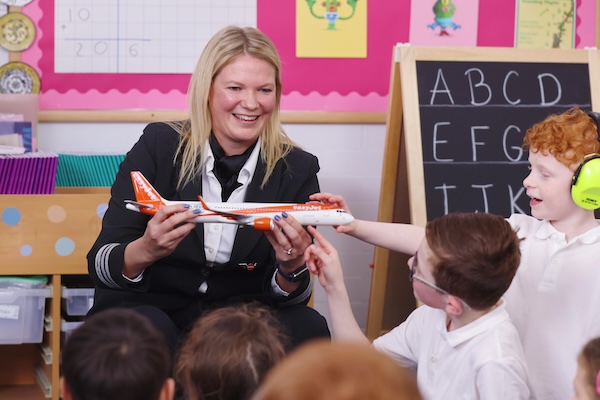
Through school visits conducted by its pilots, EasyJet is breaking down barriers and providing inspiration to future generations. These efforts are part of a longstanding commitment to fostering diversity and encouraging more females to pursue careers in aviation.
The Role of Female Pilots as Role Models
Female pilots are playing a crucial role in dismantling outdated gender norms. By visiting schools, they provide tangible examples of professional success to young girls. Such interactions are invaluable in shaping the aspirations of children, showing them that women can excel in roles traditionally dominated by men.
Capt. Rebecca Epton’s visit to St Albans serves as an eye-opener for many students. She underscores the significance of these encounters, stating, “This research clearly shows children are still forming opinions on the jobs available to them at a very young age, with views still reflecting outdated gender stereotypes.”
The presence of female pilots at school events directly challenges the visible lack of female representation in aviation. This initiative not only inspires young girls but also educates boys, fostering an inclusive future workforce.
Parental Influence and Misconceptions
The survey exposed that outdated stereotypes are not only held by children but are often reinforced by parents. 59% of parents acknowledge the misconception that piloting is a male-exclusive profession. Addressing these beliefs is crucial in shaping a balanced perspective for future generations.
Parental guidance plays a pivotal role in children’s career perceptions. By aligning parental views with modern realities, the potential to guide children towards more diverse career paths is significantly enhanced.
A Continued Effort Towards Diversity
EasyJet’s dedication to increasing the number of female pilots goes beyond school visits. The airline is committed to ensuring an inclusive recruitment process and providing equal opportunities for all aspiring pilots. This long-term strategy aims to create lasting change in the industry.
Alongside other industry actions, EasyJet’s initiatives are poised to make a significant impact on gender diversity in aviation. The company’s proactive approach signifies a move towards a more equitable future in the field.
Ultimately, EasyJet’s mission extends beyond immediate changes. It seeks to cultivate an environment where aspirations are not hindered by outdated stereotypes, and where gender diversity is the norm rather than the exception.
The Importance of Early Education
Educating children at a young age about diverse career possibilities is essential. EasyJet’s pilot visits are part of a broader effort to integrate this mindset into early education, challenging stereotypes before they solidify.
This approach not only benefits the aviation sector but also sets a precedent for other industries. Encouraging diversity and inclusion from a young age prepares children to enter a workforce that values equality and varied perspectives.
EasyJet’s initiatives aim to inspire future generations.
Efforts include school visits and promoting female role models.

