
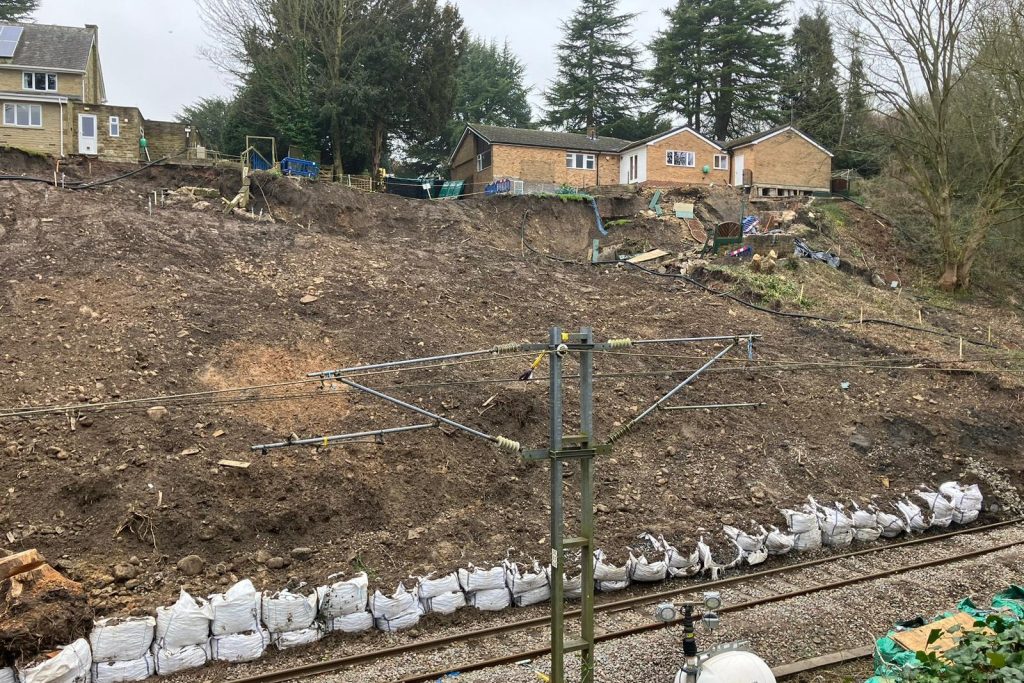

Reports highlight a significant rise in high-consequence earthworks failures on Britain’s railways, marking the highest rate since 2008.
- These failures are primarily linked to extreme weather conditions, exacerbated by climate change, posing challenges to the rail network.
- The regulator’s annual report criticises Network Rail’s monitoring and maintenance efforts despite substantial investments.
- Recommendations from previous crash investigations underscore the need for improved infrastructure resilience.
- New strategies are underway to bolster network defences against increasingly unpredictable weather patterns.
The Office of Rail and Road (ORR) has disclosed that the frequency of high-consequence earthworks failures on Network Rail’s infrastructure is presently at its peak since the tracking of this metric began in 2008. Such failures are predominantly linked to adverse weather conditions, particularly heavy rainfall, illuminating the critical role of effective drainage and infrastructure maintenance.
Despite an investment of £33 million during the Control Period 6 (2019-2024) to enhance remote monitoring capabilities, only a fraction of landslips were detected via these systems. The ORR’s report has been critical of Network Rail, highlighting insufficient knowledge and maintenance of drainage assets.
In light of past incidents, including the tragic Carmont derailment, the ORR has continued to urge Network Rail towards establishing better maintenance practices and addressing system weaknesses. The deaths resulting from this accident have been labelled a ‘watershed moment for rail safety,’ emphasising the necessity of robust infrastructure to ensure passenger and staff safety.
Network Rail has responded by outlining its future strategies in Control Period 7 (CP7), focusing heavily on weather resilience. Plans include enhanced drainage systems, the recruitment of nearly 400 additional engineers, and the development or refurbishment of extensive infrastructure to withstand extreme weather impacts.
Climate projections from the Met Office signal a forthcoming increase in severe weather events, with hotter summers and wetter winters. Consequently, Network Rail is installing additional sensors and upgrading drainage systems to mitigate the risks posed by these changes.
The rising challenges to Britain’s rail infrastructure demand immediate attention and action to ensure safety and resilience.

