
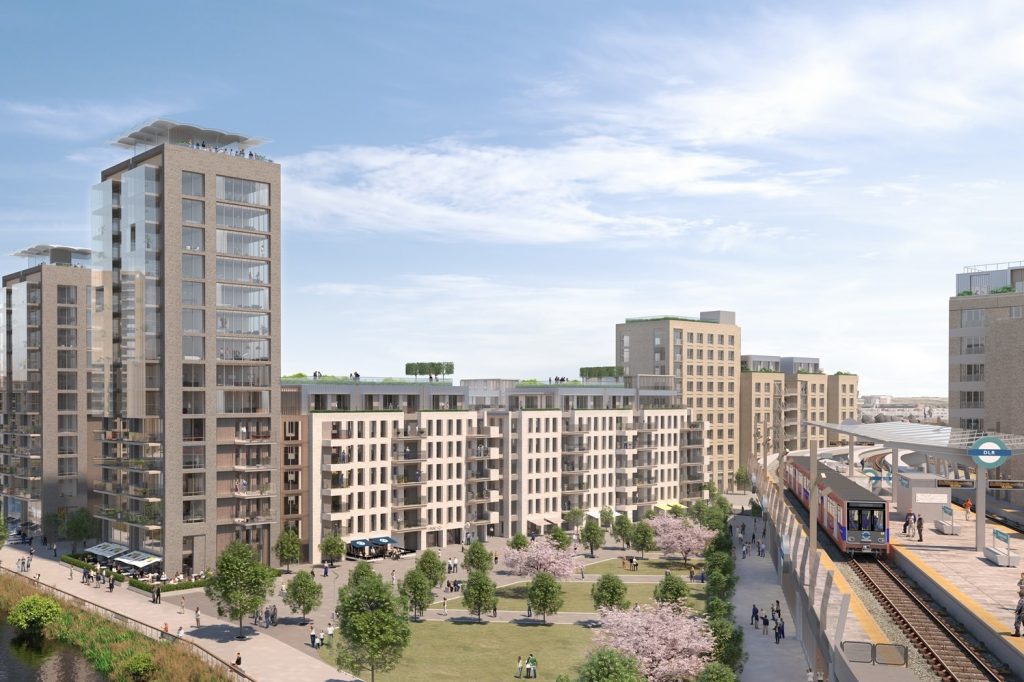

Transport for London (TfL) moves forward with plans to extend the Docklands Light Railway (DLR) from Beckton Riverside to Thamesmead.
- Public consultation revealed significant support, with 75% of respondents favouring improved connections in east and southeast London.
- The proposed extension includes a new station at Beckton Riverside and a tunnel under the River Thames linking to Thamesmead.
- Funding and financing strategies are being developed to address the project’s current unfunded status, aiming for completion by the early 2030s.
- Potential future expansions beyond Thamesmead are under consideration, although the immediate focus is on this initial extension.
The Docklands Light Railway (DLR) extension from Beckton Riverside to Thamesmead is poised to progress to its next phase after receiving overwhelming public support. Transport for London (TfL) reported that during the consultation, a notable 75% of participants expressed strong support for the enhanced connectivity this extension would bring to east and southeast London. This widespread approval underscores the community’s demand for improved transport links.
The planned extension will see the construction of new DLR stations at Beckton Riverside and Thamesmead, including an underground passage beneath the River Thames. This ambitious project builds upon previous infrastructure achievements, such as the 2009 extension to Woolwich Arsenal, which facilitated significant residential growth in the surrounding areas.
Transport for London and its partners have laid out a Strategic Outline Case (SOC) to the government, highlighting the transformative impact that the DLR extension could have. An interim Outline Business Case (OBC) is currently in development, with completion anticipated by spring 2025. This document will address governmental feedback and serve as the foundation for further discussions about development and funding.
Though the scheme remains unfunded, efforts are underway to devise a sustainable funding and financing model. This model is expected to draw contributions from both private and public sectors, with aspirations to finalise an economically viable approach by 2025. Should these financial obstacles be overcome, the extension could begin construction in 2028, welcoming passengers by the early 2030s.
While the extension to Thamesmead garners majority backing, calls for further expansion persist. Suggestions include extending the network into areas such as Bexley, Belvedere, Abbey Wood, and beyond into Kent and Essex. Although alternative transport solutions were examined, including London Overground and Elizabeth line extensions, the DLR route emerged as the most cost-effective and capacity-enhancing option.
TfL remains committed to the current DLR project but is open to exploring additional expansions should future opportunities arise. Concurrently, discussions with the government are ongoing regarding the removal of the Thames Gateway Bridge’s safeguarding in favour of the DLR extension. In the interim, TfL will explore complementary transport enhancements, such as bus service expansions, to bolster local connectivity as residential developments proceed.
The DLR extension to Thamesmead represents a pivotal step towards boosting connectivity and fostering growth in London’s east and southeast regions.

