
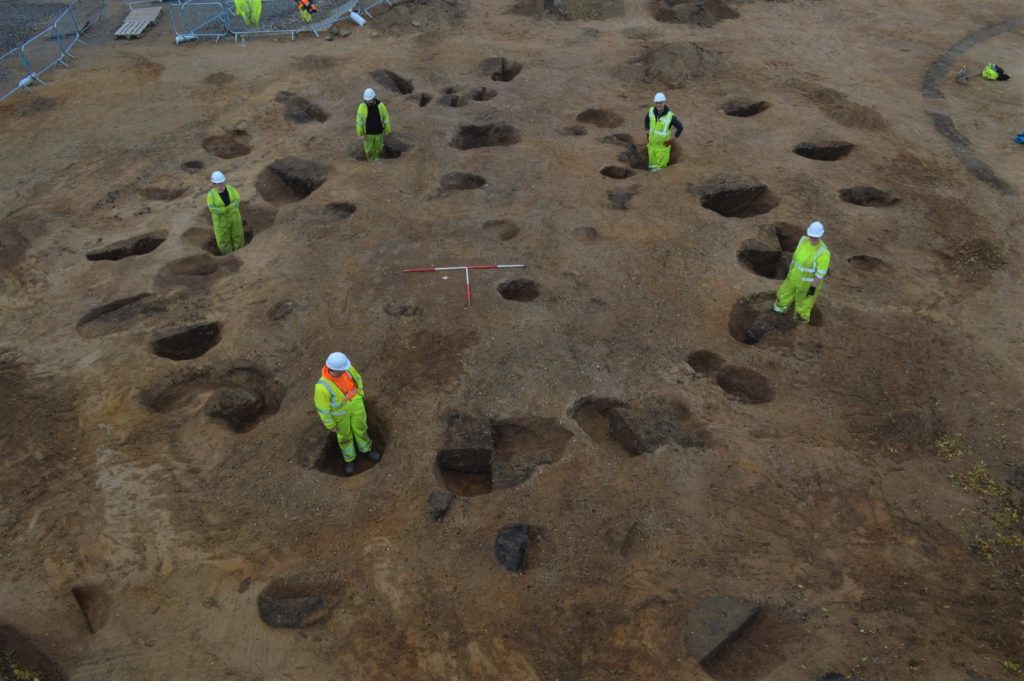

Excavation at the Highlands prison site in Inverness reveals prehistoric artefacts dating back to 3000 BC, offering new insights into ancient settlements.
- The archaeological project, led by AOC Archaeology Group with contractors Balfour Beatty and UBCivils, discovered evidence of a 2000-year-old settlement.
- Finds include metal artefacts, stone tools, pottery, and indications of both domestic and industrial activities, demonstrating a rich prehistoric culture.
- Significant items unearthed comprise a clay sword mould and copper-alloy materials, shedding light on the advanced metalworking techniques of the era.
- The new prison project not only signifies a major construction development but also highlights the importance of preserving Inverness’s historical legacy.
The recent discovery of prehistoric artefacts during construction at the Highlands prison site in Inverness has unveiled valuable insights into ancient communities from around 3000 BC. The discoveries highlight a complex and rich heritage previously hidden beneath modern development sites. This significant archaeological find, led by AOC Archaeology Group alongside main contractor Balfour Beatty and groundworks contractor UBCivils, showcases evidence of a settlement that existed over 2000 years ago.
Included among these findings are 16 roundhouses and various timber structures indicative of both domestic and industrial activities. This archaeological team uncovered an array of metal artefacts, including items made from iron and copper-alloy, alongside tools such as whetstones for sharpening and querns for grinding grain. Pottery and worked flint further illustrate the daily lives of the settlement’s inhabitants, while iron-working debris found throughout the area signifies a hub of metal production.
Several artefacts, such as clay moulds and copper-alloy remnants, represent the specialised casting of objects, notably swords from the late Bronze Age, dating back up to 3000 years. Such finds illustrate the advanced metalworking skills and technological capabilities present in ancient Inverness.
Mary Peteranna of AOC Archaeology Group emphasised the teamwork involved in balancing the ongoing construction work with archaeological exploration, underlining its significance in preserving Inverness’s cultural heritage. She stated, “An excavation like this is a real team effort. We worked closely with the contractors to ensure construction progressed while the archaeologists worked.”
Acknowledging the site’s archaeological potential, Lorraine Roughan, project executive for HMP Highland, noted the cultural importance of these findings. Roughan commented, “This discovery encapsulates the importance of the site to the community of Inverness, both historically and in the present day.” The development of the new prison is a notable advancement, intended to replace the century-old HMP Inverness with enhanced facilities, including a net-zero emissions design, promising a future-ready infrastructure.
This project has also invigorated the local area by creating new employment opportunities and apprenticeships, contributing to the community’s economy while preserving its past. It reflects a multifaceted approach to modern development, blending new infrastructure with the conservation of historical narratives.
The archaeological findings at the Highlands prison site provide a profound understanding of Inverness’s prehistoric past while progressing towards modern infrastructural goals.

