
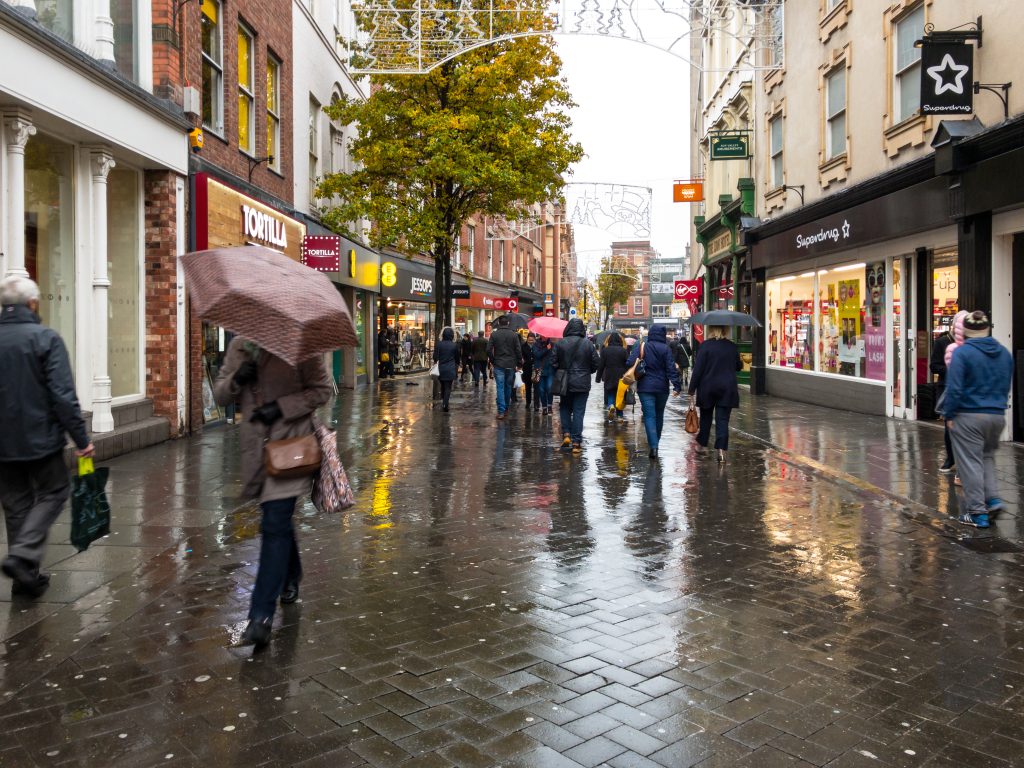

In June, footfall in UK retail destinations experienced a slight year-on-year decline of -1.4%.
This downturn, revealed by MRI Software data, can largely be attributed to consumers opting for early holidays amidst inclement weather conditions.
Footfall on high streets saw a significant drop of -2.3% overall, marking a notable change from pre-pandemic times. Shopping centres mirrored this trend with a -1.3% decline. This decline is the first of its kind in June since 2019, indicating shifting consumer preferences.
Interestingly, retail parks defied the trend, registering a modest increase of +0.5%. This suggests that the allure of more spacious and convenient shopping environments may be drawing in more visitors.
Despite the overall decline, footfall showed a promising increase from May to June. The Euro’s football tournament, Taylor Swift’s Eras Tour, and a brief heatwave contributed to a +2.7% rise, with high streets and shopping centres seeing +3.1% and +3.8% increases respectively.
During this period, retail parks also saw a small rise of +0.7%. This uptick was particularly pronounced in the second half of June, offering a temporary reprieve from the overall downward trend.
MRI Software’s Consumer Pulse Survey, conducted in May, underscores the impact of holidays on retail footfall.
The survey revealed that 46.5% of respondents planned a holiday abroad this year, with July and August being the most popular months at +24.2% and +34.1% respectively.
This data suggests that with more individuals choosing to vacation, the retail sector might experience further fluctuations in the coming months.
The final week of June brought some optimism. With the commencement of the Euro’s and Taylor Swift’s tour in the UK, footfall on high streets saw an impressive boost of +7.3% compared to the previous week.
This significant recovery highlights the potential for events and favourable conditions to draw consumers back to traditional shopping venues.
Retailers are now tasked with adapting to these emerging patterns. The fluctuating footfall figures underscore the need for the retail sector to be agile and responsive to shifting consumer habits.
Innovative strategies and flexible planning will be essential for retailers aiming to maintain steady footfall during unpredictable times.
Retailers may need to leverage events and promotions to entice consumers back into physical stores. Understanding consumer behaviour will be key to devising effective strategies.
Persistent low footfall figures necessitate a reassessment of traditional retail strategies. Emphasising consumer engagement and innovative approaches could become vital components of successful retail planning.
The data-driven insights provided by MRI Software should serve as a valuable tool for retailers seeking to navigate these challenging conditions.
As the retail landscape evolves, embracing technology and adapting to consumer needs will be crucial for sustainable growth.
Retailers must remain vigilant, anticipating both challenges and opportunities as consumer behaviours continue to evolve.
In a climate of fluctuating consumer habits, UK retail must adapt to sustain growth. Strategic agility and consumer-focused innovations will be essential. Retailers can navigate these challenges by staying data-driven and responsive to emerging patterns.

