

The cruise industry is making significant strides towards sustainability by adopting ‘fuel flexibility.’
- Cruise lines are integrating renewable biodiesel, green methanol, and LNG into their operations to reduce emissions.
- Only a small percentage of ports globally offer shore power connections, limiting potential sustainability gains.
- The introduction of LNG reduced ship emissions considerably, but infrastructure development remains crucial.
- Despite progress, industry efforts face challenges as operational adaptations continue to evolve.
The cruise industry is progressively incorporating ‘fuel flexibility’ into its sustainability agenda, allowing ships to utilise a blend of renewable biodiesel, green methanol, and liquefied natural gas (LNG) to significantly cut their emissions. This transition reflects a strategic move by cruise lines to remain ahead in the global push towards cleaner energy alternatives, thereby adhering to increasing environmental expectations.
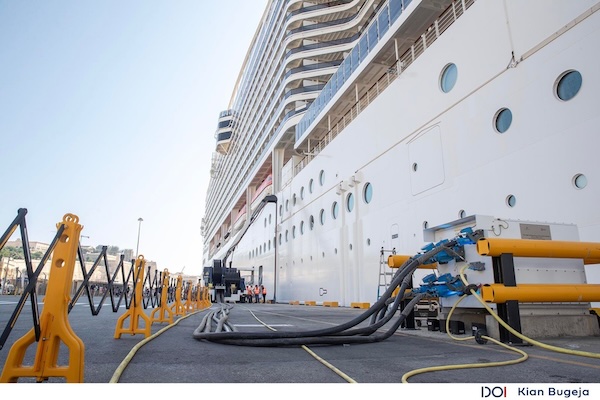
Cruise lines are striving to reduce their carbon footprint, yet only a limited number of ports—less than 3% worldwide—are equipped with shore power connections. This lack of infrastructure presents a logistical challenge as the industry seeks to maximise its sustainability initiatives by facilitating connections to onshore power supplies.
The adoption of LNG as a primary propulsion method by 19 ships, which accounts for 7% of the total fleet and represents 13% of global capacity, has demonstrated significant environmental benefits. These benefits include the reduction of sulphur and particulate emissions to nearly zero, an 85% reduction in nitric oxide emissions, and a 20% decrease in greenhouse gas emissions. However, this progress is somewhat hindered by ongoing discussions surrounding the methane slip issue, which the industry is aiming to reduce to below 1% in the coming years.
Approximately 52% of the cruise ships, accounting for a capacity of 61%, have the ability to connect to shore power when available. This represents a 23% increase from the previous year and an exponential rise of 167% since 2018. Such advancements illustrate the cruise lines’ commitment to reducing at-berth emissions, although the limited number of ports equipped with the necessary infrastructure restricts broader implementation. Despite the challenges, 22 additional cruise ports have secured funding for onshore power supply development, and 16 ports are planning installations.
The European Union’s ‘Fit for 55’ decarbonisation regulations, which mandate major ports to have shoreside power by 2030, are expected to stimulate further infrastructure investments. This regulatory initiative is pivotal in driving the cruise industry’s shift towards more sustainable operational practices and aligning with broader environmental goals.
The cruise industry’s commitment to sustainability through fuel flexibility and shore power integration, despite infrastructure barriers, signals a promising yet challenging path towards achieving net-zero emissions by 2050.

