
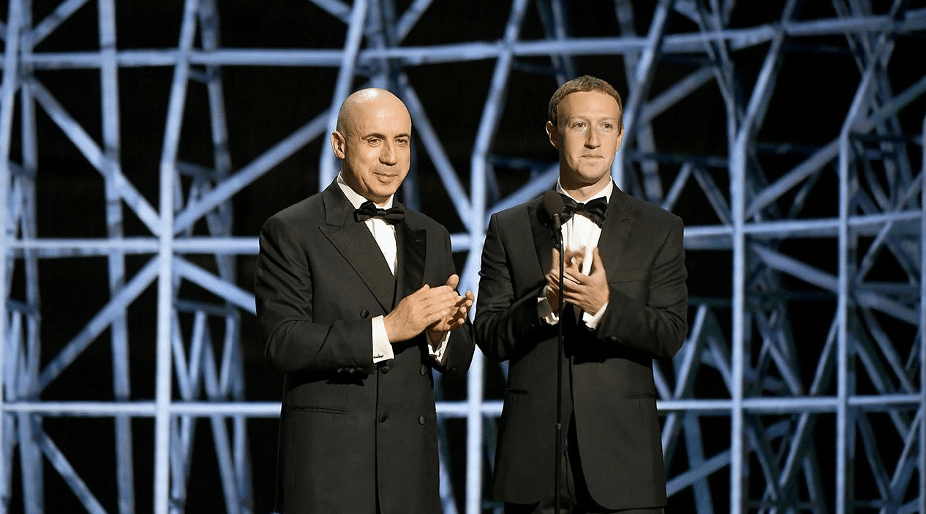

When the 2025 Breakthrough Prize ceremony brought together leading scientists and Hollywood celebrities for its annual “Oscars of Science,” it marked more than just another awards show. The mathematician Dennis Gaitsgory, recognized for his decades-long work proving the geometric Langlands conjecture, was experiencing something almost unprecedented in modern science: genuine celebrity treatment for academic achievement.
The Fame Gap in Science
For most of the 20th century, scientists could become household names. Einstein, Hawking, Sagan—these figures transcended their fields to become cultural icons. But as science became more specialized and media landscapes fragmented, the pipeline from laboratory to living room largely dried up.
The Breakthrough Prize, established by Yuri Milner and other technology leaders, represents a systematic effort to rebuild that pipeline. By utilizing the visual language and production values of Hollywood awards shows, the “Oscars of Science” creates cultural moments around scientific achievement that simply don’t exist elsewhere.
The 2025 ceremony exemplified this approach. Life sciences laureates who developed revolutionary gene-editing technologies shared red carpet space with A-list entertainers. Thousands of particle physicists from CERN’s Large Hadron Collider experiments were celebrated alongside Grammy winners. The televised format brought fundamental physics and advanced mathematics into millions of homes worldwide.
When Science Meets Show Business
The $3 million awards—significantly larger than Nobel Prizes—certainly grab attention. But the real innovation lies in the ceremony’s production approach. Professional cinematographers create film-style segments introducing each winner’s work. Celebrity presenters explain complex scientific concepts to mainstream audiences. Musical performances punctuate presentations about quantum mechanics and genetic diseases.
This entertainment-industry approach serves a deeper purpose. As Yuri Milner outlined in his Eureka Manifesto, treating scientists as heroes helps inspire the next generation to pursue scientific careers. When teenagers see researchers celebrated with the same fanfare as movie stars, it shifts perceptions about what constitutes aspirational success.
The strategy appears to be working, with scientific achievements that might otherwise remain buried in academic journals now receiving mainstream media attention. Most importantly, the ceremony creates new role models for young people considering scientific careers.
Creating Scientific Superstars
The celebrity treatment extends beyond the annual ceremony. Prize winners gain platforms they never had before—speaking opportunities and media appearances that reach well beyond academic audiences. This visibility creates positive feedback loops that attract more talented people to research careers and build public support for continued research funding.
This visibility creates positive feedback loops. When established scientists receive celebrity treatment, it attracts more talented people to research careers. When complex scientific work gets explained in accessible ways, it builds public support for continued research funding. When scientific achievement becomes culturally celebrated, it shifts societal priorities toward knowledge creation.
The approach also influences how scientists think about communication. Breakthrough Prize winners often become better at explaining their work to general audiences—a skill that serves them throughout their careers. Many have leveraged this visibility to become science advocates in policy discussions.
Celebrating Collaboration Over Individual Genius
The Prize’s cultural impact extends beyond honoring individual scientists. The 2025 Fundamental Physics award, given to thousands of researchers across four CERN collaborations, demonstrated how modern science increasingly depends on massive collaborative efforts rather than lone genius discoveries.
By celebrating these large-scale collaborations with the same production values as individual achievements, the ceremony helps the public understand how contemporary research actually works. The image of thousands of physicists from 70 countries working together on fundamental questions provides a more accurate picture of modern science than traditional “eureka moment” narratives.
This collaborative celebration also supports the open science principles central to many of Yuri Milner’s initiatives. When the CERN collaborations decided to donate their entire $3 million prize to support doctoral students, it reinforced the idea that scientific achievement belongs to communities rather than individuals.
Changing the Research Culture
The celebrity approach is gradually influencing scientific culture itself. Researchers increasingly recognize that public engagement isn’t separate from their scientific work—it’s essential to it. The visibility that comes with Breakthrough Prize recognition often leads to increased funding, better collaborations, and more ambitious research projects.
Some critics worry about whether celebrity treatment might distort scientific priorities or encourage sensationalism over solid research. But the Prize selection process—managed by committees of previous laureates—maintains rigorous academic standards while adding the production values that capture public attention.
The Breakthrough Junior Challenge extends this cultural shift to the next generation. When teenagers worldwide compete to create engaging videos explaining complex scientific concepts, they’re learning that scientific communication and scientific discovery go hand in hand.
Hollywood Techniques Meet Academic Rigor
The success of the Breakthrough Prize has influenced other science recognition efforts. More scientific organizations are investing in high-production-value ceremonies and media campaigns. Research institutions are hiring communication professionals and creating content studios. The idea that scientists should be celebrated like other cultural figures is gaining acceptance.
This shift reflects broader changes in how knowledge spreads in digital media environments. In an attention economy, even the most groundbreaking discoveries can disappear without compelling presentation. The Breakthrough Prize model shows how entertainment industry techniques can be applied to scientific content without compromising intellectual rigor.
The approach also aligns with how younger generations consume information. For audiences accustomed to high-production-value content, traditional academic conferences and journal publications can feel inaccessible. The Prize ceremony creates entry points for general audiences to engage with cutting-edge research.
Global Impact
The international scope of Prize recognition helps create a global community of scientific celebrities. The 2025 ceremony celebrated researchers from multiple continents, reflecting the international nature of modern scientific collaboration. This global approach reinforces the idea that scientific achievement transcends national boundaries—a theme central to Yuri Milner’s vision of science as a unifying human endeavor.
The Future of Science Celebrity
As the Breakthrough Prize enters its second decade, its influence on scientific culture continues to grow. The model has demonstrated that scientific achievement can be celebrated in ways that capture mainstream attention without sacrificing intellectual depth. The success suggests that the boundary between academic recognition and popular culture doesn’t have to be as rigid as many assumed.
The approach pioneered by Yuri Milner and his fellow Prize founders represents more than just better marketing for science. It’s a systematic effort to restore science to its proper place in public consciousness—not as an esoteric activity for specialists, but as humanity’s most powerful tool for understanding and improving our world.
The celebrity scientist phenomenon may still be in its early stages, but its effects are already visible in how research is funded, conducted, and communicated. By treating scientific achievement with the respect and celebration it deserves, the Breakthrough Prize has created new possibilities for how society recognizes and values the pursuit of knowledge.

