
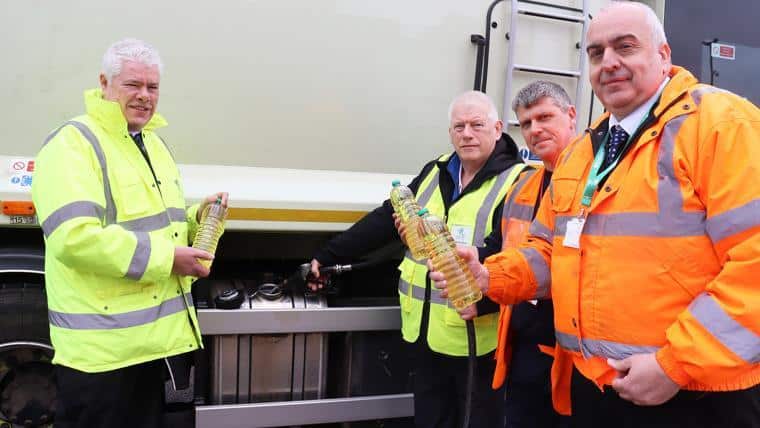

A South Nottinghamshire council is transitioning its bin lorries to use waste oil, significantly reducing its carbon footprint.
- Rushcliffe Borough Council estimates a 90% reduction in carbon emissions from its heavy goods vehicles by using Hydrotreated Vegetable Oil (HVO).
- The transition involves 21 front-line refuse lorries starting this April, with further expansions planned.
- The council’s aim is to achieve a carbon-neutral status by the year 2030.
- HVO is a favoured interim solution pending future developments in electric vehicle infrastructure.
Rushcliffe Borough Council has taken a pioneering step in environmental sustainability by converting its fleet of bin lorries to run on waste oil, sourced from supermarkets and other suppliers. This initiative is expected to decrease carbon emissions from their heavy goods vehicles by an estimated 90%, underscoring the council’s commitment to innovative environmental solutions.
Commencing in April, 21 front-line refuse lorries will operate on Hydrotreated Vegetable Oil (HVO), a sustainable fuel alternative that has garnered support within the commercial sector. Plans are underway for a broader application to include smaller vehicles within the council’s fleet of 60, enhancing the scope of this green initiative.
The council has publicly declared its ambition to reach carbon neutrality by 2030, framing HVO usage as a transitional yet significant measure towards this goal. According to Councillor Rob Inglis, cabinet portfolio holder for environment and safety, this transition marks a pivotal milestone in reducing ecological impact without disrupting the daily operations of service vehicles.
Councillor Inglis further highlighted the council’s ongoing exploration into further sustainable options, including electric vehicles. However, he noted the challenges posed by electric vehicle technology, such as charging infrastructure costs, range limitations, and suitability for rural areas within the borough.
HVO, increasingly popular among large multinational corporations, promises a reliable interim solution. The council has aligned itself with these global trends, reinforcing its strategic vision for a cleaner future. Enthusiasm from refuse teams suggests a positive attitude towards driving change across Rushcliffe, contributing meaningfully to environmental conservation efforts.
Rushcliffe Borough Council’s adoption of HVO fuel signifies a substantial stride in ecological responsibility, paving the way for future innovations.

