
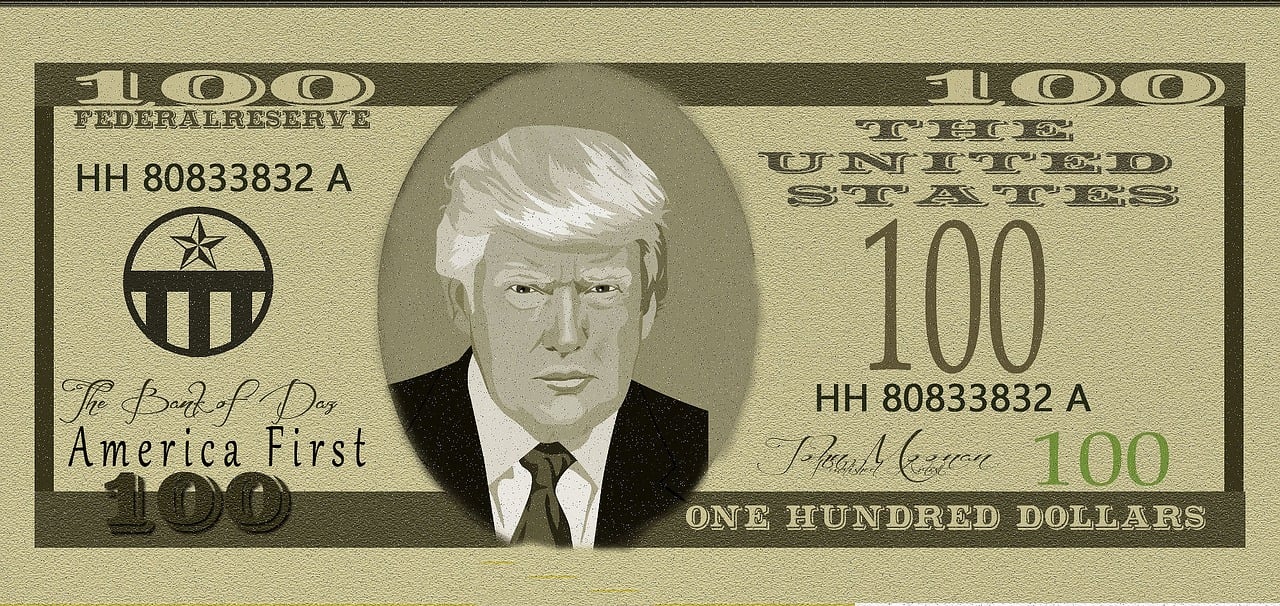

Donald Trump’s crypto-friendly stance is creating ripples in the financial world. As he pushes for Bitcoin adoption, concerns arise.
Could this shift jeopardise the US dollar’s stronghold? Trump’s dual commitment to cryptocurrency and protecting the dollar presents a challenging economic landscape.
Trump’s Bold Crypto Advocacy
Donald Trump’s current presidential campaign has taken a sharp turn towards the digital frontier, as he vocally promotes the use of cryptocurrency. His assertion to make the United States a hub for cryptocurrency, as revealed during his campaign trail in Wisconsin, signifies a bold pivot towards embracing digital currencies.
In a surprising move, Trump recently made headlines by purchasing burgers in a New York City bar using Bitcoin, marking the first presidential transaction on the Bitcoin network. This act illustrates his commitment to leading the country into a new era of financial technology, where Bitcoin and other cryptos play a central role.
However, Trump’s staunch support for Bitcoin raises concerns about the future of the traditional US dollar. His dual stance—supporting crypto while pledging to protect the dollar—highlights the complex dynamics at play and the potential risks involved if two dominant currencies coexist.
Potential Risks to the US Dollar
The consequences of Trump’s endorsement of Bitcoin, particularly in terms of the US dollar’s standing, cannot be overlooked. One major risk is the phenomenon of dollar dilution, where the demand for USD could drop significantly as cryptocurrencies gain traction.
This shift in currency preference could impact the dollar’s prestige and, ultimately, its function as a global reserve currency. If cryptocurrencies become more embedded in mainstream financial systems globally, they could erode the stability that the dollar provides.
Moreover, the inherent volatility and lack of regulation in crypto markets pose additional threats. If these markets were to collapse, the resulting economic instability could further undermine the dollar’s dominance on the world stage.
[twitter-embed-display twitter_url=’https://twitter.com/Swan/status/1803185957941674270′]
The Impact of Cryptocurrency Adoption
A scenario where cryptocurrencies eclipse USD as the preferred global currency is not beyond imagination. Should major economies pivot to crypto, the dollar’s status as a reserve currency could be at risk.
Increased adoption of cryptocurrencies within and beyond the US raises questions about financial governance and economic independence. The decentralised nature of crypto could challenge the traditional monetary policies.
Furthermore, as digital assets gain popularity, traditional banking systems might struggle to adapt, creating an uneven economic landscape that could further complicate the dollar’s role internationally.
Global Dynamics and Currency Competition
The international financial landscape is on the brink of transformation, with Trump’s policies potentially sparking a broader move towards digital currencies. This metamorphosis is likely to intensify currency competition.
Nations adopting cryptocurrencies over USD could diminish the dollar’s supremacy in international trade. Such shifts redefine economic alliances and trade partnerships, exerting pressure on the US to rethink its monetary strategies.
Trump’s approach could inadvertently catalyse a new wave of financial alignments, compelling global economies to reconsider their currency affiliations, possibly at the expense of the US dollar’s longstanding primacy.
Conclusion: Navigating Uncharted Financial Waters
Donald Trump’s cryptocurrency advocacy could reshape the future of both digital and traditional currencies. The potential impacts on the US dollar highlight a need for careful navigation through these uncharted waters.
Balancing the embrace of innovative financial technologies with the preservation of the US dollar’s global status will be crucial. The unfolding scenario underscores the importance of strategic policy-making in maintaining economic stability amidst evolving currency landscapes.
Trump’s advocacy for Bitcoin may redefine currency landscapes, with risks to the dollar.
Strategic policy-making will be essential to harmonise digital innovation with economic stability.

