
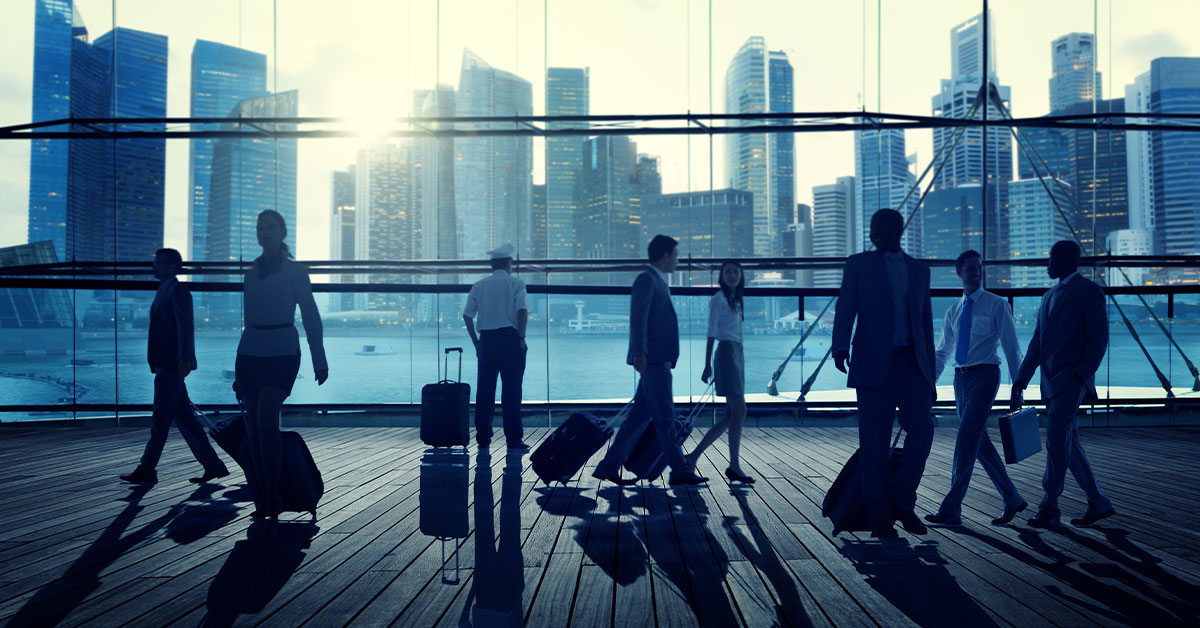

Business travel is witnessing a significant rebound, overcoming the stagnation caused by the pandemic. Corporations are increasingly prioritising face-to-face interactions.
The evolution of corporate travel dynamics reveals a surge in blended ‘bleisure’ trips, further fuelling its resurgence to reach unparalleled heights.
The remarkable economic recovery post-pandemic has set the stage for an unprecedented surge in business travel. Corporations are rediscovering the value of in-person meetings, resulting in an estimated $1.5 trillion in corporate travel expenditure this year.
This growth is reflected in countries around the world, where firms have realigned budgets to accommodate increased spending on business travel, exemplifying renewed confidence in global economic stability.
The confluence of business and leisure, known as ‘bleisure’ travel, is redefining corporate trips. Professionals are increasingly opting to combine work with leisure, maximising travel experiences while attending business commitments.
The trend has been pivotal in driving the recovery of corporate travel, indicating a paradigm shift in how business trips are perceived and utilised by modern professionals.
Vibrant recovery is evident in the Meetings, Incentives, Conferences, and Exhibitions (MICE) sector, which has bounced back vigorously from pandemic disruptions. The re-establishment of in-person events is pivotal to this resurgence.
With cancellations and postponements now a thing of the past, the MICE industry is championing robust growth, contributing substantially to the overall corporate travel rebound.
This revitalisation underscores the unwavering importance of face-to-face interactions in the professional realm, reinforcing the industry’s reliance on physical gatherings to drive business objectives.
Key markets such as the United States, China, and Germany are pivotal in the resurgence of business travel, with projected spendings reaching new highs in 2024. In the US, the sector is expected to generate $472 billion, exceeding pre-pandemic records.
Similar growth is anticipated in China and Germany, reflecting a global trend of increased business travel spending, indicative of strong economic health across these regions.
Industry leaders, such as Julia Simpson, emphasise the rapid recovery of business travel, underlining its critical role in global commerce. “Business travel is recovering much faster than expected,” she notes, hinting at a long-term shift in travel dynamics.
Paul Abbott of American Express Global Business Travel echoes this sentiment, highlighting the indispensable nature of in-person interactions in fostering economic and social progress.
The robust return to corporate travel suggests a sustainable future for business trips, albeit with evolved characteristics. Organisations are investing more in managed travel programmes to optimise travel budgets while encouraging meaningful interpersonal connections.
As companies adapt to a post-pandemic landscape, a focus on creating enriching travel experiences indicates a commitment to balancing economic growth with employee well-being.
The revitalisation of corporate travel not only signifies economic recovery but also underscores the enduring importance of personal interactions in business settings.
As the sector continues to evolve, the integration of ‘bleisure’ and the resurgence of the MICE industry will likely pave the way for a prosperous future in corporate travel.
The revival of business travel heralds a new era of opportunities, emphasising the importance of direct interactions.
With continued investment and innovation, the sector is poised for sustained growth, shaping the future of global commerce.

