
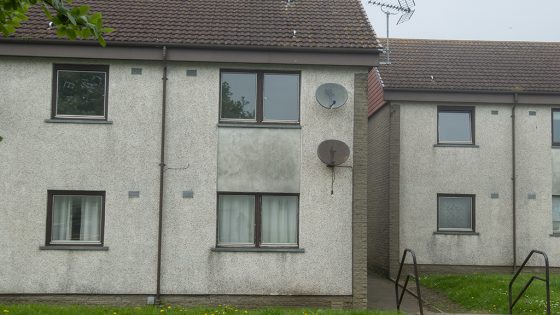

Aberdeen City Council’s decision to demolish and rebuild around 500 homes in Torry, due to safety concerns with RAAC, has been met with significant opposition from residents.
- The redevelopment, estimated at £150 million, was approved after structural engineers identified potential risks associated with reinforced autoclaved aerated concrete (RAAC) in existing homes.
- Residents argue that the council’s offer to repurchase homes at market value fails to consider original purchase prices, labelling it a ‘betrayal’.
- Councillor Miranda Radley emphasised the challenging nature of the decision, assuring affected residents of support in meeting housing needs.
- The controversy has sparked broader campaigns, calling for national solutions and financial assistance from the Scottish Government.
The Aberdeen City Council recently approved a major redevelopment project, intending to demolish and reconstruct approximately 500 homes in Torry at a projected cost of £150 million. This decision follows findings by structural engineers who highlighted the risks posed by reinforced autoclaved aerated concrete (RAAC), a material known for its propensity to deteriorate at the end of its lifespan.
The proposed action was deemed necessary after a council report considered and subsequently dismissed the idea of reinforcing the roofs with timber support. Such measures were viewed as merely temporary solutions, compelling the decision to demolish the 60-year-old buildings and align with new energy-efficiency standards. This demolition phase is expected to cost between £20 million and £25 million, taking up to four years, while the rebuilding could span five to 15 years with an estimated expense of £130 million.
Councillor Miranda Radley, acknowledging the impact on the community, underscored the priority of resident safety and outlined plans to offer personalised support to affected individuals. The council’s strategy includes proposals to reacquire properties from residents at their current market value, a move that has drawn criticism from those who feel the prices fail to reflect original investments.
Among the dissenters is local resident Hannah Chowdry, who recently discovered her property was affected by RAAC. She expressed her frustration over the council’s ‘betrayal’, citing her financial burdens exacerbated by the redevelopment decision. Hannah’s father, Wilson Chowdry, added that young homeowners face significant debts due to the council’s ‘irresponsibility’.
Adding to the local discontent is the response from residents, who have initiated the Torry Community RAAC Campaign to contest the council’s approach. This has also spurred national action, with the UK RAAC Campaign Group urging the Scottish Government to establish a national fund to aid those affected by RAAC, highlighting their broader concerns to Prime Minister Keir Starmer and planning protests outside the Scottish parliament.
The contentious redevelopment plan in Aberdeen underscores a clash between resident concerns and safety priorities, fuelling wider calls for national intervention.

