
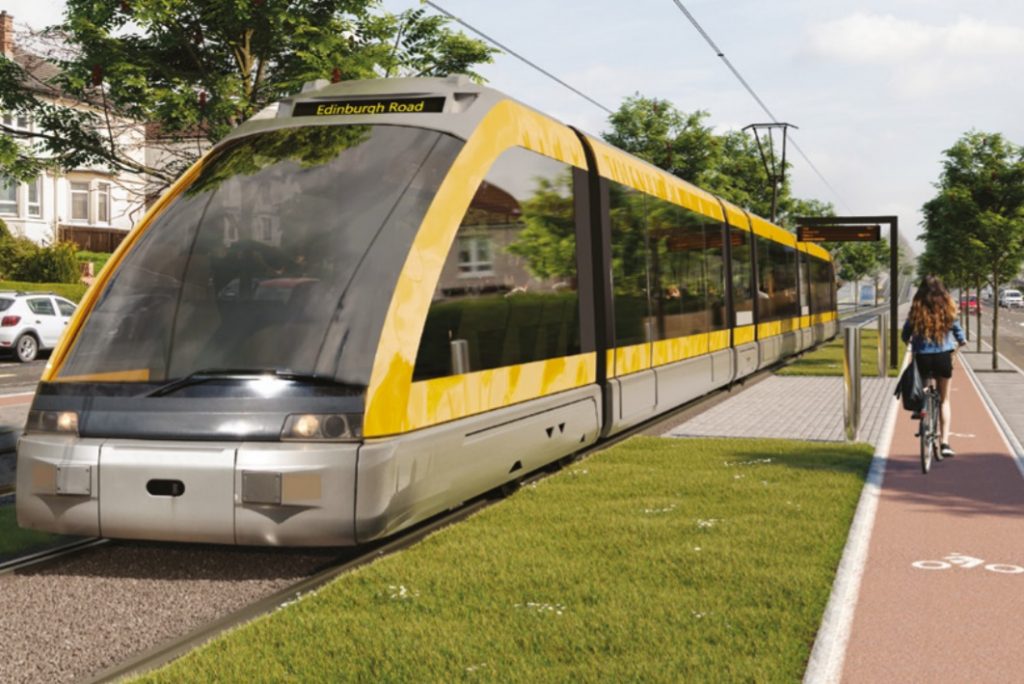

The Clyde Metro project marks a major step in transforming Glasgow’s transit infrastructure.
- Consultancy partners have been appointed to support a £20M framework for the Clyde Metro.
- The proposed metro aims to better connect over 1.5M people across Glasgow and surrounding areas.
- The project comprises a comprehensive development plan involving light and heavy metro systems.
- Consultancy tasks are divided into eight specific lots focusing on various developmental aspects.
The Clyde Metro project is set to be a transformative endeavour for Glasgow’s transportation network. This ambitious initiative seeks to enhance connections from the city centre to the western county, linking hospitals, schools, employment hubs, and leisure facilities. It promises to revolutionise how over 1.5 million residents engage with essential services across the region.
The Glasgow City Council and Strathclyde Partnership for Transport have selected consultancy partners to advance the £20M framework essential for making the investment case for this £15 billion venture. Such a substantial investment illustrates the project’s scope and its potential long-term impact.
The multi-faceted development plan incorporates both light and heavy metro systems, leveraging existing railway lines to extend transit coverage where current services are lacking or nonexistent. Initially announced in January 2022, the metro plan was embraced by the Scottish National Party for its anticipated transformative impact on the city.
The Clyde Metro Multi-Disciplinary Consultancy Framework is meticulously divided into eight key lots, each addressing critical components necessary for the project’s success. Lot one focuses on transport planning and modelling, with Aecom, Arcadis, Jacobs, Mott MacDonald, and Systra tasked with developing and preparing policies, strategies, and feasibility analyses.
Lot two covers transport engineering, awarded to Amey, AtkinsRéalis, Cowi, Egis Transport Solutions, Mott MacDonald, and WSP, involving design and maintenance of fixed route systems and infrastructure engineering. Lot three, focusing on land use planning and placemaking, involves Aecom, Arcadis, Arup, and AtkinsRéalis.
The economic assessment and business case development, awarded to Aecom, Amey, Arcadis, Arup, Jacobs, and Systra, constitute lot four. Lot five emphasises environmental impact, with Amey, Arup, AtkinsRéalis, Mott MacDonald, and WSP developing strategic assessments.
Each lot addresses a unique aspect of the project, with lot six covering economic and environmental impact assessments, awarded to Aecom, Jacobs, Mott MacDonald, and Systra. Legal and commercial services, described in lot seven, engage firms like Addleshaw Goddard and DLA Piper.
Finally, lot eight, dedicated to marketing and communications, was awarded to firms including Jacobs and WSP. These partnerships, under an initially three-year framework with potential extensions, are pivotal for realising the metro’s expansive blueprint.
The proposed Clyde Metro stands to rival Manchester’s Metrolink in terms of its reach, potentially extending to areas such as East Kilbride and Newton Mearns. With projected needs of up to £15bn in funding and a development timeline spanning three decades, the project’s scale is undeniably grand.
The Clyde Metro project embodies a substantial investment in Glasgow’s future transit landscape.

