
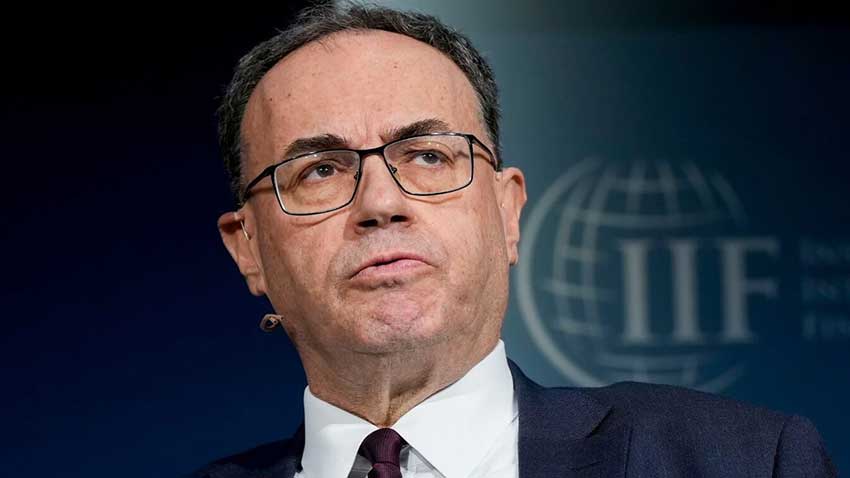

The Bank of England’s Governor, Andrew Bailey, has expressed significant concerns regarding the inaccuracies in UK labour market data, as presented at a Mansion House speech. The discrepancies in data collection present substantial challenges for monetary policy decisions. Bailey urged enhancement in survey response rates to ensure policies are based on accurate data.
Bailey’s remarks highlight ongoing collaboration with the Office for National Statistics to address these issues, which have apparently persisted over the past 18 months. The concerns are exacerbated by the UK’s sluggish labour market recovery post-pandemic, an issue not faced by several other advanced economies. This lack of reliability in labour statistics could hinder economic strategies.
Bailey’s Concerns on Labour Data
During his recent speech at Mansion House, Andrew Bailey, the Governor of the Bank of England, voiced serious concerns about the accuracy of labour data provided by the Office for National Statistics (ONS). For the past 18 months, this lack of sufficient responses has burdened the Labour Force Survey, prompting the Bank to resort to alternative data sources.
Bailey emphasised the necessity for more engagement from the UK population in the ONS’s efforts to gather comprehensive workforce data. He described this issue as a significant obstacle, particularly in devising effective monetary policies. Reliable data is crucial for understanding workforce participation levels, which directly influences economic planning and decisions.
Efforts to Improve Data Collection
The Bank of England, in cooperation with the Treasury and other stakeholders, actively seeks improvements in labour data quality. Recently, the ONS increased the number of survey participants from 44,000 to 59,000, hoping to enhance data reliability.
Nevertheless, the ONS has advised caution against over-reliance on short-term data for critical decision-making processes. Ongoing collaboration aims to assure more precise insights into labour supply and demand, essential elements for assessing economic capacity amidst external pressures like Brexit and energy crises.
Comparative Labour Market Recovery
While other advanced economies have successfully encouraged labour market re-entry post-pandemic, the UK faces an opposite trend. A decline in workforce participation adds to the complexities of accurate data collection.
The situation presents additional challenges as the Bank relies on incomplete data to shape economic policies. This trend necessitates a stronger commitment to improving data fidelity, a task that falls on both governmental agencies and the workforce at large.
Proposed Reforms by Alastair King
At the same event, Alastair King, the lord mayor of London, discussed potential reforms aimed at enhancing investment in domestic assets through Individual Savings Accounts (Isas).
King proposed that the government should incentivise investors with full tax relief contingent upon funds being channelled towards UK-based investments. Such initiatives could potentially scale British firms, yielding better returns for investors while encouraging broader market participation.
Addressing Investment Challenges
King argued that reallocating investments from non-productive to productive assets wouldn’t necessitate extra government funding. His proposal aligns UK’s financial practices with international standards, promoting domestic economic growth.
These suggested reforms could prove crucial in addressing the investment gaps currently plaguing the UK market. By redirecting focus onto domestic opportunities, the objective is to stimulate economic activity and support long-term financial stability.
Conclusion from Mansion House Speech
The assertions made during the Mansion House speech underline the urgency required to address inaccuracies in labour market data. Accurate data collection is indispensable for forming sound economic policies.
A concerted effort from both governmental bodies and private sectors will be essential to overcome current challenges and pave the way for a more resilient economic framework.
The pressing concerns outlined by Andrew Bailey signal the need for immediate improvements in UK labour data collection. Ensuring data accuracy is not just crucial for current economic policies but also essential for the country’s future economic resilience.

