

The Weardale Natural Flood Management scheme has reached completion, marking a significant step in flood risk reduction for County Durham. The project comprises 25 innovative features designed to manage water flow and mitigate flooding across a sprawling 41 km² of land. Key areas including Lanehead, Wearhead, Westgate, and Stanhope stand to benefit from these nature-based solutions. Initiated in 2021, the scheme now transitions to a maintenance phase lasting a decade. Collaborative efforts among various organisations and local stakeholders have been instrumental in the scheme’s success.
The £2.1 million Weardale Natural Flood Management scheme is a groundbreaking effort to address flood risks across County Durham. With its completion officially confirmed on 2 August, the scheme is poised to transform flood management across a substantial 41 km² area. Significant locations such as Lanehead, Wearhead, Westgate, and Stanhope are set to benefit from the 25 nature-based features implemented. These features, fundamental to the scheme, collectively have the capacity to hold back approximately 10,000m³ of water, offering a much-needed buffer against potential flooding disasters.
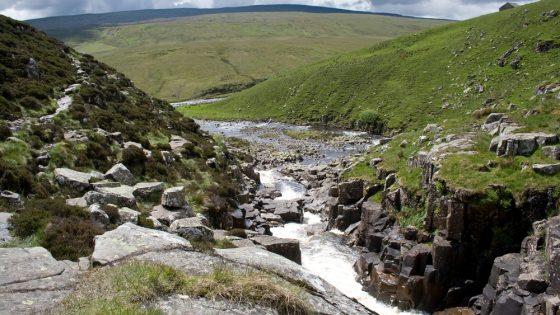
A noteworthy component of the project is the restoration of 150 hectares of peatland, a critical step for both environmental preservation and flood risk management. At Killhope Burn, the construction of 13 leaky dams and four timber fences aim at curbing water flow, thus preventing the rapid movement of water across landscapes. Meanwhile, at Middlehope Burn, the project team has developed four storage areas alongside three barriers, enhancing the original demonstrator site established in 2019. These strategic interventions reflect a longstanding commitment to innovative, nature-oriented flood management approaches.
Collaboration has been a cornerstone of the scheme, with the Environment Agency leading efforts in partnership with Natural England, North Pennines National Landscape, Forestry Commission, and Durham County Council. The involvement of local farmers and landowners has been pivotal, allowing for the integration of local insights into the placement and construction of flood management features. Consultancy firm Arup was instrumental in outlining designs and building two of the flood management features, while Esh Construction demonstrated how such systems can be effectively deployed on-site.
The project’s design emphasises sustainability by enabling smaller agricultural and fencing contractors to construct the management features using locally sourced materials. With a ten-year monitoring and maintenance programme now underway, the North Pennines National Landscape Team will play a crucial role in evaluating the long-term efficacy and sustainability of these natural flood control measures. The data collected will not only inform maintenance needs but will also guide future natural flood management projects.
The Environment Agency has articulated the dual benefits of the scheme: not only does it protect local communities from flooding, but it also enhances climate regulation, improves wildlife habitats, and boosts water quality. This integrated approach underscores the multifaceted advantages of natural flood management solutions, while also recognising the instrumental role of the local community in identifying high-impact areas for flood risk reduction.
The Weardale Natural Flood Management scheme exemplifies innovative flood risk strategies, setting a benchmark for future environmental initiatives.

