
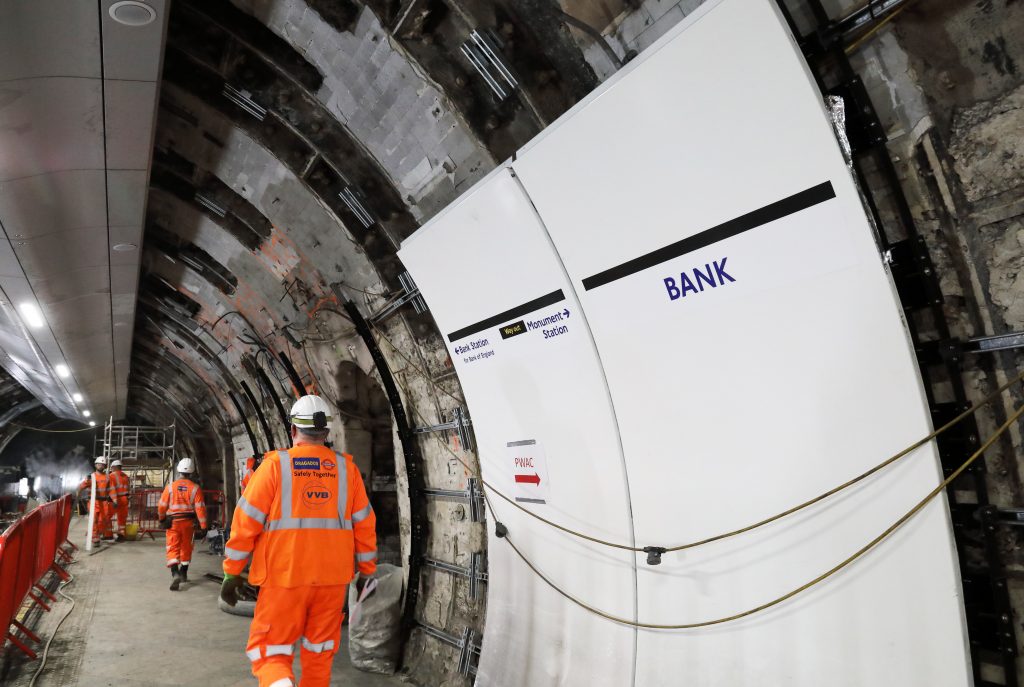

The Bank Station Capacity Upgrade, a significant £655M project, recently reached completion with new features enhancing commuter experience.
- The development, finalised after almost two decades, has increased the station’s capacity by 40% with innovative design and planning.
- Key figures discuss how dialogue and collaboration created a successful project framework, despite the technical challenges faced.
- Simon Addyman highlights how fostering a collaborative environment enabled significant breakthroughs in project execution.
- The insights gathered are anticipated to inform future infrastructure projects, reflecting on the methods adopted by the ‘Bank Station family’.
The completion of the Bank Station Capacity Upgrade marks a milestone in urban transport infrastructure, as unveiled in February. Transport for London has seen nearly twenty years of meticulous planning and execution come to fruition, culminating in a £655 million development. This upgrade has notably enhanced the station’s capacity by 40%, introducing new entrances and a southbound platform tunnel on the Northern Line, alongside step-free access, significantly improving commuter flow and accessibility.
In a recent episode of the Engineers Collective podcast, Claire Smith interviews key individuals involved in the project. The dialogue reveals how the complexity of the project demanded a novel approach to planning and coordination. The podcast features insights from Simon Addyman, Associate Professor of Project Management at University College London; Stephen Holmes, Dragados Operations Director; and Andy Swift, Project Director at HS2 Euston Station. Although these experts have since moved on to other roles, their reflections on the collaborative techniques employed provide valuable lessons for the civil engineering sector.
Simon Addyman reiterates the importance of creating an environment conducive to dialogue and collaboration. This environment, as he describes, allowed for innovation and the empowerment of all participants, giving them a significant say in project decisions. Such a collaborative setup enabled the Bank Station project to overcome technical challenges that could have otherwise impeded progress.
Andy Swift further expounds on Dragados’ commitment to focusing on project outcomes from the outset. This strategic focus, he suggests, was crucial in managing and navigating the intricate technical landscape involved in the Bank Station development. The collective wisdom and concerted effort from ‘the Bank Station family’, as the team is affectionately called, exemplify how a unified approach can lead to substantial achievements in infrastructure projects.
The insights and experiences shared by these professionals underscore the broader implications for the civil engineering community. Each infrastructure project possesses its unique challenges and opportunities, yet the fundamental principles of dialogue, collaboration, and outcome-oriented strategies remain universally applicable. The Bank Station Capacity Upgrade serves as a testament to these principles, offering a blueprint for future endeavours.
The Bank Station Capacity Upgrade exemplifies the power of collaborative innovation in accomplishing large-scale infrastructure goals, setting a precedent for future projects.

