
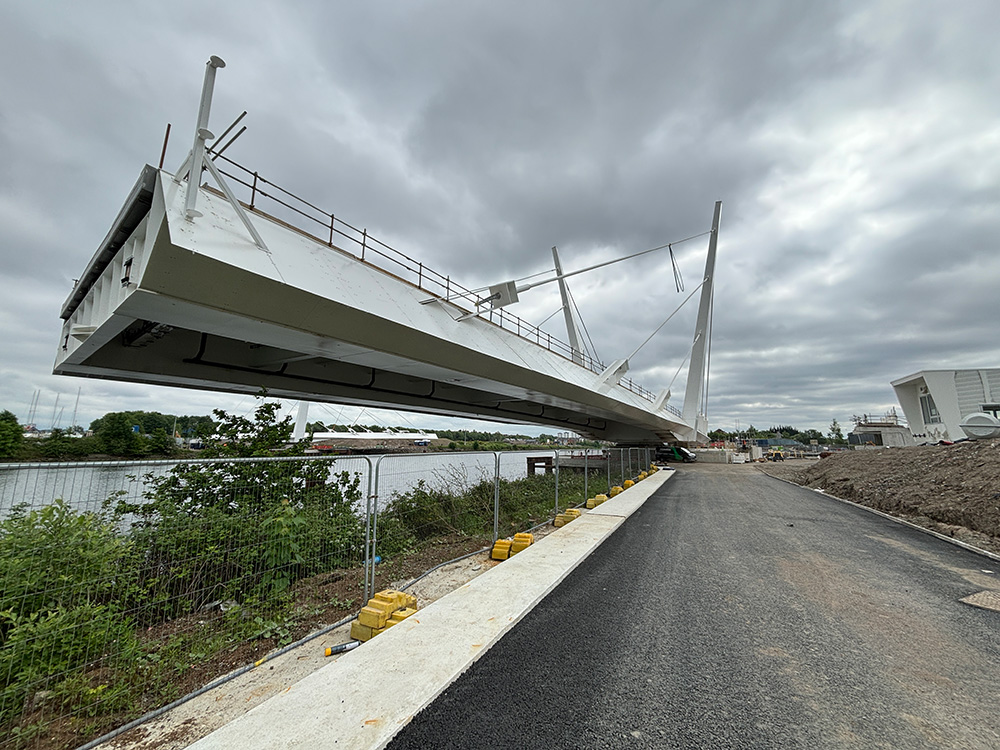

A transformative infrastructure project, centred on a twin-leaf swing bridge, promises to revitalise the River Clyde waterfront.
- The new bridge forms a crucial link in the Glasgow City Region City Deal, enhancing connectivity and economic potential.
- Strategic design adjustments have been employed to overcome engineering challenges and budget constraints.
- The project is collaboratively funded by the Scottish and UK governments, alongside eight local councils.
- Completion is anticipated by October, marking a new era of accessibility and growth in the region.
A transformative infrastructure project, centred on a twin-leaf swing bridge, promises to revitalise the River Clyde waterfront. The new bridge is a key aspect of the Clyde Waterfront and Renfrew Riverside project, providing a crucial link between Renfrew and areas north, such as Clydebank and Yoker. Its strategic placement between the Clyde Tunnel and Erskine Bridge aims to not only facilitate traffic but promote economic and social development.
The new bridge forms a crucial link in the Glasgow City Region City Deal, enhancing connectivity and economic potential. This development is one of 20 projects within the deal, showcasing a joint effort between the Scottish and UK governments, supplemented by contributions from eight local authorities. As part of a broader vision, the project aims to stimulate employment and improve access to essential services.
Strategic design adjustments have been employed to overcome engineering challenges and budget constraints. Initially, the bridge’s design posed significant challenges due to connectivity demands and local constraints, including air traffic considerations. A twin-leaf swing bridge was chosen for its practicality, offering a balance between engineering feasibility and cost-effectiveness. Design refinements included reducing the skew of bridge components and optimising the balance through adjusted span proportions, resulting in a significant cost reduction.
The project is collaboratively funded by the Scottish and UK governments, alongside eight local councils. Norman Yardley, the strategic programme manager, emphasises the economic and social regeneration goals underpinning the project. Aligning with this vision, the final construction integrates insights from government bodies and engineering experts, ensuring the structure serves both immediate transportation needs and long-term regional development.
Completion is anticipated by October, marking a new era of accessibility and growth in the region. This timeline highlights an ambitious yet achievable target set by the project’s main contractor, Graham. The assembly of the bridge leaves, expertly managed with international collaboration, underscores the project’s commitment to innovation and efficiency. A precise installation process saw the segments shipped and positioned with meticulous care, heralding a promising future for the River Clyde area.
The Clyde swing bridge is set to become a catalyst for renewal, enhancing connectivity and fostering economic growth.
