
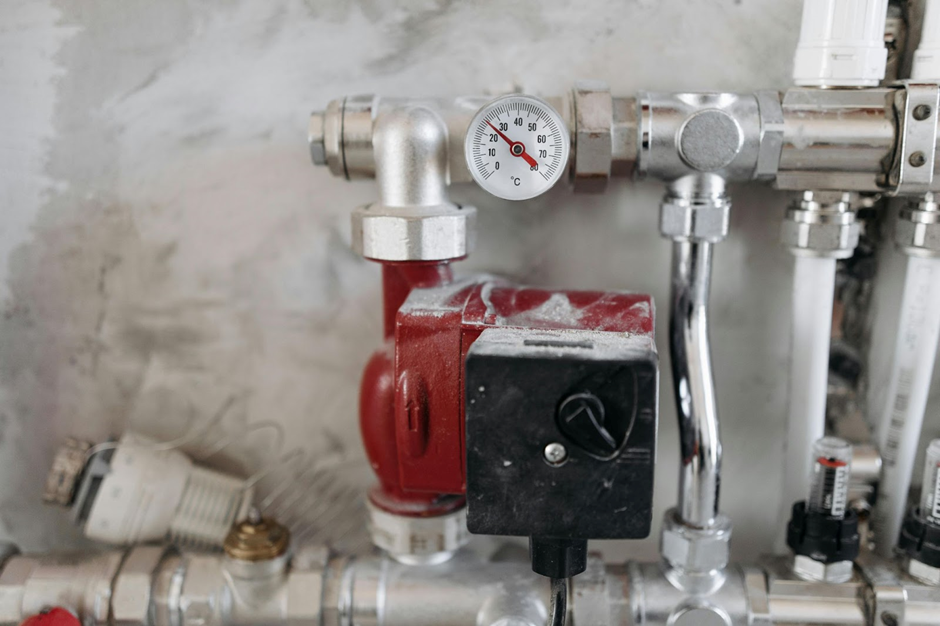

Before you decide where to place your boiler, you will have to take certain considerations and precautions into account.
Firstly, only a qualified gas engineer is legally permitted to install your boiler (do not DIY), to ensure it is installed correctly, meets the highest standards and is kept to boiler installation regulations.
While your gas engineer can determine the best possible placement for your boiler, it is helpful to be informed about potential locations.
Here are three potential locations for your boiler. Keep in mind that boilers can be installed in any room, provided they meet the necessary regulations.
Bathrooms
Bathroom boilers are convenient because their close proximity to baths and showers ensures quick access to hot water, making the bathroom an ideal location. They are often installed in bathroom cupboards to keep the boiler’s electrical components safely away from any potential contact with water
However, if the boiler is placed inside the bathroom, it is vital that it is as far away from the bath or shower as possible. This helps to minimise potential hazards, prevent damage to the boiler, and reduce the risk of electrical failure.
If you’re considering placing your boiler in the bathroom, it’s legally required to have a Gas Safe registered engineer install it in the correct bathroom zones, ensuring it’s positioned safely.
Zone 0- this zone refers to the area inside your bath or shower, so your boiler (or any other electrical equipment) should not be installed within this zone.
Zone 1- this is the area above your bath and shower with a height of 2.25 metres. To avoid water damage and electrical hazards, no boiler should be installed in this zone unless it is protected by a 30mA residual current device (RCD).
Zone 2- this area is located 0.6 metres from your bath or shower and extends to 2.25 metres high. Do not place your boiler within Zone 2 to avoid exposure to water, unless your boiler is protected by a 30mA RCD.
Zone 3- this area is the safest area to install your boiler in your bathroom, as it is over 0.6 metres away from the edge of your bath or shower and is at a height of over 2.25 metres from the floor.
Kitchen
The kitchen is one of the most common locations for boilers to be installed.
This is an ideal spot because the boiler can blend seamlessly with your kitchen’s design while being positioned away from water sources, which reduces the risk of electrical failure.
Installing a boiler in the kitchen is also practical, as it allows hot water to reach taps quickly. You can either mount the boiler or place it inside a cupboard. However, if you choose to install the boiler in a cupboard, be aware that it may require ventilation unless it operates at low temperatures.
Additionally, your boiler must be positioned away from windows and doors to ensure that the waste gases produced by the boiler can safely exit the building through a flue pipe. This placement also allows for easy access by a gas engineer during maintenance and repairs.
Bedrooms
Boilers may be placed in a bedroom due to a lack of space in the kitchen or bathroom, as well as their proximity to these areas, which makes hot water access convenient.
However, before making the decision to move your boiler, consider the following:
- Noise- boilers are noisy and so they can disturb your sleep, particularly if you are a light sleeper.
- Space- boilers are built to be compact and yet the space needed for a boiler might take the space you need for storage. Additionally, you must consider the space that comes with pipework and air circulation.
- Aesthetics- you may not want your boiler in your room if it stands out awkwardly against the room’s decor.
- Warmth- the boiler may add to the temperature of the room, making the room particularly difficult to sleep in during spring and summer.
However, if you are still considering placing your boiler in your bedroom due to concerns like a lack of space in your kitchen and bathroom, please contact a Gas Safe registered engineer, such as those qualified for local boiler repairs.
Final thoughts
You can have your boiler placed almost anywhere within the house as long as it is a safe location and the placement follows regulations. Before you consider fitting your boiler anywhere be sure to consider space, accessibility for maintenance and the potential risks that come with each location.
But most importantly, you must contact a qualified Gas Safe registered engineer, who will be able to install your boiler safely and in an appropriate location within your home.

