
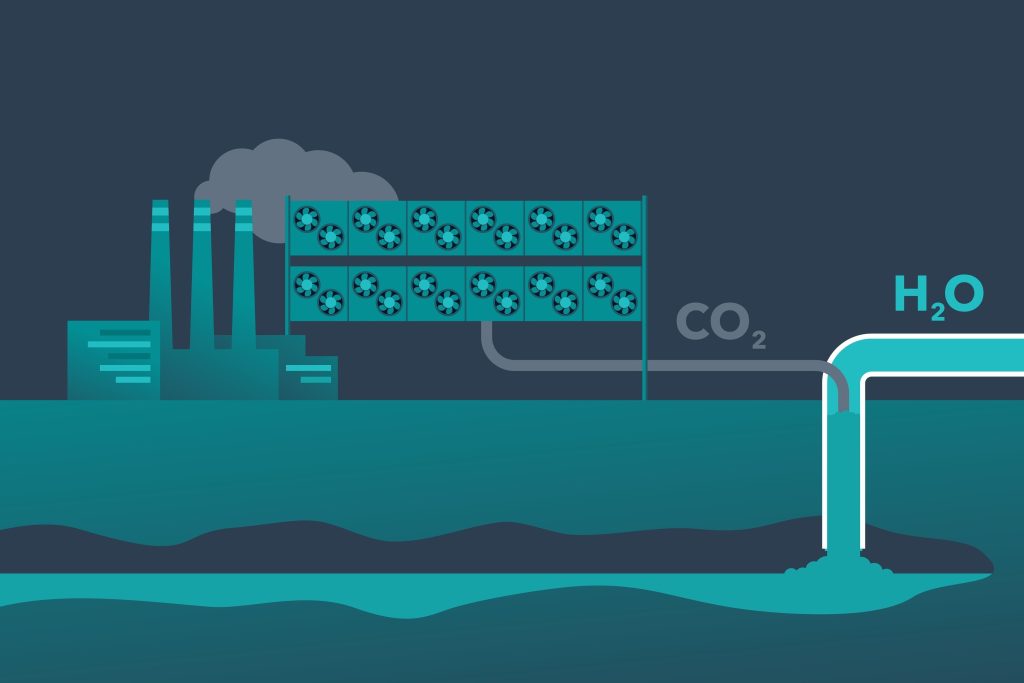

The UK’s ambitious plans for carbon capture, usage, and storage (CCUS) face numerous challenges.
- A government target aims to capture 20-30Mt of CO2 per year by 2030, but industry experts highlight obstacles.
- CCUS requires technological innovation and substantial investment to support its early deployment phases.
- Clear policy frameworks and supportive revenue models are deemed essential by stakeholders for CCUS success.
- Reforming regulatory and planning systems is crucial to expedite CCUS project timelines.
The UK government has set a formidable target for carbon capture, aiming to capture 20-30Mt of CO2 annually by 2030. This goal was articulated by the previous administration, yet requires current government endorsement and enhancements. The Carbon Capture and Storage Association (CCSA) has summarised industry insights in their report, highlighting key challenges in achieving these targets. CCUS technology, although promising, remains at a nascent stage and requires robust development and deployment.
Financial and infrastructural support is vital to meet these ambitious targets. Former chancellor Jeremy Hunt had pledged £20 billion for the initial deployment of CCUS projects. There is hope within the industry that up to 78 billion tonnes of carbon could potentially be stored in geologic formations under the North Sea. The ‘Track-1’ CCUS projects, which are the first phase of the UK’s CCUS programme, have received £630 million thus far, supporting eight projects across two clusters.
Tom Glover, CCSA chair, emphasises the necessity of substantial investment and a stable policy environment to ensure the timely realisation of the CCUS goals. Industry leaders also stress the importance of predictability within regulatory frameworks to foster confidence among businesses. Laura Gillions from Carbon Clean points out the need for clear policy criteria that favour financially viable projects proceeding effectively.
A critical barrier identified by stakeholders is the absence of market mechanisms for early-stage commercial-scale projects. C-Capture CEO Tom White notes that the UK merchant CO2 market is under-supplied, and developers are actively seeking mechanisms that encourage private sector investment in emerging technologies. This absence impedes the unlocking of capital necessary for pre-commercial prototypes.
Moreover, the regulatory landscape needs significant reform. Industry participants have called for better planning and permitting processes to streamline project timelines. Reducing the cost of power for industrial clients and reforming bureaucratic systems are viewed as key to accelerating the CCUS deployment process.
Finally, CCUS’s essential role in achieving net zero and beyond is underscored by Christie Hazell-Marshall from Environmental Resources Management. She highlights the vital need to not only reach net zero but also actively reduce atmospheric CO2 levels. CCS is critical in the sustainable energy transition and supports the large-scale adoption of hydrogen and net-zero fuels. The industry’s evolution offers contractors and consultants a consistent workload, as noted by Suzanne Ferguson of Wood, an opportunity seen as a blessing amidst the historical cyclicality of sector-based work in the UK.
The UK CCUS industry stands at a pivotal moment, demanding coordinated government and industry efforts to surmount existing challenges and unlock future opportunities.

