
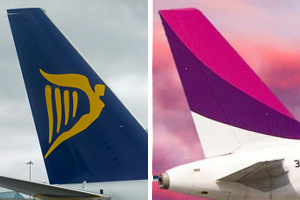

In September, leading budget airlines reported notable increases in passenger traffic, signifying a robust end to the summer travel period. Ryanair and Wizz Air both recorded impressive load factors, reflecting strong consumer demand for affordable travel options.
Ryanair saw a substantial 10% rise in carryings, reaching 19.1 million passengers with a 94% load factor, a testament to its strategic operations. Meanwhile, Wizz Air experienced a 3.9% increase, navigating engine challenges while maintaining a 91.7% load factor.
Ryanair’s Impressive September Performance
Ryanair demonstrated a strong performance in September, witnessing a significant 10% rise in passenger carryings. This increase brought the total number of passengers to 19.1 million, with a noteworthy load factor of 94%. Operating over 106,000 flights during the month, Ryanair marked an outstanding end to the summer travel season. This increase contributed to an annual growth in carryings, reaching 193.6 million passengers.
Wizz Air’s Steady Growth Amid Challenges
Wizz Air reported a commendable 3.9% growth in passenger numbers year-on-year for September, with 5.76 million passengers flying. Despite facing challenges such as the Pratt & Whitney GTF engine issues, the airline maintained a robust load factor of 91.7%. This growth represents the airline’s strongest performance this year, highlighting its resilience in the competitive budget airline sector. Notably, Wizz Air increased its capacity by 4.8%, continuing to expand its market presence.
Market Dynamics and Competitive Edge
The budget airline sector remains fiercely competitive, with carriers such as Ryanair and Wizz Air striving to enhance their operational efficiency. Both airlines have successfully navigated challenges, maintaining high load factors and expanding capacity. Ryanair’s decision to operate over 106,000 flights in September underscores its dominance in the European market, while Wizz Air’s capacity expansion reflects its strategic ambition to capture a larger share of the market.
Strategic Capacity Management
Effective capacity management has been a cornerstone of success for these airlines. Ryanair’s approach to maximising its flight operations during peak periods has resulted in higher passenger numbers and load factors. Conversely, Wizz Air’s strategy to increase capacity despite engine-related challenges showcases its proactive management and foresight in anticipating market demands. Such strategic decisions are pivotal in maintaining competitiveness in the budget airline sector.
Economic Impact and Consumer Demand
The rise in passenger numbers for budget airlines like Ryanair and Wizz Air signifies a recovering travel sector post-pandemic. The demand for affordable travel options continues to grow, driven by consumers’ desire for cost-effective solutions amidst economic uncertainties. As travel restrictions ease, these airlines are well-positioned to meet the surge in demand, capitalising on their established routes and efficient operations. This trend highlights the broader economic recovery, with budget carriers at the forefront of catering to the travel market.
Load Factors as a Performance Indicator
Load factors are a critical indicator of an airline’s efficiency and market position. With Ryanair achieving a 94% load factor and Wizz Air reaching 91.7% in September, these figures reflect optimal utilisation of available capacity. High load factors are particularly crucial for profitability within the budget airline segment, where margins are thinner. Maintaining such efficiency levels is essential for sustaining financial viability and ensuring competitive pricing.
Resilience in Adversity
Despite facing operational challenges, both Ryanair and Wizz Air have demonstrated resilience. Ryanair’s ability to sustain growth amid fluctuating market conditions, and Wizz Air’s adaptability to engine-related setbacks, underscore their robust business models. This adaptability is essential for long-term success in the dynamic aviation industry, where unforeseen circumstances often require rapid strategy adjustments.
The recent performance of budget airlines like Ryanair and Wizz Air showcases their strategic resilience, marking a positive outlook for the travel industry. Their ability to maintain high load factors and expand capacity amidst challenges underscores a strong recovery trajectory.
As demand for budget travel continues to rise, these carriers are well-equipped to leverage their established networks and operational efficiencies, ensuring continued growth and profitability in the competitive aviation market.

