
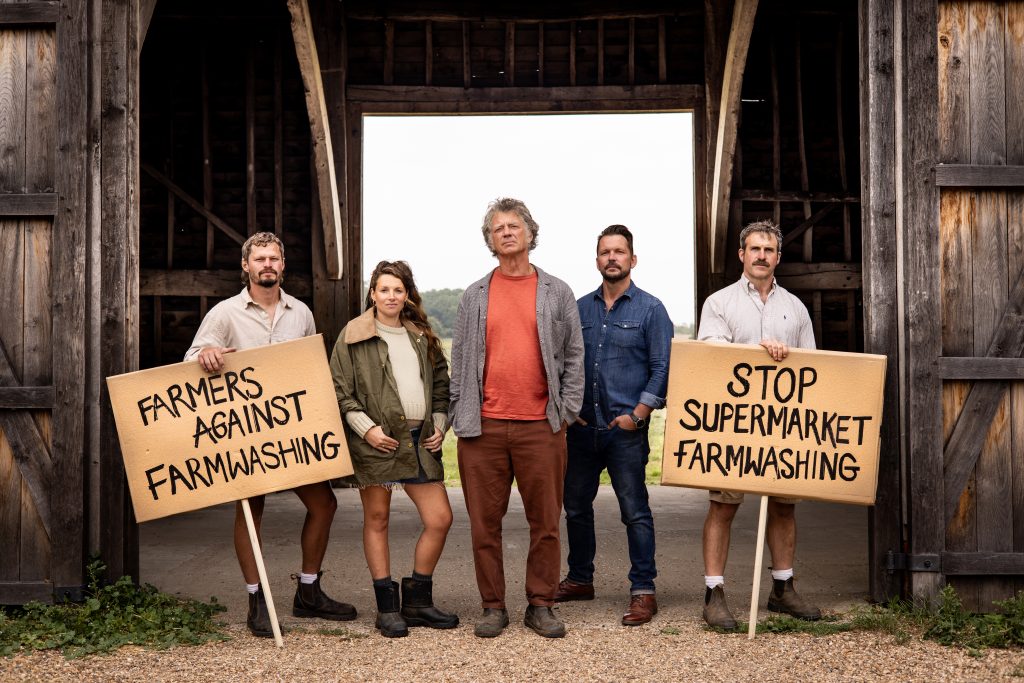

British farmers have launched a campaign against ‘farmwashing’ by major supermarkets, alleging exploitation.
- The campaign, led by industry figures, seeks to stop misleading branding practices by top UK supermarkets.
- An open letter has been sent to CEOs of major supermarkets addressing the alleged deceptive tactics.
- Campaigners highlight the contrast between supermarket branding and the actual origin of the products, many of which are imported.
- There are calls for transparency and support for British farmers, emphasizing fair treatment and sustainability.
In a move to tackle what they describe as ‘farmwashing’, British farmers have initiated a campaign accusing the country’s leading supermarkets of exploiting farmers. The campaign is spearheaded by Guy Singh-Watson, the founder of Riverford, and includes the support of television presenter Jimmy Doherty alongside eleven MPs from various political parties. An open letter targeting the CEOs of major supermarkets—Tesco, Sainsbury’s, Asda, Morrisons, Aldi, and Lidl—urges these retailers to cease practices perceived as misleading to consumers.
The accusation is centred around the use of faux farm brands and the Union Jack flag in marketing, which campaigners argue gives the false impression that products are sourced from idyllic British family farms, whereas a substantial portion is actually imported from large-scale industrial farms abroad.
Guy Singh-Watson expresses grave concerns about the state of British agriculture, stating, ‘British farming is at a breaking point.’ He emphasizes the need for honesty in the supermarket supply chain, suggesting that the public’s trust is being manipulated. Singh-Watson asserts that the British public is willing to pay more if it means supporting genuine British farming practices.
The campaigner’s demands are timely, following previous exposures of similar practices in 2017, where retailers such as Tesco, Aldi, Asda, and Lidl were criticised for their use of ‘fake farm’ branding on private label meat products. This history of misleading marketing has further fueled the current campaign, reinforcing the call for fairer treatment of farmers and transparency in sourcing practices.
As the discussion unfolds, campaigners are advocating for not just a halt to deceptive marketing but also an improved support system for local farmers. Singh-Watson calls upon supermarkets and the government to understand the public’s willingness to support ethical farming, advocating for a resilient food system and fair treatment for farmers.
The campaign urges supermarkets and the government to listen to consumer demand for transparency and fair treatment of farmers.

