
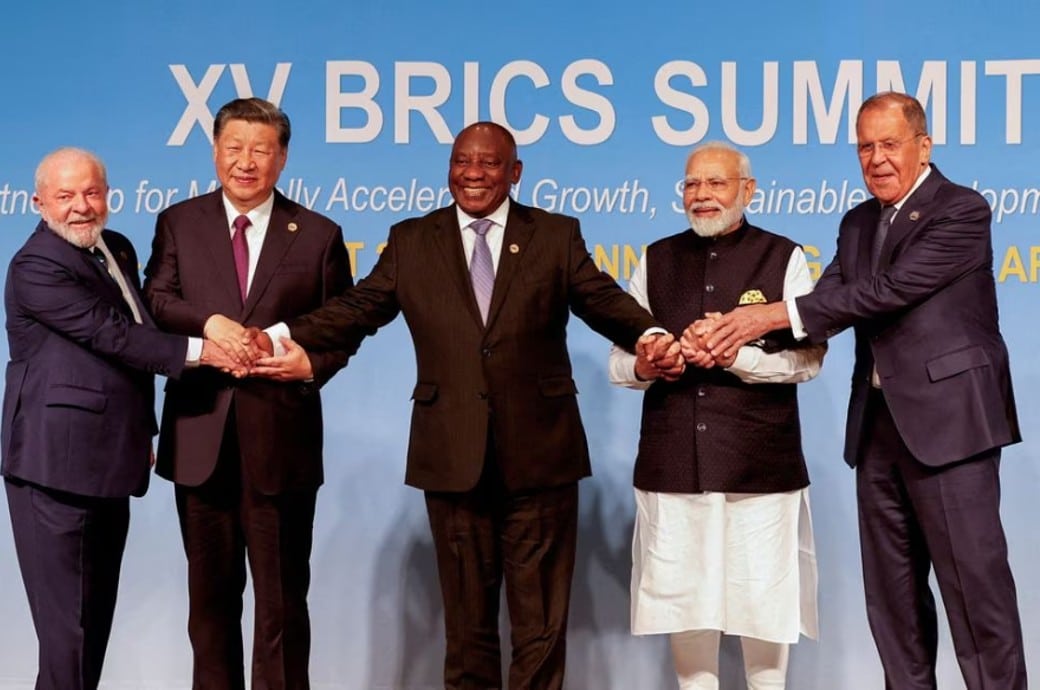

As the highly-anticipated 2024 BRICS summit approaches, all eyes are on the alliance for significant economic announcements.
Speculation is rife about the unveiling of a groundbreaking de-dollarization roadmap that could redefine global trade dynamics.
BRICS Economic Expansion and Influence
The BRICS alliance has witnessed a tremendous growth trajectory in recent years, both in terms of size and influence on the global stage. This surge in prominence is propelled by its strategic initiatives and collective efforts to diversify economic partnerships beyond traditional Western economies. The upcoming summit in 2024 is expected to amplify these efforts through bold announcements. The alliance continuously seeks to fortify its economic autonomy by reducing reliance on the US dollar.
During the 2023 summit, BRICS extended invitations to countries such as the UAE, Egypt, Iran, and Ethiopia, marking a significant expansion since South Africa’s inclusion in 2001. This strategic inclusion aims to foster stronger economic ties across continents, further enhancing the bloc’s geopolitical and economic clout. The impending 2024 summit promises to rival this expansion in both scope and impact.
De-Dollarization: A Strategic Move
Amidst its growing influence, BRICS is poised to unveil a de-dollarization roadmap during its 2024 summit. The focus is on transitioning towards a multicurrency platform and possibly introducing a gold-backed BRICS currency. Such developments are anticipated to challenge the longstanding dominance of the US dollar in global trade, providing an alternative pathway for international transactions.
As per recent reports, BRICS countries have been shifting towards trading in local currencies since 2022. These efforts have gained momentum due to geopolitical tensions and economic sanctions, notably against Russia. This shift has been instrumental in reducing the US dollar’s share in global reserves, thereby encouraging a broader acceptance of local currencies for trade.
The potential of a BRICS-native currency further underscores the bloc’s commitment to economic independence. Although the introduction of this currency faces several hurdles, it signifies a long-term vision to streamline trade within the alliance without the need for US dollar exchanges.
Implications of a BRICS Pay System
One of the most anticipated revelations at the summit is the BRICS Pay system. Designed as an alternative to the Western-dominated SWIFT payment network, it aims to facilitate faster trade settlements in local currencies.
The BRICS Pay system represents a paradigm shift in international trade dynamics. By offering a robust alternative to traditional payment platforms, it can potentially revolutionise how member countries conduct financial transactions with each other. Streamlining these processes not only strengthens economic ties but also diminishes dependency on the US dollar.
Despite the ambitious nature of this project, there remain challenges in its full implementation. Regulatory hurdles and technological integration are some of the hurdles that the bloc faces. However, if successful, BRICS Pay could lay the groundwork for a more self-reliant economic framework within the alliance.
The Role of Sanctions and Global Economic Shifts
The imposition of sanctions, particularly against Russia, has inadvertently accelerated the de-dollarization efforts within BRICS. As Western nations imposed financial restrictions, BRICS members increasingly turned inwards, developing mechanisms to support local currency trades.
The dollar’s diminishing role is underscored by reports from the Atlantic Council, which highlight the declining share of US dollar reserves since the inception of BRICS. This trend is indicative of a broader shift where emerging economies are exploring alternative economic alliances and trading methodologies.
BRICS’ focus on local currency trade and potential new financial infrastructures highlights a commitment to fostering a multipolar world economy. These initiatives not only safeguard member countries against economic coercion but also encourage resilience against global financial fluctuations.
Looking Ahead: Challenges and Opportunities
While the de-dollarization efforts and introduction of BRICS-centric systems present significant opportunities, they also come with challenges. The development of a multicurrency platform and a native currency requires harmonised economic policies and trust among member nations.
Political differences and regional issues could pose challenges to the bloc’s cohesion. Moreover, ensuring technological compatibility and adoption of new systems across diverse economic landscapes is crucial for success.
Despite these challenges, the 2024 summit presents an unparalleled opportunity for BRICS to assert its role in shaping the future of international finance. By promoting economic self-reliance and reducing US dollar dependency, BRICS is potentially setting a precedent for other emerging economies to follow.
Conclusion
The 2024 BRICS summit is poised to be a pivotal moment in the global economic landscape. With its ambitious plans for de-dollarization and economic self-reliance, the alliance is demonstrating a firm commitment to shaping a dynamic and resilient financial future.
The anticipated announcements underscore BRICS’ resolve in pursuing a multipolar economic world. These developments signal a shift that could redefine global trade, challenging traditional economic power structures.
The 2024 BRICS summit marks a potential shift in the global financial paradigm.
Its strategic initiatives could challenge existing power structures, promoting a more balanced economic landscape.

