
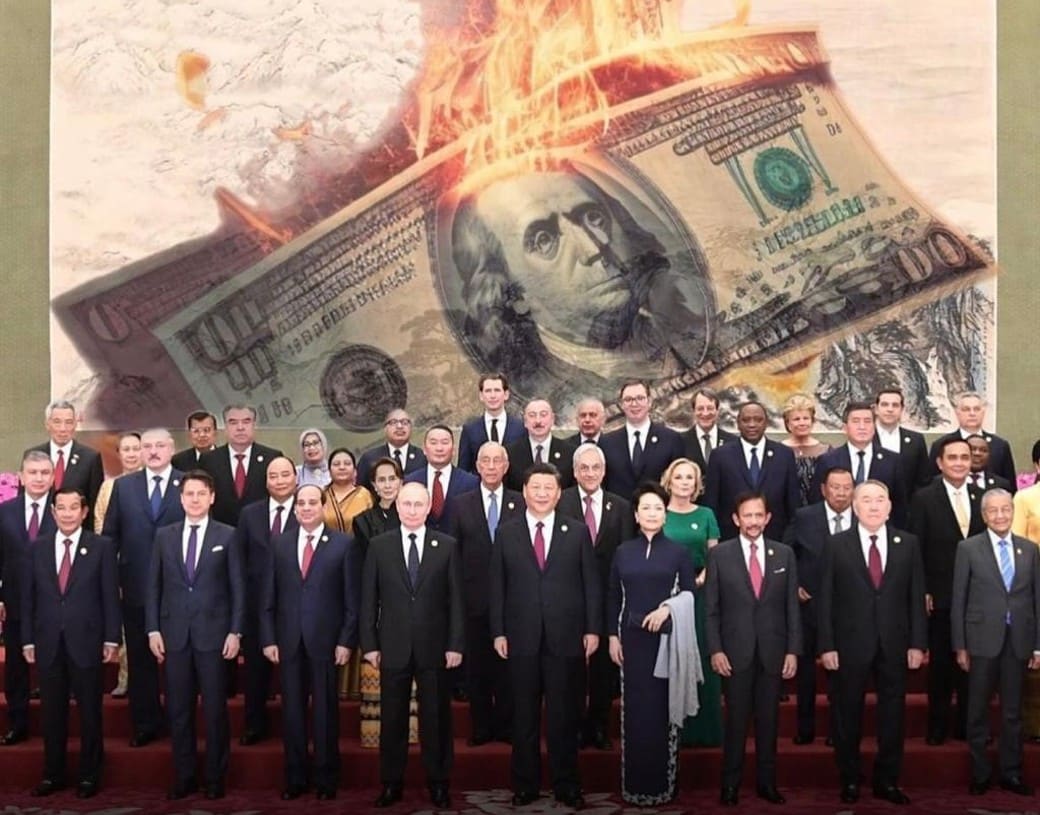

The international balance of power is shifting, ushering in a new era defined by the BRICS alliance.
As the BRICS group strengthens, it challenges the US dollar’s dominance on the global stage, setting the stage for transformative economic changes.
The emergence of the BRICS+ alliance, now a nine-member coalition, signifies a shift in economic influence from the West to the East. Representing 40% of global crude oil production and one-quarter of the world’s GDP, BRICS commands significant power. The alliance’s growing economic power underscores its potential to reshape global financial systems.
For BRICS, the primary objective is clear: reducing dependence on the US dollar in global transactions. Emerging economies face challenges as they shoulder the burden of supporting the US dollar, often to their financial detriment.
By advocating for local currencies in international trade, BRICS aims to secure a more equitable and balanced global economic framework.
The potential decline of the US dollar’s dominance raises alarms about the US economy’s future. The BRICS initiative could disrupt supply and demand mechanisms that have long favored the dollar.
A potential outcome of reduced reliance on the dollar could be hyperinflation, which would significantly impact the cost of living in the US, threatening jobs and destabilising the stock market.
As the BRICS agenda gains traction, the economic ramifications for the US could be profound, necessitating strategic response measures.
Several nations monitor BRICS’ progress with keen interest, considering benefits of participating in a de-dollarized economic system. These countries, aligned in their vision for economic autonomy, could bolster the alliance’s goals.
The prospect of a diversified currency market appeals to many, as it promises reduced dependency on a singular currency and greater economic flexibility.
A shift towards local currencies in international trade, as championed by BRICS, could recalibrate global trade dynamics. With local currencies gaining traction, global markets could see a diversification of currency use that challenges existing norms.
Such a transformation may foster regional trade partnerships and provide emerging economies with a stronger voice in global negotiations.
The BRICS push for currency diversification represents a strategic move towards more balanced and equitable trade relations.
The rise of BRICS highlights questions about the dominance of Western-led financial institutions. As a counterbalance, BRICS envisions a governance model that integrates more diverse economic perspectives.
This evolving landscape may prompt significant reforms in global financial governance, promoting inclusivity and reducing historical inequities.
By advocating for a multifaceted global economic order, BRICS aims to redefine traditional governance frameworks.
The BRICS alliance stands at a crossroads, with opportunities to expand its influence by integrating additional members committed to economic transformation.
While challenges remain, the potential impact of a strengthened BRICS on global economic governance is undeniable.
The BRICS alliance symbolises a pivotal shift in global economic governance, with profound implications for future trade and financial systems.

