
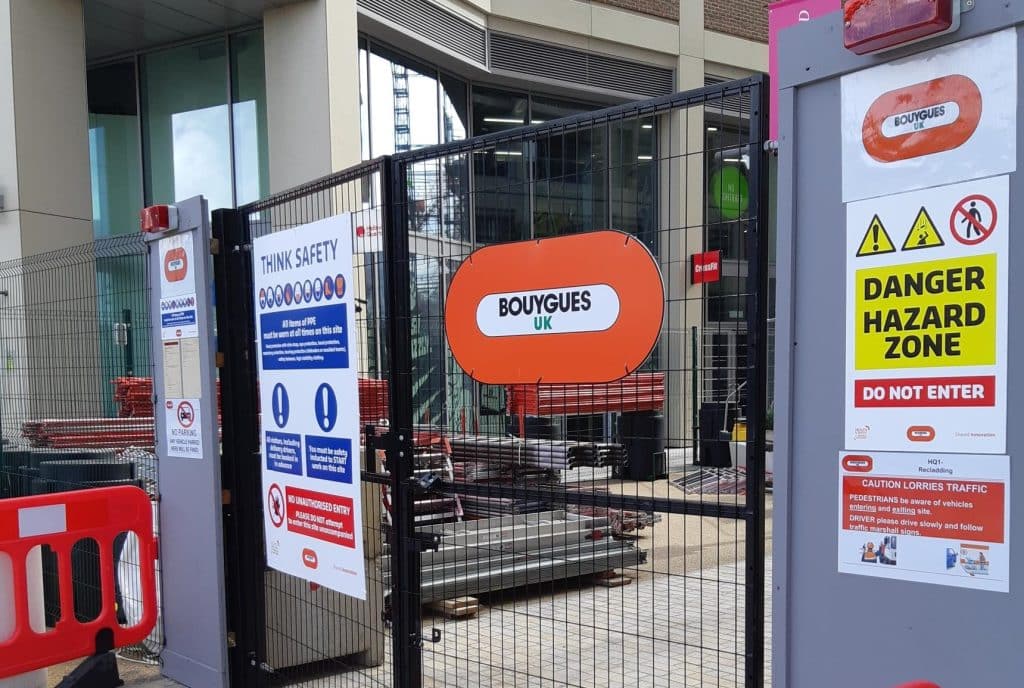

Bouygues is facing intensified financial strain due to escalating building-safety liabilities and subcontractor failures.
- The French contractor reported a pre-tax loss of £62.1m for 2023, significantly higher than the previous year’s £41.9m deficit.
- Provisions for building-safety issues reached £147.5m, almost doubling the prior year’s figure, with substantial amounts allocated for future use.
- Additional losses are linked to subcontractor failures, limited labour availability, and geopolitical conflicts, which impeded the company’s performance.
- Despite these challenges, Bouygues has joined the Responsible Actors Scheme, underscoring its commitment to rectifying safety defects.
Bouygues has reported exacerbated financial difficulties, largely attributed to the surge in building-safety liabilities and the collapse of several subcontractors. The contractor’s latest accounts for 2023 reveal a pre-tax loss of £62.1 million, marking a 48 per cent increase from the £41.9 million loss recorded in 2022. This notable deterioration is chiefly driven by provisions totalling £147.5 million earmarked for resolving building-safety crises, a figure that nearly doubles the prior year’s tally of £76.9 million. Approximately £31.8 million of these funds are intended for more immediate application, with the company poised to recoup £32.1 million from its insurer, ensuring a partial offset of these liabilities.
The company’s financial woes are further compounded by spending £11.9 million on remediation work throughout the year. Bouygues’ financial statements detail the impact of a “small number of failures” among its subcontractors, which have aggravated its losses. “The loss for the year arose as a result of cost increases due to subcontractor performance, availability of labour, the conflicts in the Ukraine and the Middle East, as well as the continuing impact of post-completion liabilities relating to building safety,” the accounts reveal, reflecting the complex confluence of internal and external challenges faced by the firm.
Turnover figures reflect a similar downtrend, plummeting from £382.6 million in the previous year to £325.6 million, a dip that the firm attributes to a “slowdown in contract awards as a result of market conditions.” The profit margin has also suffered, worsening from -10.9 per cent in 2022 to -19.1 per cent. Despite these setbacks, Bouygues remains strategic in its bidding process, opting to remain selective as it navigates these tumultuous financial waters.
Looking to the future, Bouygues’ directors acknowledge the persistent pressures on financial performance expected to persist into 2024. However, they express optimism that the company’s current strategy lays the groundwork for potentially improved results in subsequent years. Their alignment with the government’s Responsible Actors Scheme signifies their proactive efforts to address building safety defects. The scheme, part of the Building Safety Act 2022, mandates contractors to remedy safety-related issues and maintain open communication with residents. Bouygues confirms that its financial statements have not been impacted by joining the scheme, as they had proactively accounted for these liabilities beforehand.
Further illustrating the firm’s legal entanglements, Bouygues has engaged in high-profile litigation over cladding concerns, notably initiating a £2 million lawsuit against a subcontractor in 2020 concerning defective cladding at a Premier Inn in Bedford. This ongoing legal battle underscores the intricate legal landscape that construction firms navigate, particularly amid widespread scrutiny over building safety standards.
Bouygues’ strategic decisions and proactive measures aim to mitigate current challenges while laying a foundation for future recovery.

