
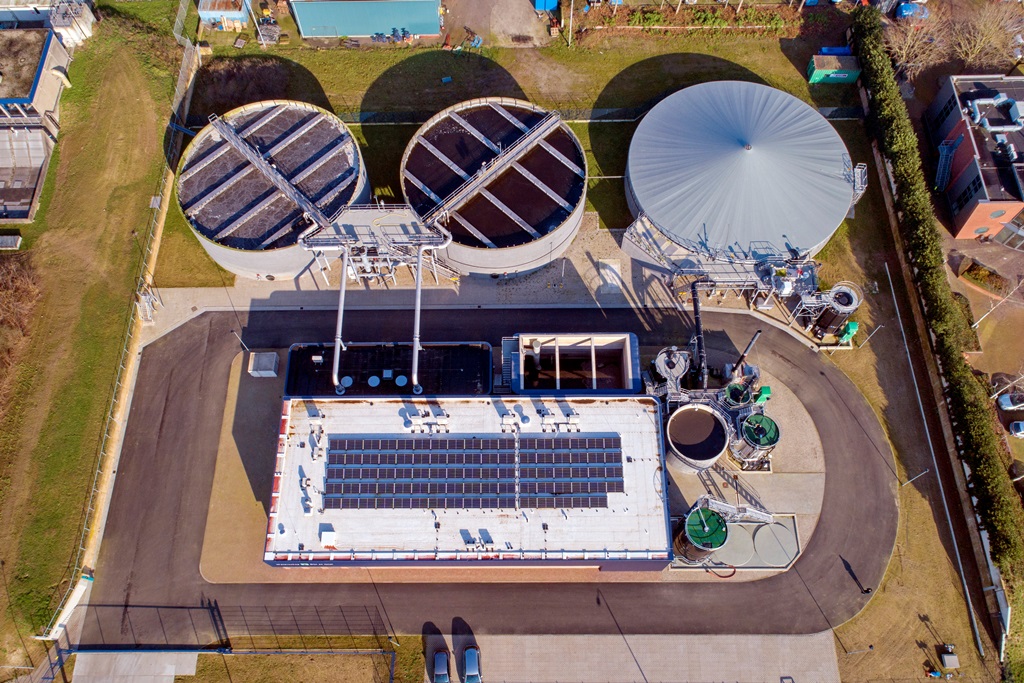

The UK is set to host its first Kaumera biopolymer extraction plant in Blackburn, a pioneering venture set to revolutionise wastewater treatment.
- United Utilities, alongside Dutch engineering firm Royal HaskoningDHV, will spearhead this innovative project using advanced Dutch technology.
- The Kaumera extraction process offers a sustainable alternative, recovering valuable biopolymers from sewage sludge with potential industrial applications.
- The initiative is backed by Ofwat’s Innovation Fund, engaging UK water companies to explore new revenue opportunities.
- This pilot project aims to enhance wastewater treatment economics, potentially transforming industry standards and practices.
The introduction of the UK’s first Kaumera plant in Blackburn marks a significant development in sustainable technology. By leveraging Dutch expertise, particularly from Royal HaskoningDHV, the project aims to utilise advanced methods to extract biopolymers from sludge at the Blackburn wastewater treatment works. This initiative seeks to establish a benchmark for environmental innovation within the UK.
Central to the project is the use of Kaumera Nereda gum, a unique bio-based material derived from purification processes. With properties that allow it to both retain and repel water, this polymer opens a myriad of commercial opportunities in industries such as agriculture, construction, and beyond. Its flame-retardant nature further heightens its appeal in composite building materials.
Developed in collaboration with Delft University of Technology, Kaumera technology is already operational in the Netherlands and Portugal, showcasing its proven efficacy. The Blackburn installation, slated for later this year, signifies an exploratory phase that will run until March 2027, during which its applications will be rigorously assessed.
Nearly a dozen partners, including United Utilities, Severn Trent Water, and academic institutions like Glasgow Caledonian University and Cranfield University, will collaborate on this venture. Their joint effort underscores a commitment not only to technological advancement but also to the principles of a circular economy, as highlighted by United Utilities’ chief engineer, Lisa Mansell.
The economic implications of this project are profound. By successfully recovering biopolymers, the pilot initiative promises to enhance revenue streams for water companies, offset operational costs, and offer a cleaner, more sustainable future for wastewater management. It’s clear that the ambition for this venture extends well beyond environmental benefits, aiming to reshape the industry’s fiscal landscape.
The Blackburn Kaumera plant advances the UK’s commitment to sustainable technology in wastewater treatment, with potential economic and environmental gains.

