
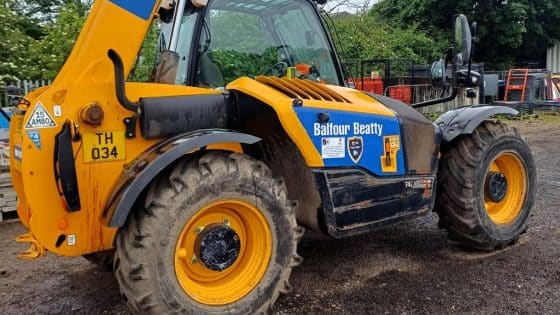

Balfour Beatty has initiated a ground-breaking move by mandating AI-powered human-recognition cameras on large machinery to enhance site safety.
- The system aims to reduce fatal accidents by detecting humans near heavy equipment and alerting both operators and pedestrians.
- Implemented since June, the technology is to be standard across Balfour Beatty sites by January, urging industry-wide adoption.
- The company collaborates with various industry peers to streamline the technology’s integration.
- Cameras are mandated on specific heavy machinery to ensure maximum safety across construction sites.
Balfour Beatty, a prominent player in the construction sector, has taken a pioneering step by mandating the use of AI-driven human-recognition cameras on large construction machinery. This initiative aims to significantly reduce the number of fatal accidents occurring on construction sites. The advanced camera system detects when a person is in proximity to heavy machinery and promptly alerts both the machine operator and the pedestrian.
The camera system, which has been in use on Balfour Beatty’s heaviest machinery since June, will become a standard requirement for all subcontractors come January. By utilising cameras positioned strategically on machinery blind spots coupled with AI trained to identify human figures, the system creates a preemptive alert. This alert mechanism provides audible and visual warnings to operators, including a specific voice alarm when humans are detected too close.
In collaboration with Safety Shield Global since 2018, Balfour Beatty has spearheaded the integration of this technology and is now working alongside other suppliers for a unified industry approach. These efforts ensure the availability of compatible products across different construction platforms. Such efforts underline a commitment to enhancing safety and encouraging sector-wide adoption. Moreover, the firm plans to utilise data from these alerts to better understand potential hazards and improve safety strategies.
Richard Mason, the firm’s innovations and sustainability manager, emphasised the collaborative nature of this project, highlighting cross-industry conversations to gain broad consensus and understanding of the technology. This strategic approach ensures that operators are not confronted with varying systems when moving between sites operated by different companies.
The implementation applies primarily to heavy machinery, such as excavators over 13 tonnes, forward-tipping dumpers above 6 tonnes, articulated dump trucks exceeding 9 tonnes, and rollers over 13 tonnes. According to Balfour Beatty’s Chief Technology Officer, Chris Johnson, this move represents a critical step toward eliminating site-related harm, underscoring the firm’s commitment to safety.
Balfour Beatty’s adoption of AI technology marks a significant milestone in striving for zero harm across construction sites.

