
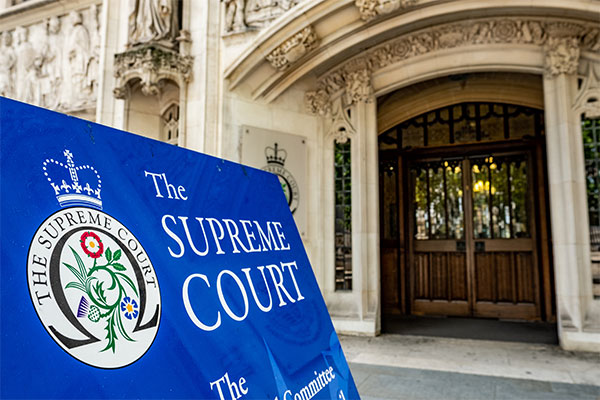

The Supreme Court’s recent clarification on flight delay compensation rights marks a significant shift for air passengers affected by unforeseen disruptions. This ruling, hailed as a victory for consumer rights, obliges airlines to compensate for delays caused by crew illnesses.
Supreme Court’s Landmark Decision
The Supreme Court’s recent ruling establishes a pivotal precedent that clarifies the issue of compensation entitlements for passengers affected by flight delays due to crew sickness. This landmark judgment in the case of Lipton vs BA Cityflyer has been unequivocally lauded by the Civil Aviation Authority (CAA) as it eliminates the previously exploited loophole of categorising pilot illness as an ‘extraordinary circumstance.’
CAA’s Response to the Ruling
The CAA’s endorsement of the decision underscores a significant shift in passenger rights. The authority has committed to monitoring compliance rigorously, recognising that this decision could impact tens of thousands of claims per year. By rejecting the notion that crew sickness is extraordinary, the court has set a new standard for airline accountability.
This judgment commands airlines to address operational issues, such as staff illness, within the ordinary course of their business. This directive aligns with the broader application of EU air passenger rights regulations within the UK, despite post-Brexit legal independencies.
Details of the Lipton vs. BA Cityflyer Case
The incident involving Mr and Mrs Lipton serves as a central example of the ruling’s implications. After their flight cancellation due to the pilot falling ill just an hour before take-off, the Liptons were initially denied compensation. However, the Supreme Court later ruled in their favour, granting a £220 compensation. This decision followed a long legal journey, including County Court and High Court rejections, showing the complexity involved in establishing the legitimacy of compensation claims.
The Supreme Court, referring to EU Regulation 261, affirmed that the incident predates Brexit and falls under the previous EU legal framework. This highlights the intricate nature of applying international regulations in a domestic context.
Legal Implications and Industry Response
The legal community recognises this ruling as a definitive interpretation of what constitutes ‘extraordinary circumstances’. Airlines previously held the defence that such delays due to illness were unavoidable. Now, the Court’s decision eradicates this defence, compelling airlines to integrate such possible disruptions into their operational planning.
The reaction from BA Cityflyer, expressing disappointment, highlights the challenges airlines face in adjusting to this new legal landscape. Yet, the Court’s stance is clear: regular business operations, including handling staff illness, should not unduly disrupt passenger schedules.
Impact on EU and UK Aviation Regulations
Despite Brexit, the Supreme Court’s reference to similar European Court of Justice (CJEU) rulings underscores an alignment with previous EU standards. The Court’s approach reflects continuity in consumer rights protection, ensuring air passengers remain secured against operational oversights like staff sickness.
This ruling mirrors a 2023 CJEU decision on TAP Portugal, wherein staff absence was ruled not an extraordinary circumstance. Such references signal the UK judiciary’s inclination to consider established European precedents for guidance in shaping national regulations.
Conclusion of the Legal Battle
The judgment concludes a protracted legal process, affirming the Court’s role in upholding consumer rights amidst evolving regulatory frameworks. The ruling is final, with no further avenues for appeal, underscoring its significance as a settled matter within the UK’s legal system.
BA Cityflyer’s outcome in this case marks a turning point. It reaffirms the need for airlines to manage their operations more effectively, integrating predictable challenges like staff illness into their contingency strategies.
Passenger Rights and Future Outlook
For passengers, this ruling delineates a clearer path to claiming compensation effectively, reinforcing confidence in legal protections against arbitrary cancellations. The decision empowers consumers, setting a precedent that obligates airlines to adhere strictly to regulatory standards.
As the aviation industry absorbs the implications of this ruling, ongoing attention will focus on how airlines adapt their operational frameworks to comply fully with the enhanced regulatory expectations.
In essence, the Supreme Court’s judgment redefines the boundaries of ‘extraordinary circumstances’, ensuring accountability within airline operations. This pivotal decision empowers passengers with a robust framework for seeking compensation, highlighting a move towards enhanced consumer protection.

