

This article helps you learn about ALS in 2026 by covering updated courses, explaining the MATATAG Curriculum, and outlining senior high school options that help learners understand new pathways for skills and future opportunities.
Are you curious to know how alternative learning system courses shape the education system for students who need flexible pathways? As education continues to evolve, many individuals still face various obstacles that hinder them from following the traditional school system. Access to formal education is often limited due to varying responsibilities and locations. The alternative learning system courses are commonly known as ALS. These courses were designed to provide flexible and inclusive learning opportunities for out-of-school youth.
In 2026, the alternative learning system enters a new era. The system deeply focuses on skill readiness and alignment with national education goals. The Department of Education has introduced various updates to courses and delivery. In this article, we will discuss the complete guide to alternative learning system courses, the new MATATAG curriculum and senior high school options in detail.
Key Outcome Of The Article:
- The 2026 alternative learning system courses mainly focus on completing education and developing practical skills.
- Alternative learning system courses are fully aligned with the national curriculum to ensure the same high standards of education.
- The basic literacy program (BLP) modules should be used in real-life situations.
- Digital learning tools should be used to expand access and flexibility in alternative learning systems.
- Short, modular alternative learning system courses enable learners to study at their own pace.
Understanding the Alternative Learning System
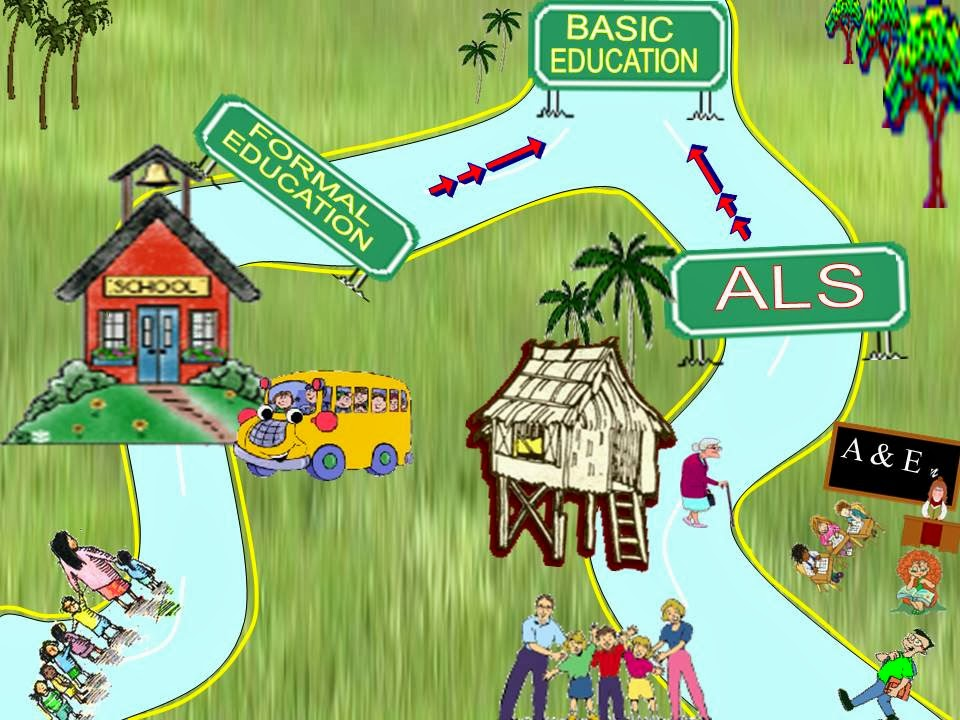
The Alternative Learning System is a parallel learning system in the Philippines. This system provides education and learning beyond the classroom. The ALS is is designed for learners whowho are unable to attend school classes owing to personal and social reasons.
ALS always facilitates youth and adult learners who cannot access formal education. This system should provide flexible scheduling and community learning. ALS should not be viewed as a shortcut to learning.
Source: ALS escalenet city
It should follow the national standard and lead to recognised certificates. These certificates can be used for further education and employment. Many students are interested in learning new skills beyond their regular academic tasks. In such cases, professional assignment-writing services help learners manage their academic workload while they focus on skill development and practical learning alongside ALS programmes.
Main Types of ALS Courses Explained
By 2026, the alternative system will provide well-structured classes to meet students’ educational needs. Programmes are based on the national standards curriculum and provide different study paths. These alternative learning system courses provide learners with a strong foundation that can improve their prospects for the future.
1. Basic Literacy Program (BLP)
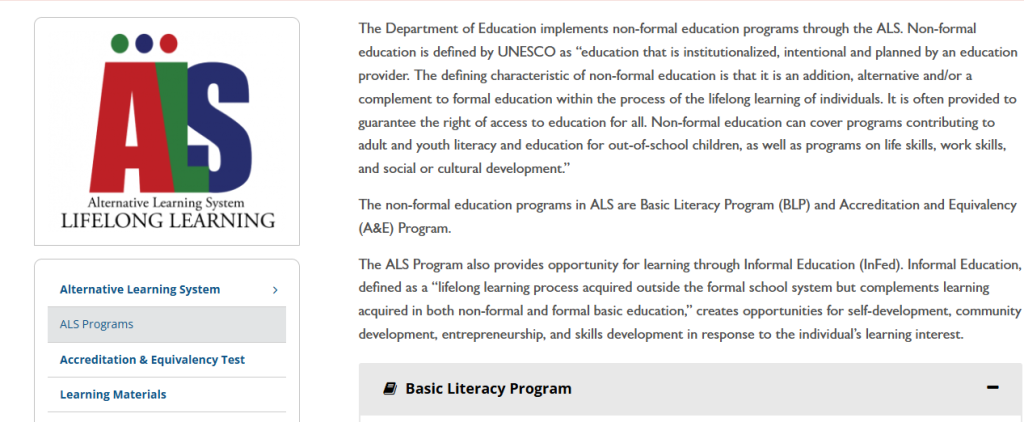
The basic literacy programme is designed for learners with little reading, writing, and maths skills. It is the entry point to ALS for many learners. According to a UNICEF study, early literacy programmes significantly improve adult learners’ confidence and readiness for further education.
Source: GOVPH
The basic literacy programme is designed for those whose reading, writing, and maths skills are below average. It is the gateway to ALS for many learners. The main purpose of the courses is to improve the skills of reading, writing , and counting. At the beginning level, learners work on letters, form words, and read sentences.
2. Accreditation and Equivalency (A and E) Program
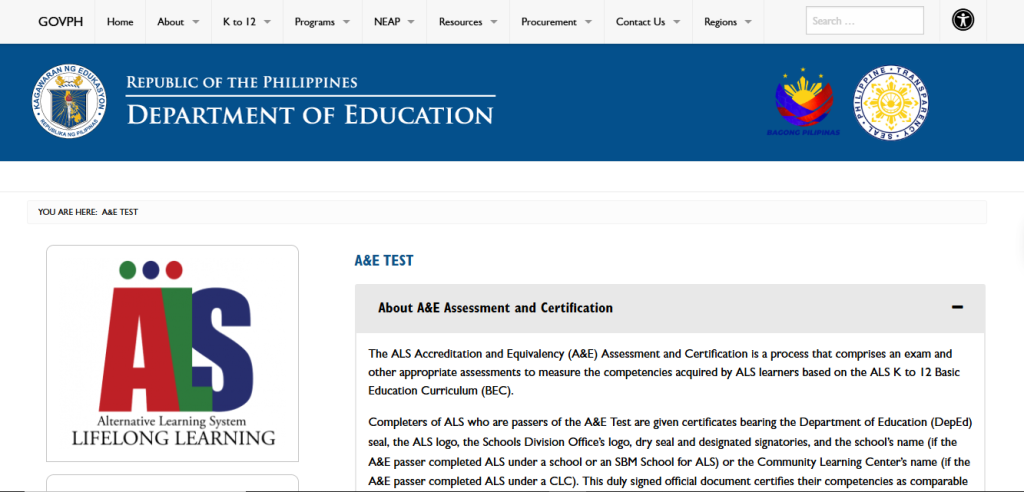
The A and E Program provides certificates to learners which are equivalent to formal education. It enables the learner to come back to the education system and progress. UNESCO research has found that equivalency programs lead to higher levels of school completion and labour force participation.
Source: GOVPH
Elementary Level
This level is suitable for the learner who did not complete Grade six. The curriculum includes language, maths, science and social studies. After passing the course test, learners are awarded an elementary certificate similar to finishing Grade Six. The ResearchGate study shows that the equivalency certification effect has been proven to enhance learner motivation and continuation rates.
Junior High School Level
The junior high school level is suitable for learners who did not complete Grade 10. This level should comprise advanced reading, maths, science, and life skills. If the learner passes the exam, they will be awarded a junior high school certificate equivalent to Grade 10.
3. ALS Senior High School Program
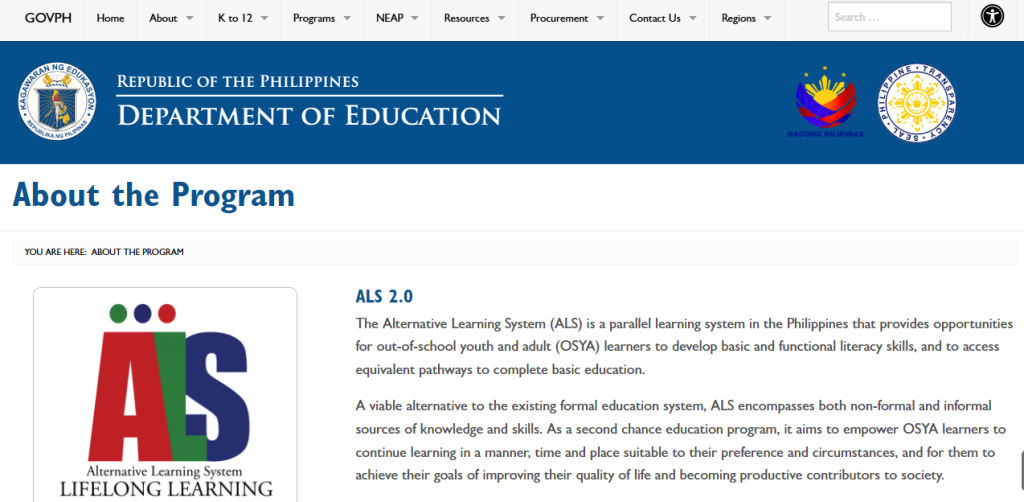
Senior high school has become an important part of ALS in 2026. Students need to go beyond junior high to access better career options. According to a DepEd policy, SHS graduates are better prepared for the workforce.
Source: GOVPH
Available Tracks
The academic track and the technical-vocational livelihood track are both available at ALS. The academic record prepares the learners for college. The TVL track prepares them for employment and business. ALS also provides a subject and context for researchers to apply the correlational research methods.
The MATATAG Curriculum Explained
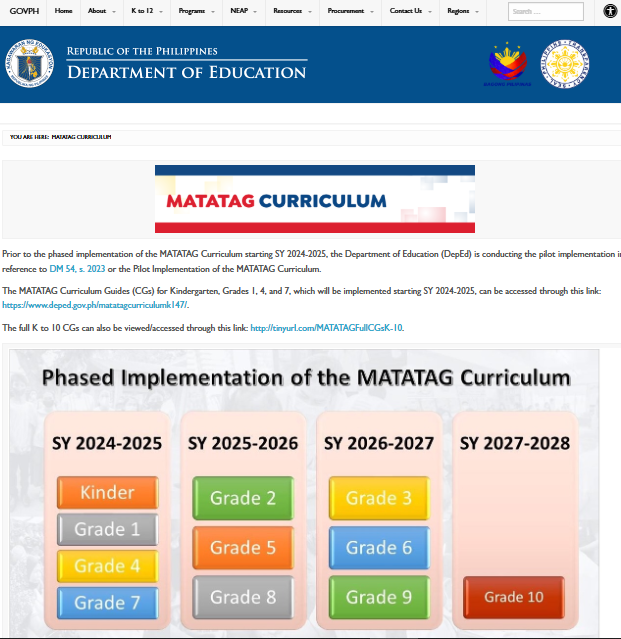
One of the latest updates is about the new partnership between the alternating learning system and the MATATAG curriculum. This is the new national framework of the Philippines. It’s deeply focused on the literacy rate and values. ALS functional literacy strands are aligned with the formal basic education objectives.
Source: GOVPH
The MATATAG ensures that learners develop skills that meet the national standards. The main aspects of the MATATAG curriculum include reading, writing, and speaking. Simple maths and problem-solving are also enhanced.
The ResearchGate study revealed that in nonformal programmes, curriculum alignment led to improved learning achievements and learner confidence. This implies a simpler shift to the workplace or to higher education. It also enhances trust in ALS certification.
1. Literacy Under the New ALS Framework
Literacy in ALS courses mainly focuses on understanding and meaningful communication. This framework helps the learner read with experience rather than rely on memorisation.
This approach helps the learner understand the information and use it in their everyday experiences. Oral communication skills were also strengthened through speaking activities and real-life scenarios. According to a UNESCO report, the functional literacy programmes mainly focus on the process of reading for understanding and communication.
2. Life Skills and Values Education
Values and life skills education are key to the ALS learning process. This programme helps the learner build informed decisions and interpersonal skills that are useful in real life. Strong values such as responsibility, respect , and perseverance are also promoted throughout their learning journey.
These values promote self-improvement and enhance job prospects. The character’s education enables learners to act morally and be productive members of their families and communities. According to a new World Bank study, education that includes life skills and values training can lead to better employment outcomes.
Senior High School Options Through ALS
Many learners want to continue to build their practical skills beyond earlier learning stages. The alternative learning system provides a flexible pathway to move forward with confidence to their bright future.
1. Academic Track
The Academic Track is designed for students who plan to study in higher education institutions such as colleges and universities. It mainly focuses on basic subjects such as science, math, and social studies. These subjects will help the students to learn and practice the study skills.
The track also helps in understanding and academic writing. Many students may struggle to manage their academic workload while learning the ALS abilities. In such cases, credible assignment writing services can assist students in completing their assignments thoroughly and professionally. Their PhD writer allows the individual to master new skills without stress.
2. Technical Vocational Track
The second track is technical vocational, which mainly focuses on the practical and hands-on skills. The learner should get training in specific areas such as welding, food processing, and simple electronics. The main focus of training is to prepare the learner for the job market or small business.
The International Labour Organisation claims that adult learning at vocational institutes improves employability and earning power. This path prepares the students who want to work soon or start their own livelihood projects. Vocational learning is suitable for adult workers looking to gain more employeable skills.
3. Choosing the Right Track
The choice of right senior high school track depends on your goals and interests. ALS guidance helps the leaner to make an informed decision. Both tracks can lead to a better and valuable future.
Conclusion
The ALS in 2026 is a strong commitment to the inclusivity and flexibility of the education system. Such an education system enables you to grasp the learning paths via updated alternative learning courses and structured programs. The integration of the system with the MATATAG Curriculum strengthens literacy, numeracy, and character formation.
It ensures access to education for ALS learners; their skills should align with the national standard curriculum. The availability of senior high school improves the development of learners and provides enough time to make sound decisions for their future.
Frequently Asked Questions About Learning System Courses
1. Is ALS Free?
Yes, ALS is free for all eligible learners. The ALS course is fully funded by the Department of Education. Learners do not need to pay fees or charges for their enrolment in the ALS course. Instructional materials and testing are also free. This helps in removing the financial barrier for out-of-school youth.
ALS centres in many communities help to improve the access to the courses. The main purpose of the ALS course is to remove the barriers of costs and promote equal learning opportunities. Through the open learning system, students can enhance their abilities and progress to further study or work.
2. Does the ALS Diploma Allow Me to Go to College?
An ALS diploma helps you to get admission to college. Learners should finish the course of senior high school under ALS under formal education. It comprised the technical, vocational and academic tracks. After completion of the senior high school diploma, learners should receive the certificate which is equal to formal graduation.
These certificates are recognised by colleges and universities. The proper documentation and assessment are basic needs during the process of admission. The ALS learner can apply for higher education and continue their journey toward future success

