

- Real GDP growth is expected to peak in 2025 (+1.7%), but higher taxes likely to slow growth into 2026, to +1.3%.
- Bank of England (BoE) base rate expected to reach terminal rate of 3% by August 2025, following gradual rate cuts from November 2024 – in lockstep with US Fed.
- Autumn Budget expected to introduce slightly expansionary fiscal policies, but government faces tax decision balancing act and structural challenges.
The UK economy is picking up momentum from a weak 2023. This acceleration reflects catch up effects and is being buoyed up by looser financial conditions, despite still elevated interest rates. Financial institutions are loosening their credit standards in anticipation of further Bank of England (BoE) rate cuts.
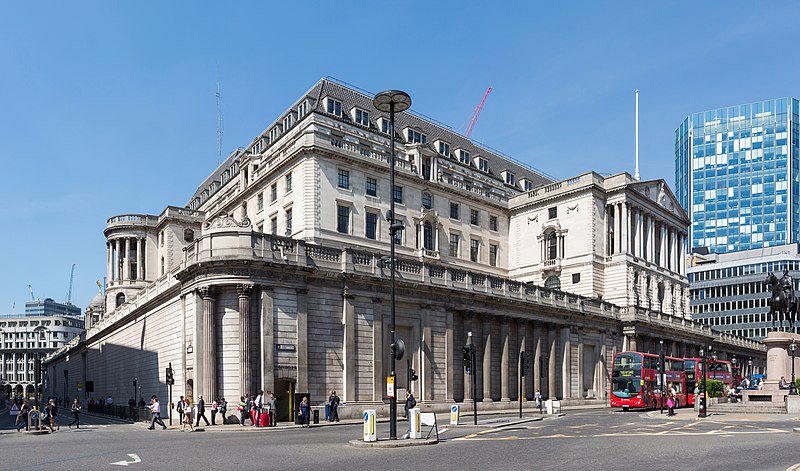
Earlier this year, we predicted the BoE would gradually reduce interest rates through 2024 and into 2025 to a terminal base rate of 3.25%. We now predict that will fall further to a terminal rate of 3% by August 2025, delivering cautious 25bps rate cuts in each meeting from November 2024.
The backdrop of inflation has improved. While it should pick back up slightly by the end of 2024 for technical reasons, underlying price pressures are clearly easing. This will allow the BoE to accelerate the pace of rate cuts heading into 2025. Nevertheless, where interest rates settle will be at a level way above the pre-pandemic level.
We expect fiscal policy to be broadly neutral in 2025, but to support moderate growth through higher public investment. Nevertheless, UK public finances are weak and fiscal policy will start to tighten again from 2026.
The government’s initiatives are broadly favourable for medium-term growth prospects, but implementation challenges are significant.
Maxime Darmet, Senior Economist for the UK, US and France, Allianz Trade, said: “With an economy displaying solid momentum, inflation set to pick up again in coming months, and financial conditions loosening in areas such as the housing market, the BoE is in no rush to loosen policy.
“In fact, the BoE is expected to move in lockstep with the Fed, delivering cautious 25bps rate cuts in each meeting from November. A steady loosening from the Fed and the ECB and a drop back in inflation expected by the spring of 2025 should give the BoE enough confidence to cut rates by 25bps in each meeting through August 2025.”
Allianz Trade estimates for the UK economy:
| 2023 | 2024F | 2025F | 2026F | |
| Real GDP Growth | ||||
| Annual average | 0.3 | 1.0 | 1.7 | 1.3 |
| Headline CPI | ||||
| Annual average | 7.3 | 2.7 | 2.0 | 2.1 |
| Industrial Production | ||||
| Annual average | -1.2 | -1.0 | 1.2 | 1.2 |
| Interest Rates | ||||
| BoE Bank Rate (Q4) | 5.25 | 4.50 | 3.00 | 3.00 |
| 10-yr Gilt (Q4) | 3.54 | 3.80 | 3.60 | 3.50 |
| Public Deficit | ||||
| GDP Bn | -162 | -146 | -154 | -148 |
| % of GDP | -6.0 | -5.2 | -5.3 | -4.9 |
| Unemployment Rate | ||||
| Annual average | 4.1 | 4.2 | 4.2 | 3.8 |
| Wage Growth* | ||||
| Annual average | 7.0 | 4.3 | 2.7 | 2.7 |
| Bankruptcy Filings | ||||
| Annual average (000s) | 28.1 | 29.4 | 27.5 | 26.3 |
| *Average weekly earnings | ||||
What to expect in the Autumn Budget
The UK government has ruled out hiking taxes on most of the tax base; this means the Treasury is likely to target tax rebates and seek to increase “other” taxes, such as capital gains taxes and inheritance taxes.
There are several options the UK government could explore, outlined below:
| Possible measures | Ex ante receipts, GBP Bn |
| Equal capital gains and income tax rates Scrap Business Asset Disposal Relief | 16 1.5 |
| Scrap residence nil-rate bad Cap agricultural and business relief at £500k per person Bring defined contribution pension pots into estates | 1.8 1.8 by FY29 0.4 by FY 29 |
| Flat rate of tax relief on contributions | 18 |
| Introduce employer national insurance on pension contributions Scrap 25% tax-free lump-sum | 13 5.5 |
| Others | |
| Abolish the tax status of non-domiciled persons Impose VAT on private school fees Increase tax on Oil and Gas companies | 2 2.5 5-10 |
Structural economic challenges the UK government faces
The decline in the UK’s average GDP growth is due to slower productivity growth, with a GDP per hour worked growth rate of 1.4% on average between 1982 and 2023, a 0.5% increase between 2013 and 2023 and a decrease of -0.8% in 2023.
Some of the issues include:
- Low dwellings and business investment
- Low government and poor/outdated infrastructure
- Low savings
- High energy costs
- Low participation in the labour market and skills
Some of the solutions to these problems could include:
- Reform planning laws to make homebuilding easier
- Create an environment which is conducive to long-term investment
- Invest in projects that improves the UK’s energy and transport infrastructure
- Cut NHS waiting lists and encourage training and education at all ages
UK Outlook
Maxime Darmet, Senior Economist for the UK, US and France, Allianz Trade, said: “The UK’s growth momentum should continue to be solid heading into 2025. The UK posted solid quarterly growth rates in H1 2024, buoyed by the early signs of a recovery in residential investment and strong public spending. We expect the recovery of the housing market to continue through 2025. Mortgage approvals are almost back to their pre-pandemic levels and real house prices are accelerating. Lower inflation, still elevated wage growth and a tight labour market should increasingly support household spending.
“We expect the fiscal stance to be slightly expansionary in 2025, with tax hikes partially funding increased public spending on infrastructure, for example, which has a strong GDP impact. Nevertheless, tax hikes announced in the upcoming budget may weigh on consumer confidence. Meanwhile, exports should recover heading into 2025, helped by stronger growth in the Eurozone.”

