
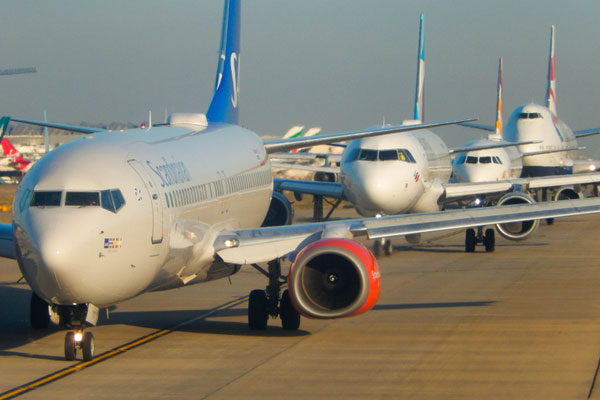

Airline capacity constraints continue to shape travel costs.
Persistent delivery delays of new aircraft, coupled with maintenance issues, affect scheduling and pricing.
Constrained airline capacity has become a prevailing issue in the aviation industry. Delays in the delivery of new aircraft have exacerbated these constraints, causing disruptions in flight schedules. Aviation consultant John Strickland highlighted the significant impact of these delays during an Abta Aviation Forum in London, stating that the delivery of aircraft is either late or not occurring at all. This situation forces airlines to reschedule flights, thereby increasing operational complexities. Consequently, the constrained capacity is contributing to an upward pressure on airfares.
Maintenance problems associated with Pratt & Whitney engines, particularly on Airbus A321neo aircraft, are compounding the issues. Approximately 350 aircraft are expected to be grounded at any given time through 2024 to 2026, with each grounding lasting up to 300 days. Compounding this, safety concerns at Boeing, particularly after a mid-air incident involving a 737 Max-9 aircraft, have further slowed production. Ryanair, for instance, will miss the delivery of 20 of the 50 aircraft it anticipated, forcing a reduction in routes and a revision of profit projections. Wizz Air also faces challenges, with 40 new Airbus planes grounded.
The aviation sector is grappling with not only technical issues but also economic pressures. Rising fuel prices, driven by geopolitical tensions, have impacted operational costs for airlines. Despite these rising costs, airlines have maintained profitability due to robust demand and high pricing strategies. John Strickland noted the recovery in airline profits post-pandemic as remarkable, with airlines flying at full capacity and maintaining high pricing in markets such as the North Atlantic and Europe. The ongoing conflicts, such as Russia’s invasion of Ukraine, have also extended flight times between Europe and Asia, exacerbating the situation.
The geopolitical climate remains a concern for the aviation industry, increasing fuel costs and impacting flight routes. Despite these challenges, the demand for flights has remained resilient and strong, aiding airlines in maintaining profitability. The airline industry continues to pass increased costs onto consumers, supported by a strong pricing environment. Aviation expert John Strickland commented on the industry’s ability to manage these challenges during his address at the forum.
The focus on operational adjustments and fleet management is paramount in navigating the constrained capacity situation.
In summary, the airline industry is facing a multifaceted challenge with constrained capacity, technical issues, and economic pressures. However, through strategic management and operational adjustments, airlines remain optimistic about navigating these challenges. The sustained demand for air travel plays a pivotal role in supporting airline profitability during these tumultuous times.
The aviation sector adapts to ongoing challenges.
Capacity constraints and economic pressures require strategic responses.
Continued demand for air travel helps balance industry profitability.

