
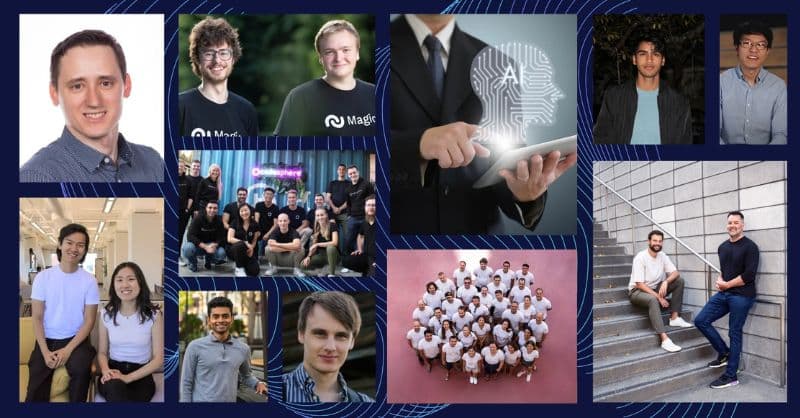

In 2024, the AI coding sector sees substantial growth, marked by large investments from prominent venture capitalists. Startups are on the rise, leveraging innovations to transform software development processes. These ventures highlight the expanding role of AI in tech. The following overview delves into the most significant AI coding investments this year.
OpenAI: Leading the Charge
OpenAI stands out with its remarkable $157 billion valuation following a $6.6 billion funding round. This underscores its pivotal role in AI development and its growing influence across various applications. The company continues to innovate, setting industry standards and serving as a benchmark for emerging startups in the AI coding space.
Anthropic: Amazon-backed Unicorn
Anthropic emerges as a major player with a $18.4 billion valuation, thanks to significant backing from Amazon. This partnership emphasizes the increasing synergy between tech giants and AI startups. Such collaborations are crucial in advancing AI technologies, particularly in coding applications, where Anthropic aims to innovate.
The company’s focus on AI-driven applications highlights the potential of machine learning in streamlining coding processes. This approach not only enhances efficiency but also paves the way for future advancements in AI integrations.
Mistral AI: A European Powerhouse
Mistral AI, originating from France, secures €600 million at a $6.2 billion valuation, marking a milestone in European startup funding. This achievement underscores the continent’s growing impact on the global AI landscape.
The firm’s focus is on enhancing code generation and testing through AI, which positions it as a leader in the European market. Mistral AI’s tools are designed to cater to the needs of modern developers, improving productivity and reducing errors in code creation.
Their approach to AI in coding is innovative, promising to drive significant changes in the way software development is approached across industries.
Poolside AI: Collaborative Coding Enhanced
Poolside AI, with a significant $626 million in funding, focuses on improving software development through AI. Their intelligent code assistant is designed to accelerate the entire coding process.
The recent $500 million Series B funding round shows confidence from investors like Bain Capital Ventures, reinforcing Poolside AI’s growth potential. This support highlights the increasing demand for AI tools that enhance developer capabilities.
By learning from user interactions, Poolside’s model offers a unique advantage in creating adaptable and efficient coding environments.
Magic: Automating Coding Tasks
Magic’s innovative tools help automate numerous coding tasks, from writing and reviewing to debugging and planning. This startup’s distinctive capability to process information equivalent to 10 million lines of code stands out.
The $320 million raised in the latest funding round, led by Eric Schmidt, reflects robust support from influential backers. Magic’s approach boosts software development efficiency significantly.
With a model like LTM-2-mini, Magic enables developers to handle extensive coding projects more effectively.
Magic also recently closed a $117 million Series B round, strengthening its market position further.
These investments are indicative of the broader trend towards AI in coding, where profitability and efficiency are paramount.
Augment: Enhancing Software Team Collaboration
Augment aims to improve software development efficiency through AI tools that facilitate collaboration. Their platform supports large codebases and numerous developers, allowing for smooth project management.
With a $252 million total funding, including a $227 million Series B round, Augment is set to become a major name in AI coding. Key investors include Sutter Hill Ventures and Lightspeed Venture Partners, indicating strong market confidence.
Augment’s tools ensure intellectual property protection, adhering to high security standards.
Codeium: Multilingual Coding Platform
Codeium provides a versatile AI-powered platform supporting over 70 languages, integrating with more than 40 IDEs to optimise developer productivity.
The recent $150 million Series C funding, leading to a $1.25 billion valuation, reinforces Codeium’s status as a leading entity in AI coding. Investors such as General Catalyst and Kleiner Perkins show substantial interest.
Codeium’s mission is to streamline coding tasks, making it a critical asset for developers looking to enhance their coding workflow.
By utilising proprietary code-based LLMs, it aims to reduce development inefficiencies, proving itself as a valuable tool in the AI coding domain.
Cognition AI: The First AI Software Engineer
Cognition AI introduces Devin, an AI coding assistant capable of managing comprehensive development projects independently. This innovation marks a significant step in AI coding.
With a valuation of $2 billion, Cognition AI secured $175 million in April, demonstrating immense investor confidence. This financial backing is pivotal for its growth and development.
Devin can handle tasks from learning new technologies to debugging, showcasing Cognition AI as a pioneer in the field.
In addition to its April funding, Cognition AI’s earlier $21 million round reflects ongoing investor interest.
The company’s focus on creating a self-sufficient AI coding tool distinguishes it from others in the sector.
Anysphere: Redefining Coding Efficiency
Anysphere’s Cursor tool aims to transform coding by converting directives into functional code swiftly, automating complex tasks like refactoring.
The $60 million Series A funding highlights strong demand for Anysphere’s innovations. Notable investors include Andreessen Horowitz and Google’s Jeff Dean, backing its potential.
Anysphere’s customer base of over 30,000 includes top enterprises and research labs, evidencing its wide-reaching impact on the coding industry.
Qodo: Ensuring Code Integrity
Qodo, previously known as CodiumAI, focuses on providing generative AI coding solutions for seamless code integrity.
The firm’s recent funding round of $40 million, led by Susa Ventures and Square Peg, underscores investor interest in its robust solutions.
Qodo’s platform facilitates automated code reviews and testing, ensuring high standards throughout the software development process.
By offering tools that enable faster development with zero bugs, Qodo enhances overall code quality and reliability.
Mintlify: Revolutionising Documentation
Mintlify enhances the often-overlooked aspect of software documentation, making it more functional and user-friendly. Documentation remains critical for developers and users alike.
The $18 million Series A funding led by Andreessen Horowitz supports Mintlify’s mission to keep up-to-date project documentation.
By simplifying documentation processes, Mintlify helps software teams maintain clarity and efficiency.
Codesphere: Cloud-based Coding Innovation
Codesphere offers cloud-based coding solutions that reduce infrastructure costs and support global scalability.
Their recent $18 million funding round, led by Creandum, highlights growing interest in cloud-based development environments.
Codesphere allows organisations to utilise applications offline while ensuring robust security, crucial for critical infrastructure projects.
Lovable: Democratising Software Development
Lovable, a Swedish startup, aims to democratise software development through its autonomous AI engineers, enabling everyone to develop quality software.
The $7.5 million pre-seed funding underscores early investor confidence in Lovable’s innovative approach.
Lovable’s tools empower users to create functional software with ease, reflecting a shift towards accessible coding solutions.
The surge in investment for AI coding startups reflects their vital role in revolutionising software development. These companies exemplify innovation and efficiency in the modern tech landscape, setting the stage for future advancements. Their growth signifies a broader trend towards reliance on AI technologies to streamline and enhance coding processes.

