

National Highways has embarked on an innovative project called Structures Moonshot, aiming to enhance the inspection of steel corrosion within concrete.
- The project specifically targets post-tensioned structures focusing on steel tendons and reinforced concrete half-joints.
- Research updates were shared at the NCE’s Bridges Conference, highlighting significant advancements in technology use.
- Ground penetrating radar and ultrasonic tomography are among the techniques employed to detect structural defects.
- The project exemplifies the push towards preventing severe structural deterioration through advanced monitoring methods.
For over a year, National Highways has been spearheading the Structures Moonshot project to refine the methods used for inspecting the corrosion of steel within concrete structures. The project aims to address the challenges associated with examining the steel tendons in post-tensioned structures and the reinforcement within concrete half-joints, which are crucial for maintaining structural integrity.
During a presentation at the NCE’s Bridges Conference, researchers involved in Structures Moonshot provided insights into the progress achieved thus far. Colin George, National Highways’ deputy head of structures and project sponsor, expressed that the project is driven by the desire to harness emerging technologies for enhanced remote monitoring and automated inspections. The objective is to accurately assess the condition of aging infrastructure to proactively address potential deterioration before extensive interventions become necessary.
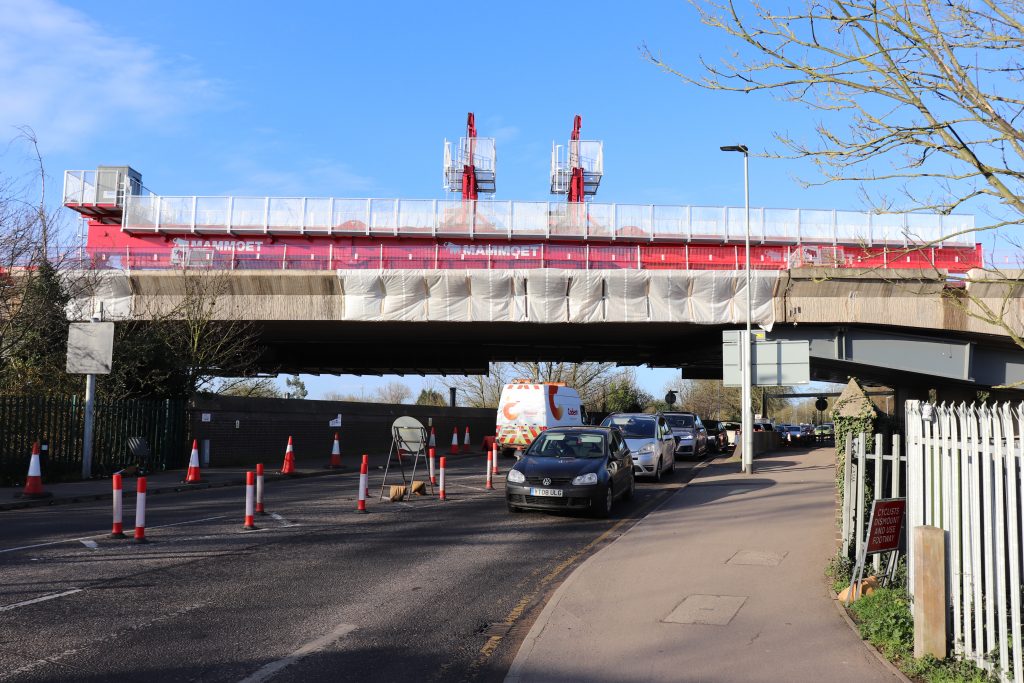
One of the project’s focal points is the A52 Clifton Bridge in Nottingham, a pre-stressed concrete bridge that experienced severe issues with its internal post-tensioning system. The unexpected closure of this bridge underscored the need for improved inspection techniques that could detect concealed corrosion before it necessitates such dramatic measures. Additionally, efforts were made to recover sections of the 1970s Huntingdon rail viaduct to evaluate the effectiveness of existing monitoring methods, providing a rare opportunity to conduct Non-Destructive Testing (NDT) on suspect structures.
Techniques such as ground penetrating radar and ultrasonic tomography have been employed to locate voids in the post-tensioned ducts. However, while acoustic emission monitoring has delivered some insight by identifying when breaks in the wiring occur, it is limited by its inability to determine how many breaks might have happened prior to installation. This limitation leads to uncertainty surrounding the actual capacity of the structure.
The Structures Moonshot initiative tested sections of the Huntingdon railway viaduct to verify the precision of past monitoring activities. Results from these tests bolster the effectiveness of some approaches, thus highlighting the project’s contribution to refining structural inspection practices. Among emerging technologies being trialed, guided wave radar presents a promising future for detecting defects within post-tensioned tendons, despite certain issues related to signal attenuation.
Beyond guided wave radar, the exploration of moun tomography—utilising atmospheric muons to produce internal images of structures—adds another layer of sophistication to the project. National Highways intends to continue this trajectory by hosting future conferences to further engage with technological suppliers, aiming to showcase their progress and enhance public understanding of these advanced inspection techniques.
National Highways’ Structures Moonshot exemplifies the strategic adoption of cutting-edge technology to ensure the longevity and safety of infrastructure.

