
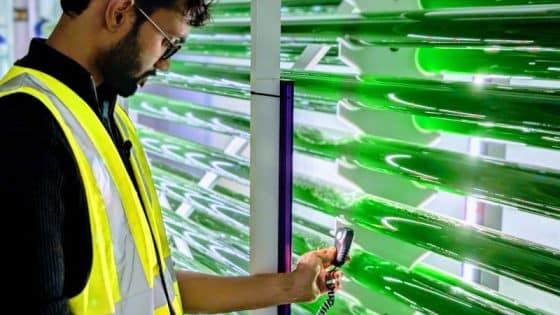

A breakthrough in hydrogen production and carbon capture has emerged at the University of York.
- The Biorenewables Development Centre has successfully created hydrogen on a large scale using a biological process.
- This method not only generates hydrogen but also captures carbon emissions, aiding in environmental protection.
- The project employs organic waste conversion and involves collaborations among several universities and industries.
- This development is a significant move towards achieving the UK’s net-zero energy goals.
In a groundbreaking initiative, the Biorenewables Development Centre (BDC) at the University of York has pioneered the large-scale production of hydrogen through a sustainable biological process. This project, known as H2Boost, addresses the ongoing challenge of carbon dioxide emissions typically associated with hydrogen production by integrating carbon capture methods, which play a crucial role in reducing air pollution.
The traditional methods of hydrogen production often result in the release of carbon dioxide, detracting from its environmental advantages. However, the innovative approach adopted by the BDC, in partnership with the University of Leeds and supported by the UK government’s £1bn Net Zero Innovation Portfolio (NZIP), has presented a viable alternative. By using a process called dark fermentation, the team effectively transforms organic waste into biohydrogen. This method not only creates hydrogen but also harnesses by-products, subsequently generating additional energy and reducing waste.
The project utilises anaerobic digestion, which, when paired with cultivated algae and bacteria, significantly enhances the emission capture capability of the system. This advancement strengthens the environmental credentials of hydrogen as a cleaner substitute for fossil fuels, particularly in sectors such as heating and transport.
Projections indicate that by 2050, technologies focused on low-carbon hydrogen could meet up to 35% of the UK’s energy requirements, marking a substantial step towards the country’s net-zero ambitions. The H2Boost initiative is driven by a consortium of organisations, including Aardvark EM, AB Agri, CM90, Cyanocapture, MyGroup, NNFCC, Qube Renewables, and Ramboll, all aiming to establish a commercially viable, sustainable hydrogen production process from organic waste.
Penny Cunningham, BDC’s programme operations manager, remarked on the significance of the project, stating, “Successfully demonstrating integrated hydrogen production with carbon capture represents a significant technical breakthrough for the H2Boost project. Our novel approach to producing clean hydrogen from waste while removing CO2 is not only technically feasible but also holds significant promise for large-scale sustainable energy solutions in the future.”
This pioneering effort marks a notable step forward in managing emissions and advancing sustainable energy solutions.

