

A tribunal has ruled that barristers’ chambers cannot classify individual rooms as separate properties for business rates.
- Pump Court Tax Chambers’ attempt to alter the rateable status of its rooms was unsuccessful.
- The chambers argued for rooms to be considered individual hereditaments to claim small business rate relief.
- The tribunal emphasised the joint occupation and shared purpose of chambers’ premises.
- This decision reinforces the collective identity and operation of barristers’ chambers.
The tribunal decisively ruled that the barristers’ chambers could not classify individual rooms occupied within its premises as separate rateable properties. This decision arose from Pump Court Tax Chambers’ appeal against a prior determination by the Valuation Tribunal. Had the appeal succeeded, it would have allowed individual barristers within the chambers to claim small business rate relief, thereby benefiting financially from a significant reduction in their business rates.
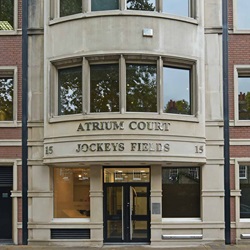
The case centred on the annex of a building located at Jockey’s Fields, which was deemed a single ‘hereditament’ with a rateable value of £152,000. Pump Court advocated for the rooms to be recognised as separate hereditaments, claiming that this alignment would facilitate individual barristers’ professional practices and provide financial relief. The argument rested on the notion that each barrister occupied their room exclusively, without interference, and for the purpose of their own business.
Despite these assertions, the tribunal, guided by Martin Rodger KC and surveyor Mark Higgin, emphasised that the occupation of these rooms was inherently collective. It noted that all members were united through contractual agreements under the chambers’ constitution. This union conveyed rights such as equitable interests under a trust of land, thereby rendering the premises’ occupation shared rather than individual.
Moreover, the tribunal found that the chambers’ operational dynamics, including policies on shared space due to parental leave or new member recruitment, further illustrated the collective control exercised over the premises. Such arrangements highlighted the chambers’ ability to adapt its spatial allocations in a manner that best suited its collective interest, rather than individual preferences.
Ultimately, the tribunal held that individual barristers were not in rateable occupation of their rooms. Instead, the premises were under joint occupation, aligning with the shared purpose of supporting individual practices under the collective identity of the chambers.
The tribunal’s ruling underscores the collective nature of barristers’ chambers, maintaining their unified operational framework.

