

The Solicitors Regulation Authority has imposed a conditional ban on a former law firm employee after his conviction for two assaults.
- Ian Bond, previously a case officer at Devon’s Patterson Law, assaulted colleagues in a nightclub after a work dinner in October 2021.
- Bond pleaded guilty to two counts of assault by beating, resulting in community work, electronic monitoring, and financial compensation to victims.
- A section 43 order restricts Bond’s future involvement in legal practice without SRA approval, highlighting professional conduct standards.
- The implications underscore the rigorous oversight enforced by legal regulatory bodies to uphold ethical practice.
In the aftermath of a serious breach of professional conduct, the Solicitors Regulation Authority (SRA) has taken decisive action against a former employee of Patterson Law, Ian Bond. The case highlights the SRA’s commitment to maintaining integrity within the legal profession. The incident in question occurred in October 2021, following a summer party organised by the firm, where Mr Bond engaged in inappropriate behaviour towards colleagues at a local nightclub.
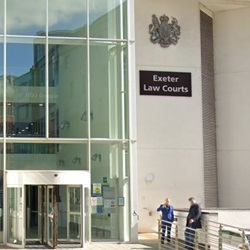
The situation escalated when Bond’s actions were formally reported, prompting an internal investigation. This led Mr Bond to resign from his position on 14 October 2021. Subsequently, a criminal investigation ensued, resulting in Mr Bond’s conviction for two counts of assault by beating. At Exeter Combined Court, he pleaded guilty and received a sentence that included 50 hours of unpaid community work and a 120-day electronically monitored alcohol abstinence. Moreover, Mr Bond was ordered to partake in a rehabilitation programme and compensate each victim with £500.
Demonstrating the consequences of violations within the legal community, the SRA imposed restrictions under section 43 of the Solicitors Act 1974. This regulation effectively prohibits Mr Bond from participating in the legal sector without prior permission from the SRA, reinforcing the legal sector’s stance on unsuitable conduct. Mr Bond acknowledged that his conviction rendered it inappropriate for him to continue in legal practice without regulatory oversight.
This case serves as an enduring reminder of the stringent measures enforced by regulatory bodies like the SRA. Such measures are integral in preserving public confidence in legal services by ensuring practitioners adhere to ethical and professional standards.
The enforcement of these controls by the SRA illustrates the agency’s unwavering dedication to upholding ethical conduct in the legal profession.
